Indonesia is a popular destination for international couples who want to get married, whether they are planning to build a life together in Indonesia or simply want to celebrate their wedding in a unique destination such as Bali.
However, getting married in Indonesia as an international couple involves more than choosing a wedding venue and completing a ceremony. Couples may need to prepare civil documents, obtain documents from their respective countries or embassies, meet Indonesian marriage requirements, and properly register the marriage with the relevant authorities.
The process can also become more complex when immigration is involved. For example, when an Indonesian citizen marries a foreign national, the foreign spouse may need to obtain an appropriate Indonesian immigration status after the marriage. It is also important to understand that not every marriage involving foreigners is legally considered a “mixed marriage” under Indonesian law. Indonesian marriage law has a specific definition of perkawinan campuran, which generally refers to a marriage between people who are subject to different laws in Indonesia because of their different nationalities.
This means that there are two important situations to distinguish:
- Indonesian citizen (WNI) + foreign citizen (WNA) — commonly referred to as a mixed marriage or perkawinan campuran.
- Foreign citizen (WNA) + foreign citizen (WNA) — two foreigners getting married in Indonesia, which has its own marriage-registration and documentation requirements.
In addition, couples should distinguish between a legally registered marriage and a wedding ceremony. Holding a wedding ceremony at a hotel, villa, beach, or resort in Indonesia does not by itself mean that the marriage has been legally registered under Indonesian law.
This guide provides an overview of the 2026 requirements and procedures for WNI–WNA and WNA–WNA marriages in Indonesia, including marriage documents, registration, getting married in Bali, immigration options for foreign spouses, ITAS and ITAP, and citizenship considerations for children.
Important: Requirements can vary depending on the nationality of the foreign spouse, religion, place of marriage, previous marital status, and the Indonesian authority responsible for registration. Foreign couples should therefore verify the latest requirements with the relevant Indonesian authority and their embassy or consulate before making final arrangements.
What Is a Mixed Marriage in Indonesia?

The term “mixed marriage” has a specific legal meaning in Indonesia. It does not simply refer to any international couple or any foreigner getting married in Indonesia.
Under Article 57 of Law No. 1 of 1974 on Marriage, a mixed marriage (perkawinan campuran) is a marriage between two people who, in Indonesia, are subject to different laws because of their different nationalities, where one party is an Indonesian citizen and the other is a foreign citizen. Law No. 1 of 1974 remains in force and has been amended, including by Law No. 16 of 2019.
In practical terms, the most common example is:
Indonesian Citizen (WNI) + Foreign Citizen (WNA)
For example:
- An Indonesian woman marrying an Australian citizen
- An Indonesian man marrying a British citizen
- An Indonesian citizen marrying a Japanese, American, German, French, or other foreign national
These relationships fall within the legal framework of mixed marriage in Indonesia.
Mixed Marriage Is Not the Same as Any International Wedding
It is important to understand that the nationality of the couple and the place where the wedding takes place are separate issues.
For example: Indonesian + Australian
This can constitute a mixed marriage under Indonesian law because one party is an Indonesian citizen and the other is a foreign citizen.
However: Australian + British
This is a marriage between two foreign nationals. Even if they get married in Bali, it is not a mixed marriage under Article 57 of the Indonesian Marriage Law, because neither party is an Indonesian citizen. The legal and administrative requirements for these two situations can therefore be different.
Marriage Ceremony vs Legal Marriage
Another important distinction is between a wedding ceremony and a legally registered marriage.
A couple may hold a wedding ceremony at:
- a beach,
- hotel,
- villa,
- resort,
- restaurant,
- private venue, or
- other wedding destination in Indonesia.
However, holding a ceremony in Indonesia does not automatically mean that the marriage has been legally registered under Indonesian law.
For couples who need their marriage to have legal consequences in Indonesia—such as obtaining a family-based immigration status for a foreign spouse—the marriage documentation and registration are particularly important.
How Does Indonesian Law Treat a Mixed Marriage?
Indonesian law provides specific provisions for mixed marriages, including requirements concerning the ability of each party to marry, marriage registration, and documentation.
Article 61 of the Marriage Law provides that a mixed marriage is recorded by the authorized marriage registrar.
This means that an international couple should not treat the marriage as simply a private agreement or wedding event. The marriage needs to follow the applicable Indonesian marriage and registration framework.
The exact registration procedure can depend on the couple’s religion and circumstances. For Muslim couples, marriage registration is governed by the applicable Ministry of Religious Affairs regulations, while other marriages are handled through the civil-registration system.
Why Is the Definition Important?
Understanding the legal definition of mixed marriage is important because it affects what comes next.
A WNI–WNA couple may need to consider not only the marriage itself, but also:
- documentation from the foreign spouse’s country;
- registration with the relevant Indonesian authority;
- the foreign spouse’s immigration status;
- family-based visa and residence options;
- the foreign spouse’s ability to work in Indonesia;
- potential permanent residence options;
- and the nationality of children born from the marriage.
A WNA–WNA couple, on the other hand, does not have an Indonesian citizen spouse. Their main concerns may instead include Indonesian marriage-registration requirements, documents proving their legal capacity to marry, embassy or consular requirements, and recognition of the Indonesian marriage in their respective countries.
For this reason, the first step for any international couple planning to marry in Indonesia is to determine which legal situation applies to them.
In Short
| Couple | Legal Category in Indonesia |
| Indonesian + Foreign Citizen | Mixed Marriage / Perkawinan Campuran |
| Indonesian + Indonesian | Indonesian marriage |
| Foreign Citizen + Foreign Citizen | Marriage between two foreign nationals, not a mixed marriage under Article 57 |
| Foreign couple holding a wedding ceremony in Bali | Not automatically a legally registered marriage |
Understanding this distinction will make it easier to determine the correct documents, registration procedure, and immigration arrangements for the couple.
Can a Foreigner Marry an Indonesian Citizen in Indonesia?

Yes. A foreign citizen (WNA) can legally marry an Indonesian citizen (WNI) in Indonesia, provided that both parties meet the applicable marriage, religious, civil-registration, and documentation requirements.
The foreign spouse does not necessarily have to hold an Indonesian ITAS or ITAP simply to get married. Indonesian Immigration has stated that a foreign national who holds a valid passport and valid immigration status, including certain visitor immigration statuses, may marry an Indonesian citizen in Indonesia as long as the required marriage documents are fulfilled.
However, being legally present in Indonesia and being legally married are two different matters.
A valid visa or stay permit allows the foreigner to remain in Indonesia under the conditions of that immigration status. It does not replace the marriage requirements imposed by Indonesian law.
Does a Foreigner Need an ITAS to Get Married in Indonesia?
Not necessarily.
A foreigner who is legally present in Indonesia may be able to marry an Indonesian citizen without first obtaining an ITAS. What matters is that the foreigner has a valid passport, valid immigration status, and the documents required to establish their legal capacity to marry.
For example, Indonesian Immigration has previously confirmed that foreigners holding a visitor visa or Visa on Arrival may marry in Indonesia if they satisfy the applicable requirements, including providing evidence of their single status from the competent authority in their home country.
Nevertheless, couples should always check the current requirements applicable to their nationality and the relevant marriage-registration authority before making arrangements.
What Does the Foreigner Need to Prove?
One of the most important requirements is evidence that the foreigner is legally able to enter into the marriage.
This usually involves documentation confirming the foreigner’s current marital status, such as:
- Certificate of No Impediment (CNI);
- Certificate of Freedom to Marry;
- Certificate of No Marriage;
- Single Status Certificate; or
- another equivalent document issued or recognized by the competent authority of the foreigner’s country.
The name of the document is not necessarily the same for every nationality.
For this reason, a British citizen, Australian citizen, American citizen, German citizen, or citizen of another country may have a different procedure for obtaining the required document.
Does the Marriage Need to Be Registered in Indonesia?
Yes, if the couple wants the marriage to be formally recorded under the applicable Indonesian registration system.
The appropriate registration authority depends on the couple’s religion and the type of marriage.
For example, Muslim marriages are generally registered through the Kantor Urusan Agama (KUA), while marriages registered through the civil-registration system are handled by the relevant Dinas Kependudukan dan Pencatatan Sipil (Dukcapil). The couple should therefore determine the correct registration route before preparing the final documents.
Is a Wedding Ceremony Enough?
No.
A wedding ceremony and a legally registered marriage are not necessarily the same thing.
A WNI and WNA couple may hold a ceremony in:
- Bali;
- Jakarta;
- Yogyakarta;
- Lombok;
- a hotel;
- a villa;
- a beach; or
- another wedding venue.
However, the ceremony itself does not automatically establish a legally registered marriage.
This distinction becomes particularly important if the foreign spouse later wants to use the marriage certificate for immigration purposes.
For example, when applying for a family-based immigration status as the spouse of an Indonesian citizen, Indonesian Immigration requires evidence of the marriage, such as a marriage certificate or marriage book issued by the competent authority. For marriages conducted outside Indonesia, additional evidence of reporting and the foreign marriage certificate may be required.
What Happens After the Marriage?
Once the marriage has been legally registered, the foreign spouse may explore an Indonesian family-based immigration pathway.
The current immigration framework provides a route for a foreigner who is legally married to an Indonesian citizen to obtain a family-based residence status. Indonesian Immigration also confirms that a foreigner who is legally married to a WNI may qualify for an ITAS pathway.
For example, the current E31A Family Visa is specifically listed by the Directorate General of Immigration for the spouse of an Indonesian citizen. The application requires evidence of the marriage, including a marriage book or marriage certificate when the marriage was conducted in Indonesia.
Therefore, the process can be viewed as three separate stages:
1. Legal marriage
↓
2. Marriage registration
↓
3. Immigration arrangement for the foreign spouse
Marriage itself does not automatically grant Indonesian citizenship or permanent residence.
Important: Check the Requirements Before the Wedding
International couples should avoid waiting until the wedding date is approaching before checking the documentation.
Foreign documents can take time to obtain, and some may require:
- issuance by the authority in the foreigner’s home country;
- embassy or consular procedures;
- apostille or legalization;
- sworn translation into Indonesian; and
- additional verification by the Indonesian marriage-registration authority.
The requirements can also vary according to the foreigner’s nationality, religion, previous marital status, and where the marriage will be registered.
For this reason, couples should confirm the complete document checklist with the relevant KUA, Dukcapil, and the foreigner’s embassy or consulate before proceeding.
Requirements for an Indonesian Citizen and a Foreigner to Get Married in Indonesia
Once a WNI and WNA decide to get married in Indonesia, the next step is preparing the documents required by the relevant Indonesian authorities.
The exact requirements can vary depending on the couple’s religion, where the marriage will be registered, the nationality of the foreign spouse, and whether either person has previously been married.
For this reason, international couples should prepare documents for both spouses, rather than assuming that only the foreign spouse needs to provide additional paperwork.
Documents for the Indonesian Spouse
The Indonesian spouse will generally need to provide Indonesian civil and identity documents required for the marriage registration process.
Depending on the circumstances and the registration authority, these may include:
- Indonesian Identity Card (KTP-el)
- Family Card (Kartu Keluarga/KK)
- Birth certificate
- Documents confirming marital status
- Required marriage-registration forms
- Documents related to the religious marriage, where applicable
- Other supporting documents requested by KUA or Dukcapil
Additional documents may be required depending on whether the Indonesian citizen is single, divorced, or widowed.
The exact checklist should therefore be confirmed with the relevant KUA or Dukcapil before the couple submits the application.
Documents for the Foreign Spouse
The foreign spouse generally needs to provide documents establishing their identity, legal status in Indonesia, and legal capacity to marry.
Commonly requested documents can include:
- Valid passport
- Valid Indonesian visa or stay permit
- Birth certificate
- Proof of current marital status
- Certificate of No Impediment (CNI), Certificate of Freedom to Marry, Certificate of No Marriage, or an equivalent document
- Divorce certificate, if previously married and divorced
- Death certificate of a previous spouse, if widowed
- Legal name-change documents, if applicable
- Documents issued or required by the foreigner’s embassy or consulate
- Indonesian translations of foreign-language documents, where required
- Apostille or legalization, where applicable
Indonesian Immigration has specifically stated that a foreigner who wishes to marry in Indonesia needs a valid passport and valid immigration status, together with evidence of their single status issued by the competent authority in their country.
The Foreign Spouse’s Proof of Marital Status
One of the most important parts of the foreigner’s documentation is proof that they are legally free to marry.
This document can have different names depending on the country.
For example, a foreign authority may issue a:
- Certificate of No Impediment;
- Certificate of Freedom to Marry;
- Certificate of Legal Capacity to Marry;
- Certificate of No Marriage;
- Single Status Certificate; or
- another equivalent document.
Therefore, couples should not assume that every foreign national must obtain a document specifically called a “CNI.”
The foreign spouse should check with their embassy, consulate, or competent authority in their home country to determine which document is accepted for marriage in Indonesia.
What If the Foreigner Was Previously Married?
Additional documents will normally be required if the foreign spouse is divorced or widowed.
For example:
Previously divorced:
- Final divorce certificate or decree
- Evidence that the divorce is legally final, where applicable
- Additional documents required by the foreign authority or Indonesian registration office
Widowed:
- Death certificate of the previous spouse
- Other evidence of marital status, where required
The purpose of these documents is to establish that there is no existing legal marriage preventing the new marriage from taking place.
Foreign Documents May Need Authentication
Foreign documents cannot always be used in Indonesia simply because they were issued by a government authority overseas.
Depending on the country of origin and the type of document, the document may need to go through an apostille, legalization, or another authentication procedure before it can be used in Indonesia.
The document may also need to be translated into Indonesian by an appropriate sworn translator.
The correct procedure depends on the country that issued the document and the requirements of the Indonesian authority handling the marriage.
This is particularly important because the process is not identical for every nationality.
Requirements Can Differ by Religion
Another important consideration is the religion or belief system under which the marriage will be performed.
For example, a Muslim couple generally follows the marriage-registration process through the Kantor Urusan Agama (KUA), while other marriages may be registered through the Dinas Kependudukan dan Pencatatan Sipil (Dukcapil).
The Ministry of Religious Affairs’ current marriage-registration framework is set out in Minister of Religious Affairs Regulation No. 30 of 2024 on Marriage Registration.
As a result, couples should determine the appropriate registration authority before finalizing their document checklist.
Requirements Are Not Identical for Every Foreign National
This is one of the most important points for international couples.
There is no universal document checklist that applies identically to every foreigner who wants to marry in Indonesia.
The required documents may vary according to:
- nationality;
- country where the civil documents were issued;
- religion;
- marital history;
- location of the marriage;
- Indonesian registration authority;
- embassy or consulate requirements; and
- whether the foreign documents require apostille, legalization, or translation.
For example, an Australian citizen and a German citizen may have different procedures for obtaining proof of legal capacity to marry, even though both are getting married in Indonesia.
Therefore, couples should verify both the Indonesian requirements and the foreign spouse’s home-country requirements before arranging the wedding.
A Simple Way to Understand the Requirements
For a WNI–WNA marriage, the documentation process can generally be divided into four groups:
1. Indonesian spouse documents
Identity + civil-status documents
2. Foreign spouse documents
Passport + immigration status + civil-status documents
3. Foreign-country documents
CNI/equivalent + embassy/consular documents + authentication where required
4. Indonesian registration documents
Forms and supporting documents required by KUA or Dukcapil
The complete checklist should be confirmed before submission because a missing or incorrectly prepared foreign document can delay the marriage-registration process.
Important 2026 Note
Indonesian marriage and civil-registration requirements should be checked against the latest rules and local service requirements at the time of application.
The national administrative framework includes Presidential Regulation No. 96 of 2018 and Minister of Home Affairs Regulation No. 108 of 2019, while marriage registration for Muslim couples is also governed by the current Ministry of Religious Affairs regulations.
In addition, local registration offices may publish their own service standards and operational procedures. For this reason, an international couple should not rely solely on a generic online checklist. The final document list should be confirmed with the relevant KUA/Dukcapil and the foreign spouse’s embassy or consulate before proceeding.
Marriage Registration in Indonesia: KUA or Dukcapil?
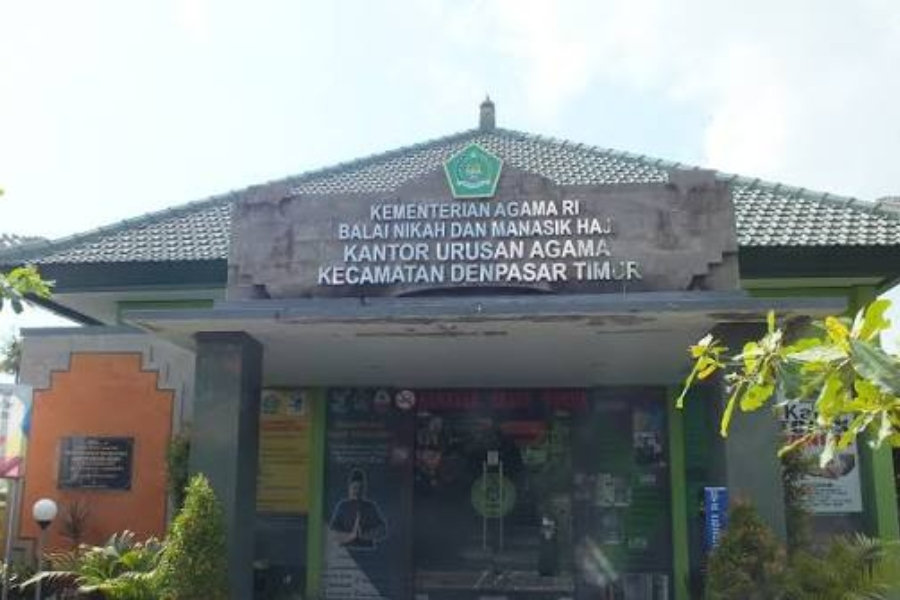
After preparing the required documents, the next step is to determine where the marriage will be registered in Indonesia.
For an Indonesian citizen and a foreign citizen, the registration process generally depends on the religion under which the marriage is performed.
In simple terms:
- Muslim marriage → generally registered through the Kantor Urusan Agama (KUA)
- Non-Muslim marriage → generally registered through the Dinas Kependudukan dan Pencatatan Sipil (Dukcapil)
The registration authority is important because each process has its own documents, forms, procedures, and administrative requirements.
Muslim Marriage: Registration Through KUA
For Muslim couples, marriage registration is handled through the KUA Kecamatan in accordance with the applicable Ministry of Religious Affairs regulations.
As of 2026, the main regulation governing marriage registration for Muslims is Minister of Religious Affairs Regulation No. 30 of 2024 on Marriage Registration, which remains in force. The regulation covers marriage registration in Indonesia and abroad and establishes processes including registration of the intention to marry, marriage examination, the marriage ceremony, and marriage registration.
The registration process generally includes:
- Registration of the intention to marry
- Verification and examination of the prospective spouses
- Completion of the required marriage conditions
- Marriage ceremony (akad nikah)
- Official registration of the marriage
- Issuance of the marriage documentation
The application can be submitted through the relevant KUA, with the marriage-registration system also supporting digital administration through SIMKAH.
Couples should not leave registration until the last minute. KUA guidance in 2026 continues to remind couples to register their intention to marry in advance, with the applicable rule generally requiring registration no later than 10 working days before the marriage ceremony, unless an exception applies.
The marriage does not necessarily have to take place inside the KUA building. Under the current regulation, an akad nikah may also be conducted outside the KUA or outside regular working hours, subject to the applicable requirements.
This can be particularly relevant for couples planning a destination wedding or a marriage ceremony at another venue.
Non-Muslim Marriage: Registration Through Dukcapil
For marriages that are registered through the civil-registration system, the relevant Dinas Kependudukan dan Pencatatan Sipil (Dukcapil) handles the registration.
The process generally involves:
- Completing the required application;
- Submitting the identity and civil-status documents of both spouses;
- Providing evidence that the marriage has been performed according to the applicable religion or belief;
- Completing verification by the civil-registration authority;
- Registering the marriage; and
- Obtaining the official marriage certificate.
The exact document checklist and procedure may vary between local Dukcapil offices, so couples should confirm the requirements with the office responsible for the place where the marriage will be registered.
What If One Spouse Is a Foreigner?
A foreign spouse does not simply follow the same document checklist as an Indonesian citizen.
The foreign spouse may need to provide additional documents, including:
- Passport;
- Valid Indonesian immigration status;
- Birth certificate;
- Proof of marital status;
- Certificate of No Impediment or equivalent document;
- Divorce or death certificate if applicable;
- Embassy or consular documentation;
- Apostille or legalization where required; and
- Indonesian translation where required.
The Indonesian authority may also need to verify that the foreign spouse is legally able to marry under the applicable law.
This is why international couples should prepare the foreign spouse’s documents before submitting the marriage application, rather than waiting until the registration office requests them.
What Documents Will the Couple Receive?
The document issued after registration depends on the registration route.
For a Muslim marriage registered through KUA, the couple receives official marriage documentation such as the Buku Nikah.
For a civil marriage registered through Dukcapil, the couple receives an official marriage certificate (Akta Perkawinan).
These documents are important beyond the wedding itself.
A foreign spouse may later need the marriage document for:
- Indonesian immigration applications;
- family-based visa applications;
- ITAS or ITAP applications;
- reporting the marriage to the foreign spouse’s country;
- updating marital status;
- registering children;
- banking or financial matters; and
- other legal or administrative purposes.
Why Proper Registration Matters for Immigration
For a WNA who marries a WNI, the marriage certificate is particularly important because the foreign spouse may later apply for an Indonesian family-based immigration status.
For example, the current immigration framework requires evidence of the marriage for the family-based visa route for a foreign spouse of an Indonesian citizen. Indonesian Immigration lists a marriage certificate or marriage book as supporting documentation, and additional reporting documentation may be required when the marriage took place outside Indonesia.
Therefore, couples should think of the process as:
Marriage ceremony → Official registration → Marriage certificate → Immigration application
rather than assuming that completing the wedding ceremony alone is sufficient.
Can the Marriage Take Place Outside the KUA or Dukcapil Office?
Yes, depending on the type of marriage and applicable rules.
For Muslim marriages, the current marriage-registration regulation allows the akad nikah to take place outside the KUA or outside regular working hours, subject to the requirements under the regulation.
For couples planning a wedding in Bali or another destination, however, they should confirm in advance whether the planned ceremony is also the official legal marriage ceremony or merely a celebration.
This distinction is especially important for international couples.
A wedding planner, hotel, villa, resort, or celebrant may organize the ceremony, but this does not necessarily mean that the marriage has been registered with the Indonesian government.
2026 Takeaway
For an international couple, choosing the correct registration route is one of the first decisions to make.
The basic framework is:
Muslim marriage
→ KUA
→ Marriage registration
→ Buku Nikah
Non-Muslim marriage
→ Dukcapil
→ Civil registration
→ Akta Perkawinan
Foreign spouse
→ Additional foreign documents
→ Verification
→ Registration
→ Marriage certificate
→ Potential immigration application
Because local administrative procedures can differ, couples should confirm the final checklist with the relevant KUA or Dukcapil before submitting their application.
Can Two Foreigners Get Married in Indonesia?

Yes. Two foreign nationals can get married in Indonesia, provided that they fulfill the applicable Indonesian marriage requirements and the requirements of their respective countries.
This is particularly relevant for international couples who choose Indonesia, especially Bali, as their wedding destination.
For example:
- An Australian citizen marrying a British citizen
- An American citizen marrying a German citizen
- A French citizen marrying a Japanese citizen
- Two foreign nationals of any other nationalities who wish to legally marry in Indonesia
However, there is an important legal distinction.
Is a Marriage Between Two Foreigners a “Mixed Marriage” in Indonesia?
Not necessarily.
Under Indonesian marriage law, the term perkawinan campuran (mixed marriage) has a specific legal definition relating to differences in nationality where the parties are subject to different laws in Indonesia.
Therefore:
WNI + WNA
→ Mixed Marriage / Perkawinan Campuran
WNA + WNA
→ Marriage between two foreign nationals
The fact that two foreigners marry in Indonesia does not, by itself, make their marriage a perkawinan campuran under Indonesian law.
Nevertheless, Indonesian law does provide a mechanism for recording marriages between foreign nationals conducted in Indonesia. Article 35 of the Population Administration Law expressly provides that the marriage-registration provisions also apply to marriages of foreign nationals conducted in Indonesia at the request of the foreign nationals concerned.
What Do Two Foreigners Need to Get Married in Indonesia?
The requirements for a foreign couple are not necessarily identical to those for a WNI–WNA couple.
Both parties are foreigners, so each person must generally establish their identity, immigration status, marital status, and legal ability to marry.
The documents commonly involved may include:
- Valid passport or other travel document
- Valid Indonesian immigration status
- Birth certificate
- Proof of current marital status
- Certificate of No Impediment (CNI) or equivalent document
- Certificate of Freedom to Marry or similar document, depending on nationality
- Divorce certificate, if previously married and divorced
- Death certificate of a previous spouse, if widowed
- Documents relating to a legal name change, if applicable
- Permission or documentation from the foreigner’s country or diplomatic/consular representative
- Indonesian translations where required
- Apostille, legalization, or other authentication where applicable
- Evidence of the marriage according to the applicable religion or belief system
The exact checklist can vary depending on the nationality of each person and the Indonesian authority handling the registration.
Proof That Each Foreigner Is Free to Marry
One of the most important parts of the process is proving that neither person is already legally married or otherwise prohibited from entering into the marriage.
This document may have different names depending on the country.
It could be called:
- Certificate of No Impediment;
- Certificate of Freedom to Marry;
- Certificate of Legal Capacity to Marry;
- Certificate of No Marriage;
- Single Status Certificate; or
- another equivalent document.
There is therefore no single document called “CNI” that every foreign national must obtain.
The correct document depends on the law and administrative system of the person’s country of nationality.
For this reason, both individuals should contact their respective embassy, consulate, or competent authority before preparing their final documents.
Do Foreigners Need Permission From Their Embassy?
In many cases, the foreign couple will need documentation from their country’s authorities or diplomatic/consular representative.
The exact requirement depends on nationality.
For example, the relevant embassy or consulate may require the foreign national to:
- provide evidence of their marital status;
- obtain a declaration or certificate confirming their capacity to marry;
- submit supporting civil documents;
- complete a consular procedure; or
- obtain permission or another document before the marriage can be registered in Indonesia.
This is why couples should check both nationalities separately.
An Australian citizen and a German citizen, for example, may have completely different procedures for obtaining their respective marriage-status documents.
Indonesian local-government service standards also recognize the need for documentation concerning permission to marry from the foreigner’s country or its representative. The current Denpasar service standard for foreign-national marriage registration specifically lists a copy of the marriage permission from the relevant country or its representative among the requirements.
Do Foreigners Need an Indonesian ITAS to Get Married?
Not necessarily in every situation.
The marriage-registration requirements and immigration requirements should be treated as separate matters.
A foreign national must have valid travel and immigration documentation while in Indonesia, but holding an ITAS is not automatically the same thing as being eligible to marry.
Importantly, local registration requirements may ask for evidence of the foreigner’s Indonesian residence status.
For example, the current Denpasar service standard for foreign-national marriage registration lists:
- a copy of the travel document; and
- a copy of the residence document for a foreigner holding an ITAS.
The same standard also refers to ITAS/ITAP/SKTT documentation in the administrative process.
Therefore, couples should not assume that every foreign couple must first obtain an ITAS simply because they want to marry in Indonesia.
Instead, they should confirm the requirements with the specific Indonesian registration authority where the marriage will be recorded.
Where Is the Marriage Registered?
For a foreign couple marrying in Indonesia, the registration route depends on the nature of the marriage and the applicable religious and civil-registration requirements.
Where the marriage is one that is registered through the civil-registration system, the relevant Dinas Kependudukan dan Pencatatan Sipil (Dukcapil) handles the registration.
The local authority verifies the submitted documents and, once the requirements are fulfilled, records the marriage and issues the relevant marriage documentation.
For example, the current Denpasar procedure allows applications for foreign-national marriage registration to be submitted online or manually. The process includes document verification, electronic signing, and issuance of the foreign-national marriage certificate.
What Document Will the Foreign Couple Receive?
Once the marriage has been properly registered, the couple can receive an official Akta Perkawinan or relevant marriage-registration document.
This document can be important for purposes such as:
- proving the legal marriage;
- reporting the marriage to the countries of nationality;
- updating marital status;
- immigration applications;
- family-related administrative matters;
- registering children; and
- other legal or administrative purposes.
The exact document and process depend on the registration route and local authority.
Can Two Foreigners Get Married in Bali?
Yes.
Bali is one of the most popular destinations for foreign couples who want to marry in Indonesia.
However, couples planning a Bali wedding need to make an important distinction:
A wedding ceremony in Bali is not automatically the same as a legally registered marriage in Indonesia.
A couple may have a beautiful ceremony at:
- a beach;
- resort;
- hotel;
- private villa;
- restaurant;
- chapel;
- temple; or
- another wedding venue.
But if the couple wants an official Indonesian marriage certificate, they must satisfy the applicable legal and registration requirements.
This is especially important if they intend to use the marriage certificate later for immigration, citizenship, family, or legal purposes.

Legal Marriage vs Destination Wedding in Bali
A foreign couple planning a wedding in Bali should first determine what they actually want.
Option 1: Legal Marriage in Indonesia
The couple completes the applicable legal and religious requirements and registers the marriage with the relevant Indonesian authority.
The resulting Indonesian marriage documentation can then potentially be used for further legal or administrative purposes, subject to recognition requirements in the countries of nationality.
Option 2: Wedding Ceremony in Indonesia
The couple legally marries in another country and holds a symbolic or religious ceremony in Bali.
In this situation, the Bali event may be a celebration rather than a new legal marriage.
This option can be significantly simpler for couples who only want Bali as their wedding destination.
The important point is to decide this before booking the ceremony and venue.
Can the Indonesian Marriage Certificate Be Used in the Foreigners’ Home Countries?
Possibly, but the Indonesian marriage certificate may need to be reported or registered with the relevant authorities in the countries of nationality.
The process depends entirely on each country.
The foreign couple may need to:
- obtain the Indonesian marriage certificate;
- obtain an official extract or certified copy;
- have the document apostilled or legalized where required;
- obtain a translation;
- submit it to their embassy or home-country authority; and
- complete any required foreign marriage-registration procedure.
Therefore, obtaining an Indonesian marriage certificate does not necessarily mean that the marriage is automatically recorded in both countries.
Couples should check the recognition and reporting requirements of both countries before the wedding.
Important: Requirements Are Nationality-Specific
This is perhaps the most important point for foreign couples.
There is no universal checklist that applies to every foreigner.
For example, the requirements for:
Australian + British
may differ from:
American + German
and both may differ again from:
French + Japanese.
The differences can involve:
- the form of the single-status certificate;
- where the document is issued;
- embassy procedures;
- whether an affidavit is required;
- apostille requirements;
- translation requirements;
- minimum notice periods;
- previous-marriage documentation; and
- recognition of the Indonesian marriage after registration.
For this reason, a foreign couple should prepare a separate document checklist for each nationality.
A Simple Process for Two Foreigners Getting Married in Indonesia
The process can generally be understood as:
1. Determine whether you want a legal marriage or a wedding ceremony
↓
2. Check the requirements for both nationalities
↓
3. Contact the relevant embassies or consulates
↓
4. Obtain proof of legal capacity to marry
↓
5. Prepare birth, marital-status, and previous-marriage documents
↓
6. Complete apostille/legalization and translation where required
↓
7. Confirm the Indonesian registration authority
↓
8. Complete the religious/legal marriage process
↓
9. Register the marriage with the Indonesian authority
↓
10. Obtain the official Indonesian marriage certificate
↓
11. Report or register the marriage in the countries of nationality if required
This process can take time, particularly when documents must be obtained from two different countries.
2026 Update: Foreign Couple Marriage in Indonesia

As of 2026, Indonesian population-administration rules continue to provide a mechanism for recording marriages between foreign nationals conducted in Indonesia.
Local authorities can also publish detailed service standards. For example, the current Denpasar service standard specifically provides a service for “Pencatatan Perkawinan Orang Asing di Wilayah NKRI” and lists requirements including travel documents, relevant residence documentation, marriage evidence, photographs, and permission from the foreigner’s country or its representative.
Because local procedures and embassy requirements can differ, foreign couples should confirm their final checklist with the relevant Dukcapil office and both embassies or consulates before arranging their marriage.
In Short
Can two foreigners legally marry in Indonesia?
Yes.
But the process is different from a WNI–WNA mixed marriage.
Each foreign spouse must generally establish:
Identity
→ Who they are
Immigration status
→ They are legally present in Indonesia
Marital status
→ They are legally free to marry
Legal capacity
→ Their country permits them to marry
Indonesian registration requirements
→ The marriage can be legally recorded in Indonesia
And if the wedding takes place in Bali, the couple should decide from the beginning whether they want:
A legally registered Indonesian marriage
or
A destination wedding ceremony only.
That decision can significantly affect the documents and procedures they need to complete.
Can Foreigners Get Legally Married in Bali?
Bali is one of the world’s most popular destinations for international weddings. Every year, couples from different countries come to Bali to celebrate their marriage, whether through a religious ceremony, a legal marriage, or a destination wedding.
However, couples planning to get married in Bali should understand an important distinction:
Having a wedding in Bali does not automatically mean that the marriage is legally registered in Indonesia.
A couple may hold a wedding ceremony at a beach, resort, villa, hotel, chapel, or private venue without completing the formal Indonesian marriage-registration process.
If the couple wants an officially registered marriage in Indonesia, they must satisfy the applicable legal and administrative requirements.
Legal Marriage vs Wedding Ceremony in Bali
Before making any arrangements, couples should determine which of the following they actually want.
1. Legal Marriage in Indonesia
A legal marriage involves completing the applicable marriage requirements and having the marriage officially registered with the competent Indonesian authority.
This is the appropriate route for couples who need an Indonesian marriage record for purposes such as:
- immigration;
- family reunification;
- residence applications;
- reporting the marriage to their home countries;
- registering children;
- changing marital status; or
- other legal and administrative purposes.
2. Destination Wedding or Symbolic Ceremony
A destination wedding can simply be a celebration held in Bali.
For example, a couple may legally marry in Australia, Germany, the United Kingdom, the United States, or another country and then hold a wedding ceremony in Bali.
In this situation, the Bali ceremony does not necessarily create a second legal marriage in Indonesia.
This distinction is especially important because many wedding venues and wedding planners specialize in ceremonies and celebrations, while legal marriage registration is handled through the appropriate Indonesian authorities.
Can Two Foreigners Legally Marry in Bali?
Yes, two foreign nationals can potentially have their marriage legally registered in Indonesia, including Bali, provided that they fulfill the applicable Indonesian requirements and the requirements relating to their respective nationalities.
Indonesian population-administration law provides a mechanism for recording marriages between foreign nationals conducted in Indonesia.
However, the process requires more than simply booking a wedding venue.
Both foreigners generally need to establish:
- their identity;
- their nationality;
- their legal presence in Indonesia;
- their current marital status;
- their legal capacity to marry; and
- their compliance with the applicable Indonesian registration requirements.
The exact documents can vary according to nationality and the local registration authority.
Can a WNI and a Foreigner Get Married in Bali?
Yes.
A marriage between an Indonesian citizen and a foreign citizen can be conducted and registered in Bali, provided that the couple meets the applicable requirements.
The process will depend on the couple’s religion and the appropriate registration authority.
For example:
Muslim marriage
→ KUA
Non-Muslim marriage
→ Dukcapil
The foreign spouse will generally need additional documentation compared with the Indonesian spouse, particularly documents proving their legal capacity to marry.
These can include a CNI or equivalent document, birth certificate, passport, proof of marital status, and documents required by the foreigner’s embassy or consulate.
What Documents Are Needed for a Foreign Couple to Marry in Bali?
Although the final checklist depends on nationality and circumstances, foreign couples should generally expect to prepare documents for each person.
Common documents can include:
Identity Documents
- Valid passport
- Copy of passport
- Recent photographs, where required
- Indonesian immigration documentation
Civil-Status Documents
- Birth certificate
- Certificate of No Impediment or equivalent
- Certificate of Freedom to Marry
- Single-status certificate
- Divorce certificate, if previously married
- Death certificate of a previous spouse, if widowed
- Legal name-change documentation, if applicable
Embassy or Consular Documents
Depending on nationality, the couple may need:
- declaration of freedom to marry;
- consular certificate;
- permission to marry;
- confirmation of marital status; or
- another document issued or recognized by the relevant embassy or authority.
Authentication and Translation
Foreign documents may also require:
- apostille;
- legalization;
- authentication; and/or
- certified Indonesian translation.
The exact procedure depends on the country that issued the document.
This is why couples should not rely on a generic “Bali wedding document checklist” without checking the requirements for each nationality.
Does a Foreigner Need ITAS to Get Married in Bali?
Not necessarily.
Marriage requirements and immigration requirements are separate matters.
A foreigner must have valid immigration status while in Indonesia, but that does not mean that every foreigner who wants to marry in Bali must first obtain an ITAS.
The applicable requirements can depend on the foreigner’s nationality, immigration status, and the local registration authority.
For example, local administrative requirements may distinguish between foreigners holding different residence documents, such as ITAS or other immigration documentation.
Therefore, couples should confirm their specific immigration and marriage-registration requirements before traveling to Bali for the wedding.
Where Is a Legal Marriage Registered in Bali?
The registration authority depends on the type of marriage.
Muslim Marriage
For Muslim couples, the marriage is generally registered through the relevant KUA Kecamatan.
The couple must follow the applicable marriage-registration requirements, including the registration of the intention to marry, document verification, marriage examination, and the marriage ceremony.
Non-Muslim Marriage
For marriages registered through the civil-registration system, the relevant Dinas Kependudukan dan Pencatatan Sipil (Dukcapil) handles the registration.
The local authority verifies the submitted documents and records the marriage when the requirements have been fulfilled.
Because administrative procedures can vary by location, couples should confirm the current requirements with the relevant Bali registration office before submitting their application.
What If We Only Want a Wedding Ceremony in Bali?
If the couple does not need an Indonesian legal marriage, they may choose to have a destination wedding ceremony instead.
For example:
Legal marriage in Australia
↓
Travel to Bali
↓
Wedding ceremony / celebration in Bali
In this situation, the couple does not necessarily need to complete the Indonesian legal marriage-registration process again.
This can be an attractive option for couples who:
- already married legally in their home country;
- want a destination wedding;
- want to avoid duplicate legal procedures;
- want a symbolic ceremony;
- or simply want to celebrate their marriage in Bali.
However, couples should still check the immigration and visa conditions applicable to their stay in Indonesia.
What If We Want the Indonesian Marriage Certificate?
If the couple wants an Indonesian marriage certificate, they should complete the legal marriage process before or as part of the wedding arrangements.
The general process is:
Determine marriage type
↓
Check nationality requirements
↓
Contact relevant embassy/consulate
↓
Prepare civil documents
↓
Complete apostille/legalization if required
↓
Translate documents if required
↓
Submit documents to KUA/Dukcapil
↓
Complete marriage ceremony
↓
Register the marriage
↓
Receive official marriage documentation
The exact process and sequence may differ depending on the couple’s religion, nationality, and registration authority.
Can We Use the Indonesian Marriage Certificate Overseas?
Potentially, yes.
A marriage certificate issued in Indonesia may be used for legal or administrative purposes in another country, but the foreign country may require additional procedures.
Depending on the country, the couple may need:
- certified copies;
- apostille or legalization;
- official translation;
- registration with the foreign embassy;
- registration with a civil registry in the foreign country; or
- other supporting documents.
Therefore, couples should check the requirements of both countries of nationality before assuming that an Indonesian marriage certificate will automatically update their marital status overseas.
Planning a Bali Wedding? Check the Legal Side First
One of the biggest mistakes international couples can make is planning the wedding ceremony first and checking the legal requirements later.
For a foreign couple, the process can involve authorities in several countries:
Foreign country A
→ civil-status documents
Foreign country B
→ civil-status documents
Embassies / Consulates
→ confirmation or permission
Indonesia
→ marriage registration
Bali
→ local administrative process
Because documents such as proof of freedom to marry may take time to obtain, couples should start checking the requirements well before the planned wedding date.
Bali Marriage: The Key Takeaway
If you are planning to get married in Bali, first decide what you actually need:
If you want a legal Indonesian marriage:
You need to complete the applicable Indonesian marriage and registration requirements.
If you only want a destination wedding:
You may be able to legally marry in another country and hold a symbolic ceremony in Bali.
If one spouse is Indonesian:
The marriage may fall under Indonesia’s mixed marriage / perkawinan campuran framework, and the foreign spouse may subsequently have access to family-based Indonesian immigration options.
If both spouses are foreigners:
The marriage is not automatically classified as a mixed marriage under Indonesian law, but Indonesian registration requirements and the requirements of both nationalities still need to be satisfied.
The most important thing is to establish the legal status of the marriage before the wedding takes place, rather than assuming that a ceremony automatically creates a legally registered marriage.
What Happens After a Foreigner Marries an Indonesian?
Getting legally married to an Indonesian citizen is an important step, but the marriage itself does not automatically change the foreign spouse’s immigration status or nationality.
After the marriage has been properly registered, the foreign spouse may need to consider their Indonesian immigration status, particularly if they plan to live in Indonesia with their Indonesian husband or wife.
It is useful to think of the process as three separate legal matters:
Marriage
→ The couple becomes legally married
Registration
→ The marriage is officially recorded and documented
Immigration
→ The foreign spouse obtains the appropriate Indonesian visa or residence status
These processes are connected, but they are not the same thing.
Does Marriage Automatically Give a Foreigner Indonesian Citizenship?
No.
A foreigner does not automatically become an Indonesian citizen simply because they marry an Indonesian citizen.
Marriage and citizenship are governed by different legal frameworks.
A foreign spouse may remain a citizen of their original country while living in Indonesia under an appropriate immigration status based on their family relationship.
If the foreign spouse later wants to become an Indonesian citizen, they must meet the requirements and follow the separate naturalization or citizenship procedure under Indonesian nationality law.
Therefore:
Marriage to an Indonesian citizen does not automatically equal Indonesian citizenship.
Can a Foreign Spouse Stay in Indonesia After Marriage?
Potentially, yes, but the foreign spouse must maintain a valid Indonesian immigration status.
Marriage itself is not an immigration permit.
If the foreign spouse is currently in Indonesia under a visitor visa or another temporary immigration status, they should determine what immigration option is appropriate for their circumstances after the marriage.
For couples intending to live together in Indonesia, a family-based immigration pathway may be available.
Family-Based Visa for the Spouse of an Indonesian Citizen
Indonesia provides a family-based immigration pathway for foreign nationals who are legally married to Indonesian citizens.
As of 2026, the Directorate General of Immigration lists E31A – Family Visa for the Spouse of an Indonesian Citizen as a visa category for a foreign spouse who wishes to join their Indonesian husband or wife in Indonesia. (imigrasi.go.id)
The E31A route is therefore particularly relevant to couples where:
Indonesian citizen
Foreign spouse
→
Family-based immigration
The application requires evidence of the family relationship, including the applicable marriage documentation.
What Documents Are Important for a Family-Based Immigration Application?
The exact checklist depends on the visa and the applicant’s circumstances, but the marriage documentation becomes particularly important.
Documents can include:
- Valid foreign passport
- Marriage certificate or marriage book
- Indonesian spouse’s identity documents
- Family Card (KK), where applicable
- Proof of sponsorship or relationship
- Other immigration forms and supporting documents
- Financial or other supporting evidence where required
- Additional documents requested by Indonesian Immigration
If the marriage was conducted outside Indonesia, the foreign marriage certificate may need to be accompanied by evidence that the marriage has been reported or registered with the relevant Indonesian authority.
This is why couples should keep the original marriage documents and properly prepared copies from the beginning.
Can the Foreign Spouse Obtain ITAS?
Yes, a foreign spouse of an Indonesian citizen may qualify for a family-based ITAS (Temporary Stay Permit) subject to the applicable immigration requirements.
The ITAS provides a legal residence status that is different from a visitor visa.
This can be particularly useful for couples who intend to:
- live together in Indonesia;
- remain in Indonesia for an extended period;
- establish a family in Indonesia;
- manage family affairs;
- or later pursue a permanent residence pathway.
The foreign spouse should apply under the immigration category appropriate to their circumstances rather than simply remaining in Indonesia after the expiry of a visitor status.
Can the Foreign Spouse Work in Indonesia?
Marriage to an Indonesian citizen does not automatically give the foreign spouse unrestricted permission to work in Indonesia.
This is an important distinction.
There are at least three separate questions:
Can the foreigner live in Indonesia?
→ Depends on their immigration status.
Can the foreigner stay long-term?
→ May require ITAS or another appropriate residence status.
Can the foreigner work or conduct a particular business activity?
→ Depends on the applicable immigration and employment/business rules.
Therefore, a foreign spouse should not assume that obtaining a spouse-based ITAS automatically means they can perform every type of employment or business activity in Indonesia.
Before starting work or a business, the foreign spouse should confirm that the intended activity is permitted under their immigration status and any other applicable regulations.
Can the Foreign Spouse Eventually Obtain ITAP?
Potentially, yes.
Indonesia also provides pathways for certain foreign nationals to obtain ITAP (Permanent Stay Permit), including eligible foreign spouses of Indonesian citizens.
The ITAP pathway is separate from the initial marriage and should not be assumed to be automatic.
Eligibility can depend on factors such as:
- the person’s current immigration status;
- the basis of their stay;
- the duration and circumstances of the family relationship;
- the applicable immigration regulations; and
- fulfillment of the required documentation.
Therefore, couples planning to live permanently in Indonesia should consider the longer-term immigration pathway from the beginning.
What If the Foreign Spouse Is Already in Indonesia?
The correct procedure depends on the foreigner’s current immigration status.
For example, a foreigner may currently hold:
- a visitor visa;
- Visa on Arrival;
- another visit-stay status;
- ITAS; or
- another valid immigration status.
The foreign spouse should not assume that every status can be handled in exactly the same way.
Depending on the applicable rules, the foreigner may need to:
- leave Indonesia and apply for the appropriate visa;
- apply for an eligible status from within Indonesia;
- complete an immigration status conversion where permitted; or
- follow another procedure determined by Indonesian Immigration.
This is why the foreigner’s current visa or stay permit should be checked before planning the post-marriage immigration process.
What If the Couple Marries Outside Indonesia?
A WNI and foreign national may marry outside Indonesia.
However, the foreign marriage certificate may need to be reported or registered with the appropriate Indonesian authorities before it can be used for certain Indonesian administrative or immigration purposes.
The couple should therefore consider two separate matters:
Recognition/registration of the marriage in Indonesia
and
Immigration status of the foreign spouse
The marriage certificate issued by the foreign country is an important document, but additional Indonesian reporting or registration may be required.
Does the Foreign Spouse Need a New Visa Immediately After Marriage?
Not automatically.
The foreigner’s existing immigration status does not necessarily change merely because the marriage ceremony has taken place.
The foreign spouse must continue to comply with the conditions and expiry date of their current immigration status until the appropriate new status is obtained.
For example, if the foreign spouse entered Indonesia under a visitor status, the couple should not assume that getting married automatically extends the foreigner’s permitted stay.
The immigration process should therefore be planned separately from the wedding itself.
Marriage, Immigration and Citizenship Are Three Different Things
This is one of the most important concepts for international couples to understand.
Marriage
The couple becomes legally married under the applicable marriage law.
Immigration
The foreign spouse obtains permission to enter, stay, or reside in Indonesia under the appropriate visa or stay permit.
Citizenship
The foreign spouse’s nationality remains unchanged unless they later complete a separate citizenship process.
In simple terms:
Marriage does not automatically create an immigration permit, and an immigration permit does not automatically create Indonesian citizenship.
A Typical Long-Term Path for a WNI–WNA Couple
For a couple who intends to live together in Indonesia, the general journey may look like:
Legal marriage
↓
Marriage registration
↓
Family-based visa / E31A
↓
ITAS
↓
Long-term family residence
↓
Potential ITAP, if eligible
The exact pathway and requirements depend on the foreign spouse’s circumstances and the immigration regulations in force when the application is made.
2026 Update: Use the Current Immigration Categories
Older articles about Indonesian spouse visas often refer to C317 as though it were still the primary current terminology.
Couples researching their options in 2026 should be careful with older information.
The Directorate General of Immigration currently lists E31A as the family visa for the spouse of an Indonesian citizen. (imigrasi.go.id)
This is why applicants should always check the current visa index and requirements on the official Indonesian Immigration system rather than relying solely on older articles, forum posts, or social-media information.
Key Takeaway
For a foreigner who marries an Indonesian citizen, the marriage is only the beginning of the legal process.
The couple should consider:
Marriage
→ Is the marriage legally valid?
Registration
→ Is the marriage officially recorded?
Immigration
→ Does the foreign spouse have the correct visa or ITAS?
Long-term residence
→ Could the foreign spouse qualify for ITAP?
Citizenship
→ Does the foreign spouse eventually want to pursue Indonesian citizenship?
Keeping these issues separate helps international couples avoid one of the most common mistakes: assuming that marriage automatically gives the foreign spouse the right to stay permanently, work freely, or become an Indonesian citizen.
Indonesian Citizenship for Children of Mixed Marriage

One of the most important legal considerations for an Indonesian–foreigner couple is the citizenship status of their children.
A child born from a mixed marriage may have connections to both Indonesia and the foreign parent’s country of citizenship. Indonesian nationality law therefore provides specific rules for certain children born from mixed marriages.
Under Law No. 12 of 2006 on Indonesian Citizenship, certain children from mixed marriages can hold limited dual citizenship.
This means that a child may be recognized as both an Indonesian citizen and a foreign citizen for a limited period, subject to the requirements of Indonesian law.
Can a Child of a Mixed Marriage Have Dual Citizenship?
Yes, in certain circumstances.
Indonesia does not generally recognize unlimited dual citizenship for adults. However, Indonesian nationality law provides an exception for certain children who acquire another nationality because of their parents’ nationalities.
For example, a child may fall within the relevant category when:
- one parent is an Indonesian citizen; and
- the other parent is a foreign citizen.
The child’s exact nationality status depends on the circumstances of the birth and the applicable provisions of Indonesian nationality law.
The important point is that this dual-nationality status is limited, rather than a permanent right to hold two nationalities throughout adulthood.
How Long Can a Child Hold Limited Dual Citizenship?
Under the current framework, an eligible child can generally retain limited dual citizenship until the child reaches 18 years of age or gets married, whichever occurs first.
After reaching the relevant point, the child must choose one nationality.
The child is generally given a further period to submit the declaration of choice. Indonesian Immigration explains that the declaration must be submitted no later than three years after the child reaches 18 years of age or gets married.
For example:
A child reaches 18 years old in June 2026.
The child does not necessarily have to make the nationality decision on their 18th birthday. The applicable period for declaring the choice extends for up to three years after reaching the relevant age.
Parents should nevertheless begin preparing well in advance rather than waiting until the deadline approaches.
Does the Child Automatically Become Indonesian?
The answer depends on the child’s circumstances under the Indonesian Citizenship Law.
For children who fall within the categories recognized by Indonesian nationality law, Indonesian citizenship can be acquired by operation of law.
However, parents still have important administrative responsibilities, including registering the child’s birth and completing the necessary citizenship and immigration documentation.
Parents should therefore distinguish between:
Citizenship by operation of law
and
Administrative registration and documentation.
The second does not necessarily create the citizenship; it provides the documentation and recognition necessary to exercise the child’s rights properly.
Should the Child Be Registered as a Child of Dual Citizenship?
Yes, where the child falls within the applicable dual-citizenship category, parents should complete the required registration.
The Indonesian Immigration system provides a specific registration process for Anak Berkewarganegaraan Ganda (ABG).
This registration is important because it allows the child’s Indonesian citizenship status and immigration facilities to be properly documented.
The required documents can include:
- Child’s birth certificate;
- Indonesian parent’s KTP;
- Indonesian parent’s passport;
- foreign parent’s passport;
- marriage certificate or marriage book;
- Family Card (KK);
- child’s foreign passport, where applicable; and
- other documents required by Immigration.
The exact checklist can depend on the child’s circumstances.
What Is an Affidavit for a Child of Mixed Marriage?
An affidavit is an immigration facility available to eligible children with limited dual citizenship who hold a foreign passport.
It is important to understand that an affidavit is not a second citizenship.
Instead, it is an immigration facility that recognizes the child’s special status as a child with limited dual citizenship.
According to current Immigration guidance, the facility can provide benefits including:
- exemption from the requirement to obtain a visa;
- exemption from the requirement to obtain a stay permit and re-entry permit; and
- entry and exit treatment similar to an Indonesian citizen, subject to the applicable rules.
This can make international travel considerably easier for children who hold a foreign passport while also being recognized as having Indonesian citizenship.
Affidavit or Indonesian Passport?
Eligible children of mixed marriages may have different documentation options depending on their circumstances.
Current Immigration guidance explains that parents may apply for an affidavit for a child who holds a foreign passport, while eligible children can also have an Indonesian passport.
The appropriate document depends on the child’s citizenship and travel circumstances.
Parents should therefore avoid assuming that one document is automatically better for every family.
The key is to ensure that the child’s citizenship and immigration status are properly registered before the child begins frequent international travel.
What Happens When the Child Turns 18?
This is one of the most important deadlines for parents of children with limited dual citizenship.
Once the child reaches the applicable age, the child must choose between the two nationalities.
The choice is not simply a matter of which passport the child prefers to use.
The child must complete the applicable legal declaration and administrative process to establish their chosen nationality.
Indonesian Immigration guidance confirms that the child must declare their choice within the applicable period, which generally extends up to three years after reaching 18 or getting married.
Parents should therefore start preparing before the child reaches 18.
What If the Child Is Already Over 18?
The situation can become more complicated if the child has reached the applicable age without completing the required citizenship choice.
There are specific procedures for former children of dual citizenship (eks-ABG) who wish to become Indonesian citizens.
Indonesian Immigration currently provides procedures for former dual-citizenship children who choose Indonesian citizenship.
This is why parents should not ignore the registration and election requirements while the child is still a minor.
2026 Update: Global Citizen of Indonesia (GCI)
Indonesia introduced a significant immigration policy development in 2026 through the Global Citizen of Indonesia (GCI) framework.
GCI provides an indefinite permanent residence permit to certain foreign nationals who have strong ties to Indonesia, without requiring them to change their original citizenship.
The eligible categories include:
- former Indonesian citizens;
- certain descendants of former Indonesian citizens;
- legal spouses of Indonesian citizens;
- children from mixed marriages; and
- certain family members of GCI holders.
This is particularly relevant to international families.
However, GCI should not be confused with Indonesian citizenship.
A child or foreign national may obtain a long-term or indefinite Indonesian residence status under the GCI framework while retaining their original foreign citizenship.
In other words:
Residence status is not the same as citizenship.
This distinction is especially important for mixed-marriage families who are planning long-term residence in Indonesia.
What Documents Should Parents Keep?
Parents of children from mixed marriages should maintain an organized record of the child’s:
- Indonesian birth certificate;
- foreign birth certificate, where applicable;
- Indonesian parent’s KTP;
- Indonesian parent’s passport;
- foreign parent’s passport;
- marriage certificate or marriage book;
- Family Card;
- child’s Indonesian passport, if applicable;
- child’s foreign passport;
- ABG registration certificate;
- affidavit, if applicable; and
- other citizenship-related documents.
Keeping these documents consistent is important because differences in names, dates of birth, or parental information can create administrative problems later.
What If the Parents Married Outside Indonesia?
If the parents were married outside Indonesia, additional documentation may be required when registering the child or applying for the child’s immigration facilities.
The foreign marriage certificate may need to be:
- reported to the relevant Indonesian authority;
- translated;
- legalized or apostilled where applicable; and
- accompanied by evidence of reporting or registration in Indonesia.
Immigration guidance for ABG documentation specifically refers to marriage documents and reporting documentation where the parents married outside Indonesia.
Therefore, parents should ensure that the parents’ marriage itself has been properly documented before dealing with the child’s citizenship and immigration status.
Why Parents Should Plan Early
The citizenship and immigration status of a child from a mixed marriage can involve multiple legal systems.
The child may have:
Indonesian citizenship
Foreign citizenship
Indonesian immigration documentation
Foreign passport
This can be perfectly manageable when the documentation is handled correctly.
The problems usually arise when parents wait until the child is approaching 18 to start checking the requirements.
Parents should instead treat the process as a long-term administrative timeline:
Birth
→ Register birth
→ Establish citizenship documentation
→ Register as ABG, where applicable
→ Obtain appropriate travel/immigration documents
→ Monitor age and election deadline
→ Choose nationality within the applicable period
Key Takeaway for Mixed-Marriage Families
A child from an Indonesian–foreign mixed marriage can have a special citizenship position under Indonesian law.
The most important points are:
- Certain children can have limited dual citizenship.
- The status is not intended to continue indefinitely into adulthood.
- The child generally must choose one nationality after reaching the applicable age.
- Parents should complete the necessary ABG registration and immigration documentation.
- An affidavit is an immigration facility, not a separate citizenship.
- The 2026 Global Citizen of Indonesia (GCI) policy provides another long-term residence option for certain children of mixed marriages, but GCI does not change their citizenship.
For international families, understanding these requirements early can help prevent citizenship, passport, and immigration problems later in the child’s life.
What If a WNI and Foreigner Get Married Outside Indonesia?

An Indonesian citizen and a foreign national do not necessarily have to get married in Indonesia. They may legally marry in the foreign spouse’s country of nationality or in another country, provided that the marriage complies with the applicable laws of the country where it takes place.
However, getting married outside Indonesia does not mean that the marriage can simply be ignored from an Indonesian administrative perspective.
If the Indonesian spouse wants to use the marriage for Indonesian administrative, family, or immigration purposes, the foreign marriage certificate may need to be reported or registered with the appropriate Indonesian authorities.
This is particularly important when the couple plans to:
- live together in Indonesia;
- apply for a family-based visa or residence permit for the foreign spouse;
- update the Indonesian spouse’s marital status;
- register the birth of a child;
- update the Family Card (KK);
- manage other civil-administration matters in Indonesia; or
- use the marriage as evidence for other legal purposes.
Is a Marriage Performed Abroad Recognized in Indonesia?
A marriage legally performed abroad can be relevant to Indonesian civil administration, but the couple may need to complete the applicable reporting or registration process in Indonesia.
The Indonesian administrative framework specifically provides procedures concerning the recording of marriages of Indonesian citizens that take place outside the territory of Indonesia.
Permendagri No. 108 of 2019 contains provisions on the recording of marriages of Indonesian citizens outside the territory of the Republic of Indonesia, including circumstances where the country where the marriage takes place does not have a mechanism for recording the marriage involving an Indonesian citizen.
Therefore, couples should distinguish between:
A marriage being legally valid in the country where it took place
and
the marriage being properly recorded in Indonesian population administration.
These are related, but they are not necessarily the same administrative process.
What Should the Couple Do After Getting Married Abroad?
The Indonesian spouse should arrange the appropriate reporting or registration of the foreign marriage with the Indonesian authorities.
The exact procedure can depend on:
- the country where the marriage took place;
- whether the marriage was registered with the local authority;
- whether the Indonesian Embassy or Consulate was involved;
- the type of marriage certificate issued;
- whether the document is in a foreign language;
- and the Indonesian administrative circumstances of the couple.
In general, the couple should keep the original foreign marriage certificate and prepare any supporting documents required for reporting or registration in Indonesia.
What Documents Are Usually Needed?
The exact checklist should be confirmed with the relevant Indonesian authority, but documents may include:
From the Indonesian spouse
- Indonesian KTP-el
- Family Card (KK)
- Indonesian passport, where applicable
- Birth certificate, where required
- Other Indonesian civil documents requested by the authority
From the foreign spouse
- Valid passport
- Foreign identity document, where applicable
- Birth certificate, where required
- Other documents relating to identity or marital status, where requested
Marriage documents
- Original foreign marriage certificate
- Certified copy of the marriage certificate, where required
- Evidence of registration of the marriage in the country where it took place
- Indonesian translation where required
- Apostille, legalization, or other authentication where applicable
- Other supporting documents requested by the Indonesian authority
The final requirements can differ depending on the country that issued the marriage certificate.
Does the Foreign Marriage Certificate Need an Apostille?
It may.
Whether a foreign marriage certificate needs an apostille, legalization, or another form of authentication depends on the country that issued the document and the requirements applicable to its use in Indonesia.
The couple should not assume that every foreign marriage certificate follows the same process.
For example, a document issued in one country may be eligible for apostille procedures, while another document may require a different authentication process.
The document may also need to be translated into Indonesian.
Therefore, couples should verify the document-authentication requirements before submitting the marriage certificate to an Indonesian authority.
What If the Marriage Certificate Is Not in Indonesian?
If the foreign marriage certificate is issued in another language, an Indonesian translation may be required.
Depending on the authority and circumstances, the translation may need to be prepared by an appropriate sworn translator.
Couples should avoid translating important legal documents informally, particularly when the document will be used for:
- immigration;
- civil registration;
- citizenship;
- family administration; or
- other official purposes.
The Indonesian authority handling the application should confirm the acceptable translation format.
What If the Marriage Was Registered at an Indonesian Embassy or Consulate?
The Indonesian diplomatic or consular mission may have a role in reporting or recording certain civil events involving Indonesian citizens abroad.
The procedure depends on the circumstances and the country concerned.
Indonesian citizens living or staying abroad should therefore contact the relevant KBRI or KJRI for guidance on the procedure applicable to their marriage.
The couple should also retain any documentation issued by the Indonesian diplomatic mission because it may be relevant when completing subsequent civil-administration procedures in Indonesia.
Do We Still Need to Report the Marriage in Indonesia?
If the Indonesian citizen intends to use the marriage for Indonesian civil-administration purposes, the couple should ensure that the marriage is properly reported or recorded according to the applicable procedure.
This becomes particularly important when the couple later needs to update:
- marital status;
- Family Card;
- population records;
- children’s civil documents; or
- immigration-related documentation.
The national administrative framework is based, among others, on Presidential Regulation No. 96 of 2018 and its implementing regulation, Permendagri No. 108 of 2019.
What If the Foreign Spouse Wants to Live in Indonesia?
This is where marriage registration and immigration become particularly important.
Suppose:
An Indonesian citizen marries a German citizen in Germany.
The couple then decides to move to Indonesia.
The German spouse may want to obtain an Indonesian family-based immigration status based on the marriage.
In this situation, the couple may need to provide evidence of the foreign marriage and any required Indonesian reporting or registration documents as part of the immigration process.
The foreign marriage certificate should therefore be prepared carefully from the beginning.
Can a Foreign Marriage Certificate Be Used for an Indonesian Spouse Visa?
Potentially, yes, provided that the marriage is legally valid and the required supporting documentation is available.
The immigration authority may require the foreign marriage certificate together with evidence of its recognition or reporting in Indonesia, depending on the applicable visa category and circumstances.
The couple should therefore avoid waiting until the immigration application to discover that the foreign marriage document requires additional authentication, translation, or registration.
A good approach is:
Marriage abroad
↓
Obtain official marriage certificate
↓
Authenticate/apostille if required
↓
Translate if required
↓
Report/register the marriage in Indonesia
↓
Prepare immigration application
↓
Apply for the appropriate family-based immigration status
What If the Couple Has a Child After Marrying Abroad?
The parents should also consider the child’s civil-registration and citizenship documentation.
If one parent is Indonesian and the other is a foreign national, the child may fall within the provisions governing children of mixed marriages.
The parents may therefore need to manage:
- birth registration;
- Indonesian citizenship documentation;
- foreign citizenship documentation;
- Family Card;
- Indonesian passport, where applicable;
- foreign passport, where applicable;
- ABG registration and related immigration facilities, where applicable.
This is another reason why properly documenting the parents’ marriage is important.
What If the Marriage Took Place in a Third Country?
The same general principle applies if the couple did not marry in either person’s home country.
For example:
Indonesian citizen + Australian citizen
Marriage performed in Singapore
The couple should first ensure that the marriage is legally valid and officially registered in Singapore.
They should then determine the requirements for reporting or recording the marriage in Indonesia and the requirements for the Australian spouse to use the marriage documentation for Australian purposes.
In this situation, there can effectively be three legal/administrative systems involved:
Country where the marriage took place
Indonesia
Foreign spouse’s country of nationality
The couple should check the documentation requirements of all relevant jurisdictions.
Common Problems With Marriages Performed Abroad
International couples can encounter several administrative problems after marrying outside Indonesia.
1. The marriage certificate is not properly authenticated
The couple may discover that the Indonesian authority requires an apostille, legalization, or another authentication procedure.
2. The document is not translated
A foreign-language marriage certificate may require an Indonesian translation.
3. Names do not match
The spelling or order of names on the marriage certificate may differ from the passport or Indonesian documents.
4. The marriage has not been reported in Indonesia
The couple may have a valid foreign marriage certificate but have not completed the relevant Indonesian administrative reporting.
5. The couple wants to apply for immigration immediately
The foreign spouse may need additional marriage documentation before the family-based immigration application can proceed.
6. The couple has a child before completing the marriage documentation
This can create additional administrative work when registering the child’s birth and citizenship status.
Marriage Abroad: A Practical Checklist
Before leaving the country where the marriage took place, couples should ideally make sure they have:
- Original official marriage certificate
- Certified copies, where available
- Information about apostille/legalization requirements
- Indonesian translation, if required
- Copies of both passports
- Copies of the Indonesian spouse’s KTP and KK
- Evidence of marriage registration in the country where the marriage took place
- Documents issued by the Indonesian Embassy/Consulate, where applicable
- Information about reporting the marriage to Indonesian authorities
- Documents that may later be required for the foreign spouse’s Indonesian immigration application
Keeping a complete set of documents from the beginning can make the subsequent Indonesian civil-registration and immigration process significantly easier.
2026 Takeaway: Marriage Abroad Does Not End the Process
For a WNI–WNA couple, getting legally married outside Indonesia may be perfectly valid, but the couple should think beyond the wedding day.
The process may involve:
Marriage in another country
→ Official foreign marriage certificate
→ Authentication/apostille if required
→ Indonesian translation if required
→ Reporting/recording in Indonesia
→ Updating Indonesian civil records
→ Family-based immigration for the foreign spouse, if applicable
→ Citizenship and civil documentation for children, if applicable
The exact procedure depends on the country where the marriage took place and the couple’s individual circumstances.
For this reason, couples should check the requirements before and after the marriage, rather than assuming that a foreign marriage certificate will automatically update their Indonesian records.
Indonesia’s population-administration framework continues to regulate the recording of marriages involving Indonesian citizens abroad, including through the procedures established under Permendagri No. 108 of 2019.
Common Problems in International Marriage in Indonesia
International couples can successfully marry and build a life in Indonesia, but cross-border marriages often involve more administrative and legal considerations than a marriage between two Indonesian citizens.
The difficulties are not always related to the wedding itself. Problems can arise from foreign documents, marriage registration, immigration status, citizenship, property ownership, and differences between Indonesian law and the law of the foreign spouse’s country.
Understanding the most common issues in advance can help couples avoid unnecessary delays and legal complications.
1. The Foreigner’s Proof of Single Status Is Not Accepted
One of the most common issues is an incorrect or incomplete document proving that the foreigner is legally free to marry.
A foreign authority may issue a document called:
- Certificate of No Impediment;
- Certificate of Freedom to Marry;
- Certificate of Legal Capacity to Marry;
- Certificate of No Marriage; or
- another equivalent document.
The problem is that the name, format, issuing authority, and procedure differ between countries.
A document that is accepted for marriage in one country is not necessarily the document required by an Indonesian authority.
How to avoid the problem
The foreign spouse should confirm the required document with:
- their embassy or consulate;
- the competent authority in their country; and
- the Indonesian KUA or Dukcapil handling the marriage.
Do this before the wedding date is finalized.
2. Names Do Not Match Between Documents
International couples frequently have differences in the spelling or order of names between:
- passport;
- birth certificate;
- CNI;
- divorce certificate;
- marriage certificate;
- Indonesian civil documents; and
- immigration records.
For example, a foreign passport may show:
John Michael Smith
while another document shows:
Smith John Michael
or omits a middle name.
Even apparently minor differences can result in additional verification.
How to avoid the problem
Check all documents before submission and make sure:
- names are consistent;
- dates of birth are correct;
- place of birth is consistent; and
- previous names are properly documented.
If a name has legally changed, keep the official name-change document.
3. Foreign Documents Are Not Properly Authenticated
A foreign marriage or civil-status document may require an apostille, legalization, authentication, or another form of verification, depending on the country that issued it.
Couples sometimes obtain the correct document but fail to complete the authentication process.
This can cause delays when the document is submitted in Indonesia.
How to avoid the problem
Before traveling to Indonesia, determine:
- where the document is issued;
- whether it needs apostille or legalization;
- which authority performs the authentication;
- whether an Indonesian translation is required; and
- whether the Indonesian authority accepts that particular format.
4. Foreign Documents Are Not Translated Correctly
Documents issued in a foreign language may need to be translated into Indonesian.
This can include:
- birth certificates;
- divorce certificates;
- death certificates;
- certificates of freedom to marry;
- marriage certificates; and
- other civil documents.
Couples should confirm whether the relevant authority requires a translation by a sworn translator or another specific format.
An informal translation prepared simply for convenience may not be sufficient for an official application.
5. The Couple Chooses the Wrong Registration Authority
Another common problem is not determining the correct registration route before preparing the documents.
The process can differ depending on the religion and type of marriage.
For example:
Muslim marriage
→ KUA
Non-Muslim marriage
→ Dukcapil
The documents and administrative procedures are not necessarily identical.
For Muslim marriages, the current framework is governed by Minister of Religious Affairs Regulation No. 30 of 2024 on Marriage Registration, including the registration of the intention to marry and examination of the prospective spouses.
How to avoid the problem
Determine the correct registration authority before collecting the final document set.
6. The Couple Confuses a Wedding Ceremony With a Legal Marriage
This is particularly common in Bali.
A couple may organize:
- a beach wedding;
- resort ceremony;
- villa ceremony;
- chapel ceremony;
- destination wedding; or
- symbolic ceremony.
But a ceremony does not automatically mean that the marriage has been officially registered under Indonesian law.
A couple who needs an official marriage certificate should make sure that the legal marriage and registration requirements are actually completed.
7. The Foreigner’s Immigration Status Is Not Checked
Marriage and immigration status are separate matters.
A foreigner may legally marry in Indonesia while holding a valid immigration status, but getting married does not automatically extend the foreigner’s permitted stay.
For example, a foreigner who entered Indonesia under a visitor status should not assume:
“I am now married, so I can stay until I want.”
The foreign spouse must continue complying with the conditions and expiry date of their immigration status until the appropriate new immigration status is obtained.
For a WNI–WNA couple planning to live in Indonesia, the foreign spouse may subsequently explore a family-based immigration route, including the current E31A family visa framework.
8. The Couple Assumes Marriage Automatically Gives ITAS
Marriage does not automatically create an ITAS.
The marriage must first be legally established and properly documented, after which the foreign spouse can determine the appropriate immigration pathway.
The immigration application itself has its own requirements.
Therefore:
Marriage
does not automatically equal
ITAS
The couple should plan the immigration process separately.
9. The Couple Assumes Marriage Automatically Gives Indonesian Citizenship
This is another common misconception.
A foreigner does not automatically become an Indonesian citizen simply because they marry an Indonesian citizen.
The foreign spouse’s:
- marriage status;
- immigration status; and
- citizenship status
are separate legal matters.
A foreign spouse who eventually wants Indonesian citizenship must follow the applicable citizenship procedure and satisfy the relevant requirements.
10. The Couple Does Not Plan for the Child’s Citizenship
A WNI–WNA couple should think about their future child’s citizenship before the child is born.
Depending on the circumstances, a child of a mixed marriage may be entitled to Indonesian citizenship and may also acquire a foreign nationality through the foreign parent.
Certain children can therefore have limited dual citizenship under Indonesian law.
The parents should understand:
- birth registration;
- citizenship documentation;
- ABG registration;
- passport arrangements;
- affidavit facilities where applicable; and
- the eventual nationality-choice requirement.
Waiting until the child is approaching 18 can create unnecessary administrative complications.
11. The Couple Does Not Consider a Prenuptial or Postnuptial Agreement
This is an especially important issue for a WNI + WNA couple.
Marriage can have consequences for the couple’s property and assets in Indonesia.
Under Indonesian marriage law, property acquired during marriage is generally treated as joint property unless otherwise provided by a valid agreement.
At the same time, Indonesian land law restricts ownership of certain land rights to Indonesian citizens.
This means that a mixed-marriage couple should carefully consider how their property arrangements could affect the Indonesian spouse.
A 2026 legal guidance article from the Attorney General’s Office specifically highlights the interaction between mixed marriage, joint property, and restrictions on ownership of Hak Milik land, and explains the importance of a marriage agreement in protecting the Indonesian spouse’s property rights.
Why a Marriage Agreement Can Matter
A properly structured marriage agreement can be used to regulate the couple’s property arrangements and separate certain assets where legally appropriate.
Following Constitutional Court Decision No. 69/PUU-XIII/2015, a marriage agreement is not necessarily limited to being made before the marriage; under the applicable legal framework, an agreement can also be made during the marriage.
This is commonly referred to as a postnuptial agreement.
However, property planning in a mixed marriage can be legally complex, particularly where land or other restricted assets are involved. Couples should obtain appropriate legal advice before purchasing property.
12. The Couple Buys Property Without Understanding WNA Restrictions
A foreign spouse should not assume that marriage to an Indonesian citizen automatically gives them the same property rights as an Indonesian citizen.
Different types of property and land rights are governed by different rules.
In particular, Hak Milik is generally restricted to Indonesian citizens under Indonesian land law.
Therefore, before buying:
- land;
- a house;
- a villa;
- an apartment;
- or another property in Indonesia,
a mixed-marriage couple should understand:
- who will legally own the asset;
- whether the foreign spouse can hold the relevant right;
- whether the asset becomes joint property;
- whether a marriage agreement is required or advisable; and
- what happens to the asset if the marriage ends.
This should be addressed before signing a purchase agreement, rather than after the property has already been acquired.
13. The Couple Gets Married Abroad but Does Not Report the Marriage in Indonesia
A WNI who marries abroad may later discover that their Indonesian civil records do not reflect the marriage.
This can create problems when the couple wants to:
- update the Family Card;
- register a child;
- apply for family-based immigration;
- manage property;
- update marital status; or
- handle other government administration.
The foreign marriage certificate may require additional authentication, translation, and reporting or registration procedures.
14. The Couple Waits Until the Last Minute
International marriage documentation can involve several authorities:
Indonesia
Foreign country
Embassy/Consulate
KUA/Dukcapil
Immigration
Because of this, couples should not start preparing the documents only a few days before the wedding.
Some documents may take time to obtain, authenticate, translate, or verify.
A safer approach is to begin the documentation process well before the planned marriage date.
How to Avoid Common Mixed-Marriage Problems
A practical approach is to divide the process into five stages:
Before the Wedding
- Confirm the legal marriage route
- Check the nationality-specific requirements
- Contact the foreign embassy or consulate
- Confirm the KUA/Dukcapil requirements
- Check immigration status
- Consider property arrangements and a marriage agreement
Preparing Documents
- Obtain birth certificates
- Obtain proof of legal capacity to marry
- Prepare divorce/death documents if applicable
- Complete apostille/legalization
- Prepare Indonesian translations
- Check names and personal information
Marriage and Registration
- Complete the applicable religious/legal ceremony
- Register the marriage
- Obtain the official marriage document
- Keep certified copies
After Marriage
- Update civil records where required
- Review the foreign spouse’s immigration status
- Apply for the appropriate family-based immigration status if needed
- Report the marriage to the foreign spouse’s country where required
If There Are Children
- Register the child’s birth
- Establish citizenship documentation
- Register ABG status where applicable
- Maintain both parents’ citizenship documentation
- Monitor the eventual nationality-choice deadline
The Most Important Rule
The biggest mistake international couples can make is treating the wedding as the end of the process.
For a WNI–WNA couple, the wedding is actually the beginning of several separate legal and administrative matters:
Marriage
→ Registration
→ Immigration
→ Property
→ Children & Citizenship
Each stage has different requirements.
Planning these issues together from the beginning can make the entire process considerably easier and reduce the risk of expensive administrative or legal problems later.
Marriage Checklist for Foreigners and Indonesians in Indonesia
Preparing for an international marriage is easier when the documentation is divided into clear stages.
The following checklist provides a practical overview for couples planning to marry in Indonesia. Because requirements can vary by nationality, religion, location, and personal circumstances, this checklist should be treated as a starting point rather than a universal document list.
WNI + WNA Marriage Checklist
Documents for the Indonesian Spouse
The Indonesian spouse should generally prepare:
- KTP-el
- Kartu Keluarga (KK)
- Birth certificate
- Documents confirming current marital status
- Marriage-registration forms required by KUA or Dukcapil
- Religious or marriage documents required for the applicable marriage process
- Passport, if required
- Divorce documents, if previously married
- Death certificate of a previous spouse, if widowed
- Other supporting documents requested by the relevant authority
The exact requirements can differ depending on whether the marriage is registered through KUA or Dukcapil.
Documents for the Foreign Spouse
The foreign spouse should generally prepare:
- Valid passport
- Valid Indonesian visa or immigration status
- Birth certificate
- Proof of current marital status
- Certificate of No Impediment (CNI) or equivalent document
- Certificate of Freedom to Marry or equivalent, where applicable
- Divorce certificate, if previously married and divorced
- Death certificate of a previous spouse, if widowed
- Legal name-change document, if applicable
- Embassy or consular documents, where required
- Apostille or legalization, where required
- Indonesian sworn translation, where required
The foreign spouse should confirm the exact document required by their country of nationality.
Before the Marriage
Before setting the final wedding date, the couple should:
- Determine whether the marriage will be registered through KUA or Dukcapil
- Check the foreign spouse’s nationality-specific requirements
- Contact the foreign spouse’s embassy or consulate
- Confirm the required proof of legal capacity to marry
- Check whether foreign documents require apostille or legalization
- Check Indonesian translation requirements
- Confirm the marriage-registration requirements with the relevant Indonesian authority
- Check the foreign spouse’s Indonesian immigration status
- Consider whether a marriage agreement is appropriate
- If purchasing property, obtain appropriate legal advice before making the purchase
During the Marriage and Registration Process
The couple should ensure that:
- The marriage is performed according to the applicable religion or belief requirements
- The marriage is registered with the appropriate Indonesian authority
- All names and personal details are correct
- The official marriage document is obtained
- Certified copies are kept safely
- Digital copies are stored securely
For Muslim couples, the relevant marriage registration process is handled through KUA.
For other marriages registered through the civil-registration system, the relevant Dukcapil office handles the registration.
After the Marriage
Once the marriage has been registered, the couple should consider:
- Updating Indonesian civil records where required
- Updating the Family Card where applicable
- Checking the foreign spouse’s immigration status
- Applying for the appropriate family-based visa if the foreign spouse intends to live in Indonesia
- Applying for ITAS where eligible
- Considering the longer-term ITAP pathway
- Reporting the marriage to the foreign spouse’s country where required
- Reviewing property and financial arrangements
- Keeping the original marriage documents securely
WNA + WNA Marriage Checklist
For a marriage between two foreign nationals, both individuals need to prepare their own documentation.
Foreigner A
- Valid passport
- Valid Indonesian immigration status
- Birth certificate
- Proof of marital status
- CNI or equivalent
- Certificate of Freedom to Marry or equivalent
- Divorce certificate, if applicable
- Death certificate of previous spouse, if applicable
- Name-change document, if applicable
- Embassy/consular documentation
- Apostille/legalization, if required
- Indonesian translation, if required
Foreigner B
- Valid passport
- Valid Indonesian immigration status
- Birth certificate
- Proof of marital status
- CNI or equivalent
- Certificate of Freedom to Marry or equivalent
- Divorce certificate, if applicable
- Death certificate of previous spouse, if applicable
- Name-change document, if applicable
- Embassy/consular documentation
- Apostille/legalization, if required
- Indonesian translation, if required
Embassy and Consulate Checklist for a Foreign Couple
Before traveling to Indonesia, each foreign spouse should check with their own embassy or consulate:
- What document proves that I am legally free to marry?
- Does my country require a CNI or equivalent document?
- Where is the document issued?
- Does the document need apostille or legalization?
- Does my embassy need to issue a declaration or certificate?
- Does the document have an expiration period?
- Does the document need to be translated into Indonesian?
- Does my country require the Indonesian marriage to be reported after the wedding?
- Will my country require an apostilled Indonesian marriage certificate?
Because the requirements can differ significantly between countries, each foreign spouse should complete this check separately.
Bali Wedding Checklist for Foreign Couples
If the couple plans to marry in Bali, they should first decide whether they want a legal marriage or simply a destination wedding ceremony.
If You Want a Legal Indonesian Marriage
- Confirm the Indonesian registration authority
- Confirm nationality-specific requirements
- Contact both embassies/consulates
- Prepare civil-status documents
- Obtain CNI or equivalent documents
- Complete apostille/legalization if required
- Translate documents if required
- Submit the marriage application
- Complete the legal/religious marriage ceremony
- Register the marriage
- Obtain the official Indonesian marriage certificate
If You Only Want a Destination Wedding
- Confirm that you are already legally married in the relevant country
- Check your Indonesian immigration status
- Book the wedding venue
- Confirm whether the ceremony is symbolic or religious
- Confirm whether the celebrant is conducting a legal marriage or ceremony only
- Keep your existing legal marriage certificate safely
A destination wedding in Bali does not automatically create a new legal marriage in Indonesia.
After Marriage: Immigration Checklist for the Foreign Spouse
For a WNA married to a WNI, consider:
- Obtain the official Indonesian marriage certificate
- Confirm that the marriage documentation meets Immigration requirements
- Check current immigration status
- Determine the appropriate family-based visa
- Review E31A eligibility
- Prepare the Indonesian spouse’s supporting documents
- Prepare passport and marriage documents
- Apply for the appropriate immigration status
- Consider ITAS
- Review long-term ITAP eligibility
- Confirm whether the intended employment or business activity is permitted
The current Indonesian Immigration framework lists E31A as the family visa for the spouse of an Indonesian citizen. Couples should always verify the current requirements at the time of application because visa requirements and procedures may change.
Children of Mixed Marriage Checklist
If the couple has a child, parents should consider:
- Register the child’s birth
- Obtain the Indonesian birth certificate
- Obtain foreign birth documentation where applicable
- Confirm the child’s citizenship status
- Register the child as an ABG where applicable
- Obtain an Indonesian passport where applicable
- Obtain the foreign passport where applicable
- Apply for an affidavit where applicable
- Keep the parents’ marriage certificate available
- Keep both parents’ passports and identity documents
- Monitor the child’s age and nationality-election deadline
Parents should begin planning the child’s citizenship documentation early, rather than waiting until the child approaches adulthood.
Marriage Abroad Checklist
If the WNI and WNA marry outside Indonesia:
- Obtain the official foreign marriage certificate
- Obtain certified copies
- Check apostille/legalization requirements
- Translate the certificate into Indonesian if required
- Contact the relevant Indonesian Embassy or Consulate
- Report or register the marriage in Indonesia as required
- Update Indonesian civil records where applicable
- Keep documentation of the Indonesian reporting/registration
- Check immigration requirements for the foreign spouse
- Check whether the foreign spouse’s country requires the Indonesian marriage to be registered there
International Marriage: The Master Checklist
For couples who want one simple overview, the entire process can be summarized as:
Before Marriage
- Identify the couple’s legal category: WNI + WNA or WNA + WNA
- Determine the correct marriage-registration authority
- Check nationality-specific requirements
- Contact relevant embassies/consulates
- Prepare civil documents
- Prepare CNI or equivalent
- Complete apostille/legalization if required
- Translate documents if required
- Check immigration status
- Consider property and marriage-agreement issues
Marriage
- Complete the religious/legal marriage process
- Register the marriage
- Check all information on the official marriage document
- Obtain certified copies
After Marriage
- Update civil records
- Report marriage to the foreign country where required
- Review immigration status
- Apply for family-based immigration where applicable
- Consider ITAS/ITAP
- Review property arrangements
If There Are Children
- Register birth
- Confirm citizenship
- Register ABG where applicable
- Arrange passports/immigration documents
- Monitor nationality-election requirements
Important 2026 Reminder
This checklist is designed as a practical overview, but it should not be treated as a one-size-fits-all requirement list.
International marriage requirements can change depending on:
- nationality;
- religion;
- place of marriage;
- previous marital status;
- type of foreign documents;
- Indonesian registration authority;
- immigration status; and
- whether the couple marries in Indonesia or abroad.
The safest approach is to confirm the final checklist with the relevant KUA or Dukcapil, Indonesian Immigration, and the foreign spouse’s embassy or consulate before submitting documents or booking a final wedding date.
Frequently Asked Questions About Marriage in Indonesia
Can a foreigner marry an Indonesian citizen in Indonesia?
Yes. A foreign citizen can marry an Indonesian citizen in Indonesia as long as both parties meet the applicable marriage, religious, registration, and documentation requirements.
The foreign spouse must also maintain valid immigration status while in Indonesia.
Can two foreigners legally get married in Indonesia?
Yes. Two foreign nationals can potentially have their marriage legally registered in Indonesia, provided they meet the applicable Indonesian requirements and the requirements of their respective countries.
However, a marriage between two foreigners is not automatically considered a mixed marriage (perkawinan campuran) under Indonesian law.
Can two foreigners get married in Bali?
Yes. Foreign couples can potentially legally marry in Bali.
However, couples should distinguish between a legally registered marriage and a destination wedding ceremony.
A wedding ceremony at a Bali hotel, resort, villa, or beach does not automatically mean that the marriage has been legally registered in Indonesia.
Can foreigners get married in Indonesia without an ITAS?
An ITAS is not necessarily a prerequisite for every foreigner who wants to marry in Indonesia.
Marriage requirements and immigration requirements are separate matters. A foreigner must have valid immigration status while in Indonesia, but the specific residence status required for marriage registration can depend on the circumstances and the local registration authority.
Couples should confirm the current requirements with the relevant KUA or Dukcapil before proceeding.
Can I marry in Indonesia on a tourist visa or Visa on Arrival?
A foreigner may be able to marry in Indonesia while holding a valid visitor immigration status, provided the applicable marriage requirements are fulfilled.
Indonesian Immigration has confirmed that foreign nationals with valid visitor status can marry in Indonesia when they meet the required documentation, including evidence of their marital status. (jogja.imigrasi.go.id)
However, getting married does not automatically extend the foreigner’s permitted stay.
The foreign spouse must continue to comply with the conditions and expiry date of their immigration status.
What documents does a foreigner need to marry an Indonesian?
Common documents can include:
- Valid passport
- Valid Indonesian immigration status
- Birth certificate
- Proof of marital status
- Certificate of No Impediment (CNI) or equivalent
- Certificate of Freedom to Marry or similar document
- Divorce certificate if previously married
- Death certificate of a previous spouse if widowed
- Embassy or consular documents
- Apostille or legalization where applicable
- Indonesian translation where required
The exact requirements depend on nationality and the relevant Indonesian registration authority.
What is a CNI?
CNI generally stands for Certificate of No Impediment.
It is a document used in some countries to demonstrate that a person is legally free to marry.
However, not every country uses the term “CNI”.
Depending on nationality, the equivalent document may be called:
- Certificate of Freedom to Marry;
- Certificate of Legal Capacity to Marry;
- Certificate of No Marriage;
- Single Status Certificate; or
- another equivalent document.
Therefore, the foreign spouse should check the terminology and procedure used by their own country.
Does every foreigner need a CNI?
Not necessarily a document specifically called a CNI.
The foreigner generally needs evidence of their legal capacity or freedom to marry, but the exact document depends on their nationality and the requirements of the Indonesian registration authority.
This is why couples should check the requirements with both the foreigner’s competent authority or embassy and the relevant Indonesian authority.
Do foreign documents need an apostille?
Sometimes.
The requirement depends on:
- the country that issued the document;
- the type of document;
- the authentication system applicable between the countries; and
- the requirements of the Indonesian authority.
Depending on the circumstances, a document may require an apostille, legalization, authentication, or another verification process.
The couple should confirm this before submitting the document in Indonesia.
Do foreign documents need to be translated into Indonesian?
Foreign-language documents may need to be translated into Indonesian.
Depending on the document and authority, the translation may need to be completed by a sworn translator.
Couples should confirm the accepted translation format with the KUA, Dukcapil, Immigration, or other relevant authority before submitting the documents.
Where is a marriage registered in Indonesia?
The registration authority depends on the type of marriage.
For Muslim marriages, registration is generally handled through the Kantor Urusan Agama (KUA).
For marriages registered through the civil-registration system, the relevant Dinas Kependudukan dan Pencatatan Sipil (Dukcapil) handles the registration.
The applicable requirements can vary depending on the circumstances.
Can a WNI and WNA get married in Bali?
Yes.
A WNI and WNA can potentially marry and register their marriage in Bali if they meet the applicable requirements.
The process depends on the couple’s religion, nationality, and the relevant registration authority.
Does getting married in Bali automatically create a legal Indonesian marriage?
No.
A ceremony and legal marriage are not necessarily the same thing.
A couple can have a symbolic or destination wedding in Bali without creating a new legally registered marriage in Indonesia.
Couples who require an official Indonesian marriage certificate should make sure the formal marriage and registration process is completed.
Does marriage to an Indonesian automatically give a foreigner Indonesian citizenship?
No.
Marriage does not automatically change the foreign spouse’s citizenship.
A foreign spouse remains a citizen of their original country unless they later complete a separate Indonesian citizenship process and satisfy the applicable requirements.
Does marriage to an Indonesian automatically give a foreigner ITAS?
No.
Marriage itself does not automatically issue an ITAS.
After the marriage has been legally registered, the foreign spouse can determine whether they qualify for a family-based immigration pathway.
The current Indonesian Immigration system includes E31A – Family Visa for the Spouse of an Indonesian Citizen. (imigrasi.go.id)
What is E31A?
E31A is a family visa category for the spouse of an Indonesian citizen.
It is part of Indonesia’s family-based immigration framework and is particularly relevant to WNA spouses who intend to join their Indonesian husband or wife in Indonesia.
The exact requirements, validity, and application procedure should be checked with Indonesian Immigration at the time of application.
Can a foreign spouse get ITAS after marriage?
Potentially, yes.
A foreign spouse of an Indonesian citizen may qualify for a family-based ITAS pathway, subject to the applicable immigration requirements.
The marriage must be properly documented, and the foreign spouse must meet the requirements of the relevant immigration category.
Can a foreign spouse work in Indonesia after getting married?
Marriage alone does not automatically give the foreign spouse unrestricted permission to work.
The right to stay in Indonesia and the right to conduct employment or other activities are separate matters.
Before starting employment or a business, the foreign spouse should confirm that their immigration status and applicable Indonesian regulations permit the intended activity.
Can a foreign spouse eventually get ITAP?
Potentially, yes.
Eligible foreign spouses may have a pathway toward ITAP (Permanent Stay Permit) under Indonesia’s immigration regulations.
The exact requirements depend on the foreigner’s circumstances, current immigration status, family relationship, and the regulations applicable at the time of application.
Can children from a mixed marriage have dual citizenship?
Certain children born from mixed marriages can have limited dual citizenship under Indonesian nationality law.
This is not the same as permanent dual citizenship for adults.
Eligible children generally have a specific period during which they may hold the two nationalities before they must choose one nationality under the applicable rules.
When does a child of a mixed marriage have to choose a nationality?
For children covered by the applicable limited-dual-citizenship provisions, the nationality-choice requirement generally arises when the child reaches 18 years of age or gets married, whichever occurs first.
The applicable declaration of choice generally must then be submitted within the legally prescribed period.
Parents should monitor the deadline well in advance.
What is ABG?
ABG stands for Anak Berkewarganegaraan Ganda, meaning a child with dual citizenship.
Eligible children from mixed marriages can be registered under the applicable Indonesian immigration and citizenship procedures.
Registration helps ensure that the child’s citizenship and immigration status are properly documented.
What is an affidavit for a child of mixed marriage?
An affidavit is an immigration facility for eligible children with limited dual citizenship who hold a foreign passport.
It is not a separate citizenship.
Depending on the child’s circumstances, the affidavit can provide special immigration treatment when entering and leaving Indonesia.
Can a WNI and WNA get married outside Indonesia?
Yes.
An Indonesian citizen and foreign national can legally marry in another country if they satisfy the applicable law of that country.
However, the Indonesian spouse should ensure that the marriage is properly reported or recorded in Indonesia when required.
Can a foreign marriage certificate be used in Indonesia?
Potentially, yes.
A foreign marriage certificate can be used for Indonesian administrative purposes, but it may require:
- authentication or apostille;
- Indonesian translation;
- reporting or registration in Indonesia; and
- other supporting documents.
The exact procedure depends on where the marriage took place and the document involved.
What happens if the couple marries in another country and then moves to Indonesia?
The couple should first ensure that the foreign marriage is properly documented and reported or recorded in Indonesia as required.
The foreign spouse can then determine the appropriate Indonesian immigration status based on the marriage.
For example, a foreign spouse of an Indonesian citizen may explore the current family-based immigration framework, including E31A where eligible.
Can two foreigners marry in Bali and use the marriage certificate in their home countries?
Potentially, yes, but recognition is not necessarily automatic.
After obtaining an Indonesian marriage certificate, the couple may need to:
- obtain an apostille or legalization;
- obtain a certified translation;
- report the marriage to their embassy;
- register the marriage with their home-country authority; or
- complete another recognition process.
The requirements depend on the laws of each country.
Do foreign couples need to register their marriage in both countries?
Not necessarily in exactly the same way.
The Indonesian marriage can be legally registered in Indonesia, but each foreign spouse should check whether their country requires the marriage to be reported or registered with its authorities.
This is particularly important for future matters involving:
- citizenship;
- taxation;
- inheritance;
- social benefits;
- family registration;
- divorce;
- children; or
- immigration.
Can a mixed-marriage couple buy property in Indonesia?
Property ownership requires careful consideration because Indonesian law distinguishes between different types of property and land rights.
A foreign spouse does not automatically have the same land-ownership rights as an Indonesian citizen simply because they are married to a WNI.
In particular, Hak Milik is generally restricted to Indonesian citizens.
Mixed-marriage couples should therefore obtain appropriate legal advice before purchasing land or property in Indonesia.
Do we need a prenuptial agreement if one spouse is a foreigner?
Not every couple is legally required to have a prenuptial agreement simply because one spouse is a foreigner.
However, a marriage agreement can be particularly important for mixed-marriage couples, especially when they intend to acquire or manage property in Indonesia.
Couples should obtain independent legal advice before deciding whether a prenuptial or postnuptial agreement is appropriate for their circumstances.
How long does it take to get married in Indonesia as a foreigner?
There is no single processing time that applies to every international couple.
The timeline can depend on:
- nationality;
- embassy requirements;
- availability of civil-status documents;
- apostille or legalization;
- translation;
- religion;
- KUA or Dukcapil procedures;
- location; and
- whether either spouse was previously married.
For this reason, couples should begin preparing their documents well before the planned wedding date.
How much does it cost to get married in Indonesia as a foreigner?
There is no single total cost for an international marriage in Indonesia.
Potential expenses can include:
- marriage-registration fees, where applicable;
- document issuance;
- embassy or consular fees;
- apostille or legalization;
- sworn translation;
- document courier services;
- wedding ceremony and venue;
- visa or immigration fees; and
- professional assistance.
The total cost depends heavily on the couple’s nationality, location, type of marriage, and immigration needs.
What is the most important thing to prepare before marrying in Indonesia?
The most important step is to determine the exact legal and administrative requirements for both people before the wedding date is finalized.
For a WNI + WNA couple, this means checking:
Marriage requirements
→ Foreign documents
→ Registration
→ Immigration
→ Children/citizenship
For a WNA + WNA couple:
Marriage requirements
→ Both nationalities
→ Embassy requirements
→ Indonesian registration
→ Recognition in their home countries
Planning these steps in advance can prevent many of the common problems associated with international marriages.
Final Thoughts
Getting married in Indonesia as an international couple can be a rewarding experience, but the legal and administrative process requires more preparation than simply arranging a wedding ceremony.
Whether you are an Indonesian citizen marrying a foreign national or two foreign nationals planning to marry in Indonesia, the first step is to understand which legal requirements apply to your situation.
For a WNI–WNA couple, the process generally involves:
Marriage
→ Marriage Registration
→ Foreign Spouse’s Immigration Status
→ Long-Term Residence
→ Children & Citizenship
For a WNA–WNA couple, the process generally focuses on:
Marriage Requirements
→ Nationality-Specific Documents
→ Embassy/Consular Requirements
→ Indonesian Marriage Registration
→ Recognition in the Countries of Nationality
Couples planning a wedding in Bali should also make an important distinction between a legally registered marriage and a destination wedding ceremony. A wedding ceremony at a hotel, villa, beach, or resort does not automatically create a legally registered marriage in Indonesia.
For WNI–WNA couples, marriage is also only the beginning of the immigration process. The foreign spouse may need to arrange an appropriate family-based immigration status after the marriage. Indonesian Immigration currently provides family-based pathways, including the E31A Family Visa for the spouse of an Indonesian citizen, subject to the applicable requirements.
Families should also think beyond the wedding itself. Mixed marriages can involve additional considerations relating to:
- Immigration and residence;
- Employment and business activities;
- Property and marital assets;
- Children’s citizenship;
- Dual-citizenship registration;
- Passports and immigration facilities; and
- Long-term residence in Indonesia.
The most important thing is to prepare the legal and administrative requirements before the wedding date is finalized. Foreign documents may require additional procedures such as apostille, legalization, translation, or embassy certification, and the requirements can differ significantly depending on the foreign spouse’s nationality.
Indonesian marriage law remains governed principally by Law No. 1 of 1974 on Marriage, as amended by Law No. 16 of 2019, while immigration matters are governed under the current Indonesian immigration framework and its subsequent amendments.
Because regulations and administrative procedures can change, couples should always verify the latest requirements with the relevant KUA, Dukcapil, Indonesian Immigration office, and the foreign spouse’s embassy or consulate before submitting their documents.