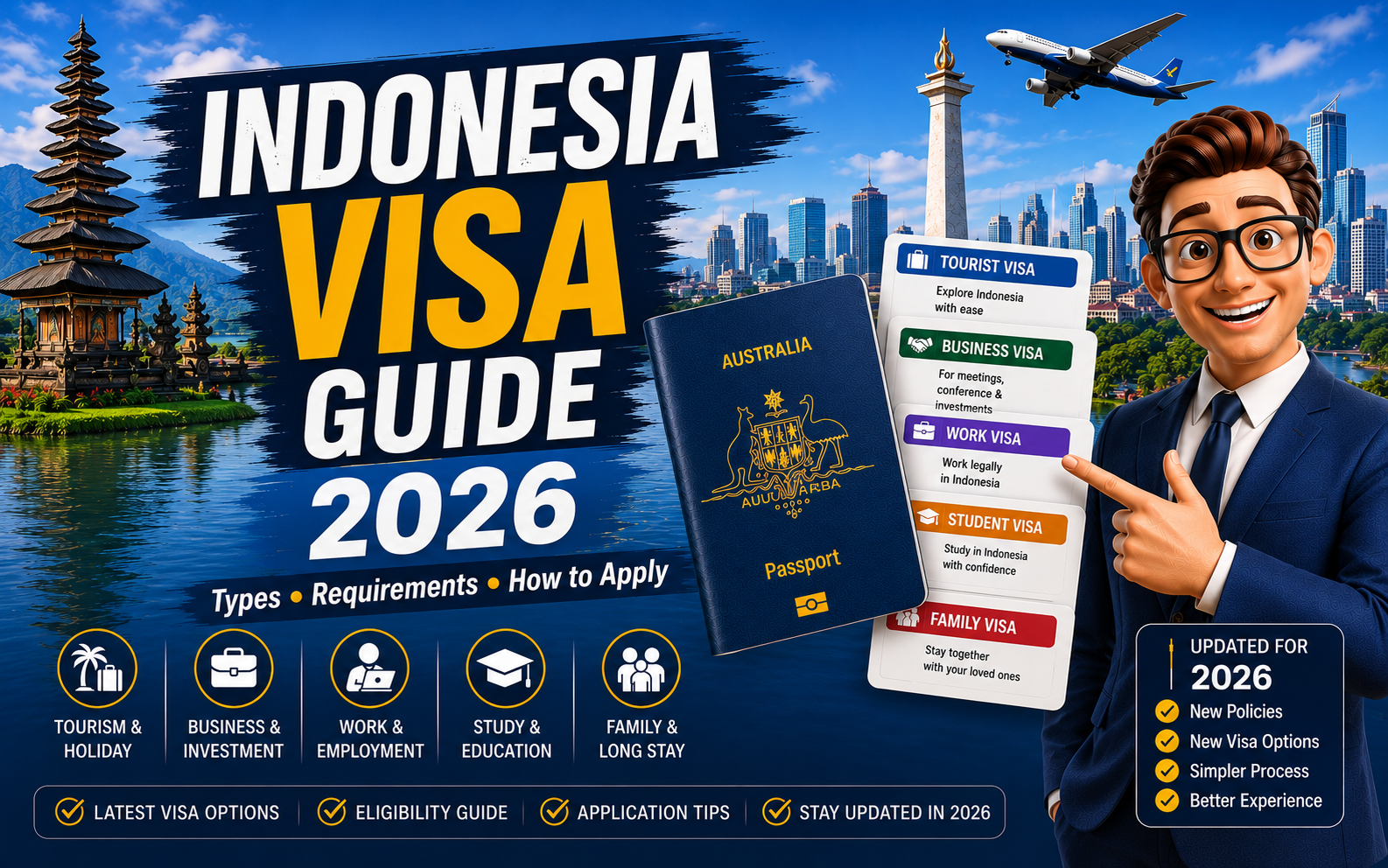
Are you planning an extended stay in Indonesia for tourism, business, investment, retirement, or the digital nomad lifestyle? Choosing the right visa is one of the most important decisions before entering Indonesia.
Indonesia offers various visa options designed for different purposes and lengths of stay. Whether you are a tourist, entrepreneur, investor, remote worker, or frequent visitor, selecting the correct visa helps ensure compliance with immigration regulations while maximizing flexibility during your stay.
This guide explains the main Indonesia visa types, their requirements, who they are suitable for, and how to choose the right visa based on your purpose of stay in 2026.
1. Visa on Arrival (VoA) – Best for Short Term Visits
The Visa on Arrival (VoA) remains one of the most popular options for travelers visiting Indonesia for tourism, family visits, or short-term business activities.
The visa is available to eligible nationals upon arrival at designated Indonesian airports and seaports.
Key Benefits
- Quick and simple application process.
- Suitable for tourism and short-term visits.
- Available for citizens of many countries.
- Can be extended according to current immigration regulations.
Recommended For
- Tourists
- Family visitors
- Short business trips
- First-time visitors to Indonesia
2. Single Entry Visitor Visa (C1) – Best for Longer Tourism Stays
The Single Entry Visitor Visa (C1) is ideal for foreigners planning a longer stay in Indonesia without frequent international travel.
Unlike a Visa on Arrival, the C1 Visa offers greater flexibility for travelers who wish to remain in Indonesia for an extended period while enjoying tourism, visiting family, or exploring various regions of the country.
Key Benefits
- Longer stay period compared to VoA.
- Extension options may be available.
- Suitable for slow travelers and long-term tourists.
- Convenient for exploring multiple destinations throughout Indonesia.
Recommended For
- Long-term tourists
- Family visitors
- Remote travelers
- Retirees exploring Indonesia
3. Multiple Entry Visitor Visa (D1) – Best for Frequent Travelers
The Multiple Entry Visitor Visa (D1) is designed for foreign nationals who frequently travel to Indonesia for business meetings, market research, professional activities, or regular visits.
This visa allows multiple entries during its validity period, reducing the need to apply for a new visa before every trip.
Key Benefits
- Multiple entries into Indonesia.
- Convenient for regular business travel.
- Suitable for regional executives and entrepreneurs.
- Reduces administrative burden for frequent visitors.
Recommended For
- Business professionals
- Entrepreneurs
- Regional managers
- Frequent travelers to Indonesia
4. Pre-Investment Visa (D12) – Best for Future Investors
Indonesia continues to attract international investors through various economic opportunities. The Pre-Investment Visa (D12) is intended for foreign nationals who wish to explore investment opportunities before establishing a company or making significant business commitments.
This visa provides an opportunity to conduct research, attend meetings, evaluate projects, and assess market conditions in Indonesia.
Key Benefits
- Explore investment opportunities legally.
- Attend meetings and conduct business assessments.
- Evaluate potential projects and partnerships.
- Prepare for future company establishment.
Recommended For
- Prospective investors
- Business owners
- Corporate representatives
- Foreign entrepreneurs
5. Remote Worker Visa (E33G) – Best for Digital Nomads
The Remote Worker Visa (E33G) has become one of the most attractive visa options for foreign nationals who work remotely for overseas employers or clients while residing in Indonesia.
Indonesia’s growing digital infrastructure, affordable living costs, and world-famous destinations such as Bali make it an increasingly popular destination for remote workers and digital nomads.
Key Benefits
- Suitable for remote work arrangements.
- Long-term stay opportunities.
- Access to Indonesia’s digital nomad communities.
- Ability to enjoy Indonesia while maintaining overseas employment.
Recommended For
- Digital nomads
- Freelancers
- Remote employees
- Online entrepreneurs
How to Choose the Right Indonesia Visa in 2026
Choosing the right Indonesia visa depends on your purpose of stay, intended duration, and future plans in Indonesia.
If you are visiting Indonesia for tourism or short-term family visits, the Visa on Arrival (VoA) remains the simplest option. For travelers planning to stay several months without leaving the country, the Single Entry Visitor Visa (C1) provides greater flexibility through multiple extensions.
Business professionals who frequently travel in and out of Indonesia may benefit from the Multiple Entry Visitor Visa (D1), while investors exploring opportunities should consider the Pre-Investment Visa (D12).
For remote workers and digital nomads who earn income from overseas companies, the Remote Worker Visa (E33G) offers one of the most suitable legal pathways for long-term stays in Indonesia.
Before applying, always ensure that the visa category matches your intended activities, as engaging in unauthorized work or business activities may lead to immigration penalties.
Indonesia Visa Requirements 2026
Foreign nationals applying for an Indonesian visa in 2026 generally need to prepare several standard documents.
While requirements vary depending on the visa category, applicants are commonly asked to provide:
- A passport valid for at least six months.
- Proof of sufficient financial means.
- A return or onward travel ticket.
- A recent photograph.
- Supporting documents related to the purpose of visit.
- Health or immigration documents if specifically requested.
Additional requirements may apply for investor visas, remote worker visas, family visas, or long-term stay permits. Applicants should always verify the latest immigration regulations before submitting their application.
Before applying for an Indonesian visa, make sure your travel document meets the latest security standards. You may also be interested in learning about the differences between polycarbonate e-passports and regular e-passports and how these security features can support international travel.
Why Indonesia Remains a Top Destination for Foreign Nationals
Indonesia continues to attract millions of international visitors, investors, retirees, and remote workers each year. The country’s growing economy, diverse culture, affordable cost of living, and world-renowned destinations such as Bali make it an attractive choice for long-term stays.
In addition to tourism, Indonesia offers opportunities for business expansion, investment, and remote work, supported by evolving immigration policies designed to accommodate different visitor needs. Choosing the right visa can help foreign nationals enjoy these opportunities while remaining compliant with Indonesian immigration regulations.
Frequently Asked Questions About Indonesia Visas
What is the best visa for staying in Indonesia long term?
The best visa depends on your purpose of stay. Many long-term visitors choose the Single Entry Visitor Visa (C1), while investors often use Investor KITAS and remote workers may qualify for the Remote Worker Visa (E33G).
Travelers planning multi-country trips throughout the Asia-Pacific region may also find it useful to explore the countries and capital cities located within the Australian continent and Oceania.
Can I work in Indonesia with a tourist visa?
No. Tourist visas and visitor visas generally do not permit employment in Indonesia. Foreign nationals must obtain the appropriate work authorization or stay permit before engaging in work activities.
Is the Indonesia Digital Nomad Visa available?
Indonesia currently provides visa options that support remote workers who are employed by companies outside Indonesia. Eligibility requirements and visa categories may change depending on immigration policies.
Which Indonesia visa is best for business travelers?
Business travelers who frequently visit Indonesia often choose the Multiple Entry Visitor Visa (D1) because it allows multiple entries during its validity period.
Can I extend my Indonesian visa?
Many Indonesian visa categories can be extended, including Visa on Arrival and certain visitor visas. Extension rules depend on the visa type and current immigration regulations.
Which Indonesia Visa Is Best for Digital Nomads?
Many remote workers consider the Remote Worker Visa (E33G) one of the most suitable options for staying in Indonesia while working for overseas employers or clients. Applicants should always verify the latest eligibility requirements before applying.
What Is the Difference Between C1 and D1 Indonesia Visa?
The C1 Visa is generally intended for longer stays with a single entry, while the D1 Visa allows multiple entries during its validity period. The most suitable option depends on the traveler’s purpose and frequency of travel to Indonesia.
How Do I Choose the Right Indonesia Visa?
Choosing the right Indonesia visa depends on the purpose of your visit, the length of your stay, and your planned activities in Indonesia.
For example, tourists may choose a Visa on Arrival (VOA) or a Single Entry Visitor Visa (C1), business travelers often use the Multiple Entry Visitor Visa (D1), remote workers may qualify for the Remote Worker Visa (E33G), while investors typically consider the D12 Pre-Investment Visa or Investor KITAS.
If you are unsure which visa best suits your situation, consulting with an experienced visa specialist can help you avoid applying for the wrong visa category.
Conclusion
Indonesia offers a wide range of visa options tailored to different travel objectives, from tourism and family visits to business activities, investment exploration, and remote work.
Understanding the differences between VoA, C1, D1, D12, and E33G visa categories helps foreign nationals select the most suitable pathway for their stay while remaining compliant with Indonesian immigration regulations.
Before applying, it is always recommended to review the latest immigration requirements and choose a visa category that aligns with your intended activities in Indonesia.
For Indonesian citizens interested in international work and travel opportunities, you can also learn about Australia’s Work and Holiday Visa (Subclass 462) and understand the key differences between Subclass 417 and Subclass 462 programs.
Need help selecting the right Indonesian visa?
Azra Solutions provides professional assistance for visa applications, immigration consultation, business permits, and long-term stay solutions in Indonesia.