
A business partnership can become difficult when partners disagree over company decisions, finances, profit distribution, ownership or contractual obligations. In Indonesia, resolving the conflict may require review of company law, the parties’ agreements and corporate records.
An Indonesian business partner dispute may involve founders, shareholders, directors or commercial partners. The appropriate response depends on the relationship between the parties, the company’s legal structure, the available evidence and any dispute resolution clause in the relevant agreement. Foreign investors may face additional challenges when a partner controls company documents, the business operates through a PT PMA, or decision-making authority is disputed.
1. What Is an Indonesian Business Partner Dispute?
An Indonesian business partner dispute occurs when parties involved in a business relationship disagree about their rights, responsibilities, financial interests or control of the business.
The dispute may arise between shareholders of an Indonesian limited liability company (Perseroan Terbatas or PT), participants in a joint venture, company founders, directors or parties to a commercial cooperation agreement.
Not every disagreement is a legal dispute. Differences in business strategy, communication or expectations may be resolved through discussion. However, a conflict may become a legal matter when one party allegedly breaches a contractual obligation, interferes with another party’s rights, misuses company assets or makes a decision that may violate applicable law or corporate documents.
Business Partner Disputes Versus Shareholder Disputes
Shareholder disputes in Indonesia may involve voting rights, share transfers and access to information.
A shareholder dispute concerns rights or obligations associated with shares in a company. Examples include disagreements over voting rights, share transfers, dividends, corporate decisions or access to information.
A broader business partner dispute may concern contractual cooperation, profit-sharing arrangements, management responsibilities or commercial obligations, even when the parties are not all shareholders of the same company.
The distinction matters because the applicable documents, legal remedies and parties to a potential claim may differ.
When a dispute arises with an Indonesian business partner, identify the parties, agreements and legal relationship before choosing a remedy.
Why Foreign Investors May Face Additional Complications
Business partner disputes in Indonesia may also involve informal agreements or unclear decision-making authority.
Foreign investors may need to understand Indonesian corporate procedures, communicate across languages, verify company records and distinguish personal arrangements from the company’s legal obligations. An informal understanding with a local business partner may not provide the protection an investor expects. The actual legal position depends on the executed agreements, corporate records, applicable regulations and facts of the transaction.
2. What Are the Most Common Business Partner Disputes in Indonesia?
Business disputes can develop in several ways. Identifying the underlying issue helps determine which documents should be reviewed and what options may be appropriate.

| Dispute type | Possible warning signs | Documents to review |
| Breach of agreement | A partner fails to perform agreed obligations | Signed contracts, amendments and notices |
| Profit-sharing dispute | Disagreement over distributions or financial calculations | Financial statements, accounting records and profit-sharing agreements |
| Share ownership dispute | Conflicting claims about ownership or transfers | Shareholder records, transfer documents and company deeds |
| Management control | A partner makes contested decisions or restricts access to records | Articles of association, meeting minutes and resolutions |
| Company funds dispute | Unexplained transactions or disputed expenses | Bank statements, invoices, accounting records and approvals |
| Business deadlock | Partners cannot agree on important decisions | Voting provisions, reserved matters and deadlock clauses |
Breach of Business Agreements
A partner may fail to provide agreed funding, deliver services, meet milestones or comply with restrictions in a contract. Before alleging a breach, identify the precise contractual obligation, applicable conditions and any notice or cure period.
Profit-Sharing and Financial Disputes
Conflicts may arise when partners disagree about revenue, expenses, distributions, management fees or reinvestment. Financial records should be examined before assuming that an unpaid distribution proves misconduct.
A difference between expected and actual profit does not automatically establish wrongdoing. The parties may need to review accounting methods, authorized expenses, the terms governing distributions and any agreed reinvestment policy.
Ownership and Management Disputes
Disagreements over shares, director appointments, voting rights or company decisions may require a review of both the company’s articles of association and any separate shareholder agreement.
A partner’s financial contribution does not necessarily establish the precise shareholding or management rights they claim. The executed documents and corporate records must be checked.
Business Deadlock
A deadlock occurs when the parties cannot reach a decision required to operate the business. The company may be unable to approve a budget, appoint management, secure financing or proceed with a major transaction. The solution depends on the governance documents, the decision at issue and any contractual deadlock mechanism. A clause may provide escalation, mediation, a buyout or another procedure, subject to the documents and applicable law.
3. What Should You Do First When a Dispute Arises?
Preserve Evidence and Company Records
Keep copies of signed agreements, amendments, emails, messages, meeting minutes, invoices, payment records and other relevant documents. Preserve original files and their available metadata where possible.
Avoid editing, deleting or selectively presenting records. If information is stored on a company system, obtain advice before accessing it in a way that could breach company policies, confidentiality obligations or applicable law.
Create a chronology showing when the disagreement began, what each party said or did, which obligations were due and what remains unresolved. A clear timeline can help identify the central issue and prevent important details from being overlooked.
Review Contracts and Corporate Documents
Identify the legal entities and individuals involved, the obligations in dispute, relevant deadlines and any notice or dispute resolution requirements.
Check whether the agreement specifies negotiation, mediation, arbitration or court proceedings. Do not assume that every dispute can be brought directly before a particular court.
Also establish whether the disputed obligation belongs to the company, an individual partner or another entity. The distinction can affect who may bring a claim and which documents are relevant.
Identify Urgent Financial and Operational Risks
Consider whether there is a credible risk of asset dissipation, destruction of records, unauthorized transactions or interruption of essential business operations.
If urgent protective action may be necessary, obtain advice from an appropriately qualified Indonesian lawyer. Do not attempt to take control of company property, accounts or systems without establishing your authority.
Avoid Actions That Could Weaken Your Position
Avoid threats, public accusations, unauthorized withdrawals, destruction of records or unilateral changes to company access without a proper legal basis.
A factual written record of the disagreement, combined with a measured request for relevant information, may help clarify the issue and preserve opportunities for settlement.
4. What Documents Should You Review Before Taking Legal Action?
Shareholder Agreements and Articles of Association
Review any shareholder agreement, joint venture agreement, cooperation contract and the company’s articles of association. Compare their provisions on voting, management authority, transfers, funding, distributions, default and dispute resolution.
Where documents appear inconsistent, an Indonesian lawyer should determine their legal effect rather than assuming that one automatically overrides the other.
Company Resolutions and Share Records
Review relevant company deeds, records of share ownership, shareholder meeting minutes, written resolutions and documents concerning director or commissioner appointments.
The applicable formalities and the company’s current registered information may be important when determining whether a disputed decision or transfer was properly made.
Financial Statements and Bank Records
Relevant evidence may include financial statements, ledgers, invoices, tax documents, payment instructions and transaction approvals. The scope of lawful access depends on the individual’s role, shareholder rights, company rules and applicable law.
Where transactions are disputed, record the date, amount, recipient, stated purpose and available supporting documents. This creates a factual basis for further review without assuming that an unusual transaction was necessarily unlawful.
Contracts and Correspondence
Build a chronology of important events. Record when obligations became due, what each party communicated, what was performed and what remains unresolved.
A practical document register can help organize the review.
| Document | Purpose | Follow-up |
| Signed agreement | Establish obligations | Check amendments and signatures |
| Corporate records | Confirm ownership and authority | Verify current records |
| Financial records | Understand disputed transactions | Identify unexplained entries |
| Correspondence | Establish notice and chronology | Preserve original messages |
| Meeting minutes | Review decisions and approvals | Check applicable procedures |

Review Your Business Dispute Documents
5. What Rights May Foreign Shareholders Have in an Indonesian PT PMA?
A PT PMA is an Indonesian limited liability company established under the applicable foreign investment framework. Its shareholders’ rights are not determined solely by nationality or by an informal understanding between business partners.
The legal position depends on Indonesian company law, the company’s articles of association, valid corporate decisions, relevant agreements and any sector-specific requirements.

Shareholder Rights Under Indonesian Company Law
Law No. 40 of 2007 on Limited Liability Companies, as amended, provides the principal statutory framework for Indonesian PT companies. Relevant provisions address shares, general meetings of shareholders, directors, commissioners and certain shareholder remedies.
The precise rights available in a particular dispute must be assessed against the current legal text and the company’s circumstances.
Official source: Law No. 40 of 2007 on Limited Liability Companies — BPK Legal Documentation and Information Network
Voting and General Meetings
Voting rights and company decision procedures depend on applicable law, share class, the articles of association and the matter being decided.
If a shareholder believes a meeting or resolution was improperly conducted, relevant questions include whether notice was given, quorum requirements were met, voting rules were followed and the correct procedure was used.
Access to Company Information
A shareholder may have certain rights to obtain company information or inspect records under applicable law. These rights should not be confused with unrestricted access to every account, document or system.
The correct approach is to identify the person’s legal capacity, the specific information requested and the relevant statutory or corporate basis for access.
Challenging Decisions and Protecting Shareholder Interests
Depending on the circumstances, a shareholder may need advice on challenging a decision, seeking a remedy for a breach, requesting an appropriate corporate process or pursuing another legally available course.
A remedy should never be assumed to apply automatically. The standing of the claimant, the nature of the alleged violation, applicable procedural requirements and available evidence all matter. For further information about corporate structure and related legal issues, see PT PMA Lawyer in Bali for Foreign Investors and Businesses.
6. What If Your Indonesian Business Partner Controls the Company?
A dispute becomes especially difficult when one partner controls the company’s day-to-day operations, accounting systems, bank communications or corporate documents.
Control alone does not necessarily establish wrongdoing. The important questions are whether the person is acting within their authority, whether required approvals were obtained and whether another party’s legal rights have been affected.
Control of Bank Accounts and Corporate Documents
If you suspect that transactions are unauthorized, preserve the available records and establish who is legally authorized to operate the accounts.
Contacting the bank, requesting a review or seeking urgent legal measures may be appropriate depending on the facts. Do not attempt to bypass authorized controls or transfer company funds without a valid basis.
Director and Commissioner Disputes
Directors and commissioners have different roles under Indonesian company law. A shareholder’s position does not automatically give them the same management authority as a director.
Review the company’s articles of association, appointment records, relevant resolutions and the legal responsibilities of the individuals involved.
Unauthorized Transactions
Examine the transaction date, amount, recipient, stated business purpose, approval process and supporting documents. A questionable transaction should be investigated based on evidence rather than assumptions about intent.
Responding to Exclusion From Management
If access to records or participation in decisions has been restricted, identify the legal capacity in which you are acting and the rights that may apply.
A lawyer can help determine whether a formal information request, corporate procedure, negotiated arrangement or other legal remedy is appropriate. Avoid assuming that being a shareholder automatically authorizes you to perform management functions or operate company accounts.
7. What Happens If a Business Partner Breaches an Agreement?
A breach of contract may create grounds for a claim or another remedy, but the result depends on the contract, applicable law, the facts and the relief available.
Identify the Contractual Obligation
Locate the relevant clause and establish what each party was required to do, by when and subject to what conditions. Review amendments, waivers, performance records and any clause allowing additional time to comply.
An alleged failure should be assessed against the actual wording of the agreement. A delayed payment, for example, may be affected by a contractual grace period, an amendment or another relevant condition.
Establish Evidence of Breach and Loss
Compare the contractual requirement with the actual conduct. If financial loss is claimed, identify how the loss is calculated and how it relates to the alleged breach.
Not every disagreement creates a right to compensation. Causation, proof, contractual terms and applicable legal requirements may affect the claim.
Review Notices and Contractual Remedies
Some agreements require written notice, a cure period or negotiation before formal proceedings. Others may provide for termination, a buyout mechanism or a specified dispute resolution procedure.
Follow the applicable terms where legally required and obtain advice before sending a termination notice, withholding payment or taking another action that could itself trigger a dispute. A careful review should also identify the parties to the agreement, any limitation period that may apply and whether urgent action is required to preserve a claim or protect the company.
8. Can You Resolve an Indonesian Business Partner Dispute Without Going to Court?
Yes. Depending on the facts and the parties’ agreement, a dispute may be resolved through direct negotiation, mediation, a commercial settlement, a share buyout or restructuring.
An out-of-court solution may preserve business value and reduce disruption. However, settlement is not always possible or appropriate, especially where urgent protection, serious misconduct allegations or an entrenched deadlock is involved.
Direct Negotiation
Negotiation allows the parties to discuss the problem and potential solutions directly or through their representatives.
A useful negotiation plan identifies the disputed issues, the evidence supporting each position, acceptable outcomes and any non-negotiable legal or operational requirements.
Mediation
Mediation involves a neutral third party who assists the parties in exploring a settlement. The mediator does not ordinarily impose a decision on the parties.
Any settlement should be documented carefully, including payment terms, deadlines, releases, confidentiality where appropriate, corporate approvals and the consequences of non-compliance.
Share Buyout or Restructuring
In some cases, one partner may buy the other’s shares, the parties may reorganize responsibilities, or the company may restructure the business relationship.
Such arrangements require careful review of valuation, transfer restrictions, approvals, payment security, tax consequences and regulatory requirements. A proposed exit should not be treated as complete until the relevant legal steps have been properly carried out.
Settlement Agreements
A written settlement should clearly identify the parties, the issues resolved, the obligations each party must perform, deadlines, conditions and the consequences if the settlement is breached.
If the dispute involves a company, the parties should also check whether corporate approvals or additional documents are required to implement the settlement.

9. When Should You Consider Arbitration or Litigation in Indonesia?
Formal proceedings may be worth considering when negotiation fails, important rights need to be determined or a party requires a legally enforceable remedy.
The choice between arbitration and court proceedings depends on the dispute, the applicable law, the agreement and the relief sought.
Review Jurisdiction and Arbitration Clauses
Check whether the agreement contains a valid arbitration clause, names an arbitral institution or specifies a seat, rules or language. A clause may significantly affect the appropriate forum.
Indonesia’s Law No. 30 of 1999 governs arbitration and alternative dispute resolution. The law addresses disputes covered by arbitration agreements and the relationship between arbitration and court proceedings. The current legal position should be reviewed alongside relevant judicial decisions and procedural regulations.
Official source: Law No. 30 of 1999 on Arbitration and Alternative Dispute Resolution — BPK
Commercial Litigation
Court proceedings may be appropriate where the dispute falls within the court’s jurisdiction and litigation is legally available. The proper court, procedure, parties and remedies must be determined from the actual claim and applicable law.
Arbitration Procedures
Arbitration is a dispute resolution process in which an arbitrator or tribunal determines a dispute within the scope of the parties’ arbitration agreement and applicable rules.
It is not automatically faster, cheaper or better than litigation; costs, procedure, evidence, confidentiality, enforceability and the dispute itself should be evaluated.
Enforcement Considerations
A decision or settlement is useful only if the parties can implement it or, where necessary, obtain enforcement through the applicable legal process.
For arbitration, relevant issues may include the award, statutory requirements, court involvement and the rules governing recognition or enforcement. Indonesia also has procedural regulations concerning the appointment of arbitrators by courts, challenges to arbitrators and applications relating to the enforcement or annulment of arbitral awards.
See Supreme Court Regulation No. 3 of 2023 for the relevant procedural framework.
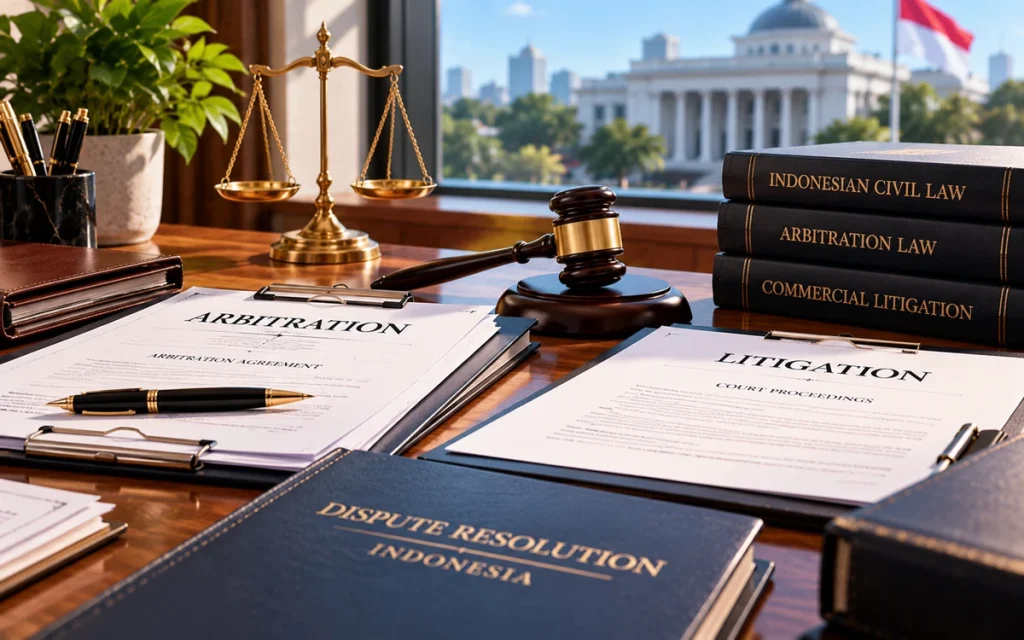
Understand Your Legal Resolution Options
Before deciding whether to negotiate, mediate, arbitrate or litigate, review the agreement, evidence, potential remedies and business consequences with an appropriately qualified Indonesian legal professional.
10. Can a Business Partner Dispute Involve Fraud or Criminal Allegations?
A business dispute may raise concerns about suspected fraud, misuse of funds, falsified records or other potentially unlawful conduct. However, a commercial disagreement or breach of contract does not automatically establish a criminal offence.
Distinguishing Civil Disputes From Suspected Criminal Conduct
A civil claim may concern contractual performance, payment, damages or corporate rights. A criminal allegation involves different legal elements and requires an assessment under the applicable criminal law.
The same facts may raise more than one legal issue, but each must be assessed independently. Failure to repay an amount or disagreement over a business decision is not, by itself, proof of fraud.
Why Evidence Matters
Preserve relevant contracts, payment records, communications, approvals and accounting documents. Record what happened, when it occurred, who was involved and what evidence supports the concern.
Avoid making public accusations or threatening criminal proceedings as a negotiating tactic. Unsupported allegations can create additional legal and commercial risks.
Obtaining Appropriate Advice
If there is credible evidence of suspected criminal conduct, consult an appropriately qualified Indonesian lawyer about the appropriate reporting or legal process. The correct approach depends on the alleged conduct, evidence, applicable law and potential consequences.
11. What Are the Biggest Legal Risks for Foreign Investors?
Foreign investors may encounter avoidable risks when the company’s legal documents do not match the parties’ actual arrangements or when governance controls are weak.
A business dispute in Indonesia involving a foreign investor may require review of corporate, contractual and financial records.
Unclear Ownership Arrangements
Informal promises about shares, voting rights or future ownership may not be sufficient to establish the legal position. Review the company’s formal records and executed documents before relying on an ownership claim.
Weak Shareholder Agreements
A poorly drafted agreement may leave uncertainty about funding obligations, reserved decisions, information rights, transfers, default, deadlock and exit arrangements.
The agreement should be reviewed alongside the articles of association and applicable law. The documents should work together as far as legally possible and accurately reflect the parties’ intended business relationship.
Undocumented Investments
Keep evidence of capital contributions, shareholder loans, commercial payments and other transfers. Identify the legal basis of each payment and whether it was intended as equity, debt, an expense or another type of transaction.
The characterization of a payment can affect rights, repayment expectations and potential remedies. Avoid relying only on informal messages where a formal agreement or corporate record is required.
Corporate Governance and Compliance Problems
A dispute may expose weaknesses in accounting, approvals, recordkeeping or regulatory compliance. The company should be assessed on its own facts rather than assuming that the foreign investment structure resolves every issue.
Foreign investors should also avoid nominee arrangements or informal structures intended to circumvent applicable ownership restrictions. Obtain advice on the legality of the proposed arrangement before proceeding.
12. How Long Does It Take and What Does It Cost to Resolve a Business Partner Dispute?
There is no single reliable timeline or standard fee for every Indonesian business partner dispute.
Duration and cost depend on complexity, document volume, number of parties, urgency, resolution method and cooperation.
Factors Affecting Duration
A dispute involving a small number of documents and a willingness to negotiate may be simpler than a conflict involving multiple entities, disputed transactions, expert evidence or complex corporate decisions.
Formal proceedings also involve procedural requirements and scheduling that may affect the timeline. Appeals, enforcement issues or parallel proceedings may add further complexity where legally available and relevant.
Legal and Professional Fees
Costs may include legal advice, document review, negotiation, mediation, arbitration or court proceedings, translation, expert assistance and related professional services.
Request a clear scope of work and fee arrangement from the relevant professional. Ask what is included, what may incur additional charges and how disbursements will be handled.
Business Disruption and Settlement Costs
A realistic strategy should consider the likely costs and benefits of each available option without assuming that settlement is always preferable or that litigation is always necessary.
13. How Can Foreign Investors Prevent Future Business Partner Disputes?
Prepare a Clear Shareholder Agreement
Address capital contributions, voting, reserved matters, distributions, management responsibilities, transfer restrictions, default, deadlock and exit mechanisms.
The terms should reflect the actual business arrangement and be reviewed under Indonesian law.
Establish Corporate Governance and Approval Controls
Document who may approve transactions, sign contracts, operate accounts and make significant business decisions. Maintain accurate meeting minutes and records of required approvals.
Controls should be proportionate to the company’s size and risks while remaining consistent with the legal authority of directors and other corporate organs.
Maintain Transparent Financial Reporting
Agree on appropriate reporting frequency, accounting procedures, budgets and review processes. Keep records of capital contributions, shareholder loans, expenses and distributions.
Transparent reporting can help identify discrepancies before they develop into a larger dispute.
Plan for Deadlock and Exit
Consider how the parties will respond if they cannot agree on a major decision or one partner wishes to leave. A practical mechanism may address escalation, mediation, valuation, transfer procedures and the conditions for a buyout or other restructuring. The mechanism must be legally workable and consistent with the company’s documents and applicable law.
14. How to Decide Your Next Step in a Business Partner Dispute
The best next step depends on the evidence, the urgency of the situation, the legal rights involved and the outcome you are seeking.
Use the following framework as an initial planning tool, not as a substitute for a legal assessment.
| Situation | Possible next step |
| The disagreement is limited and communication remains constructive | Consider structured negotiation |
| The facts are unclear or documents appear inconsistent | Arrange a document and legal review |
| The agreement contains a dispute resolution clause | Obtain advice on the clause and required procedures |
| There is a serious risk to company assets or records | Seek urgent legal advice about lawful protective measures |
| Negotiation has failed and the dispute concerns enforceable rights | Assess arbitration or litigation where legally available |
| A settlement appears possible | Document the terms and verify implementation requirements |
Before Choosing a Resolution Strategy
Prepare a short summary of the dispute, the parties involved, the relevant company structure, the key dates, the documents available and the outcome you want to achieve.
Identify any immediate deadlines or transactions that may affect your position. Avoid assuming that a particular remedy is available until the applicable agreements and law have been reviewed.
Need Legal Guidance on an Indonesian Business Partner Dispute?
If you are facing a business partner conflict, understanding the documents, corporate structure and possible resolution routes is an important starting point.
AzraID can assist with an initial consultation and coordinate with appropriately qualified Indonesian legal professionals where legal advice or representation is required. The available services and next steps depend on the circumstances of your case.
15. FAQs About Indonesian Business Partner Disputes
What Should I Do If My Indonesian Business Partner Breaches Our Agreement?
Review the signed agreement, identify the obligation allegedly breached, preserve relevant evidence and check any notice or cure requirements. Obtain legal advice before terminating the agreement or starting formal proceedings.
Can a Foreign Shareholder Take Legal Action Against an Indonesian Business Partner?
Potentially, depending on the claimant’s legal rights, the nature of the dispute, the relevant agreements and applicable procedural rules. The available remedy should be assessed on the specific facts.
Can a Shareholder Dispute Affect a PT PMA?
Yes. A dispute may affect governance, shareholder decisions, funding, operations or the company’s commercial relationships. The consequences depend on the nature of the conflict and the company’s circumstances.
Is Arbitration Always Better Than Litigation in Indonesia?
No. Arbitration and litigation have different requirements, procedures, costs and implications. The agreement, dispute type, desired remedy and enforceability considerations should be assessed before selecting a forum.
Can I Recover Money From a Business Partner?
Recovery may be possible where there is a valid legal basis and sufficient evidence, but it is not guaranteed. The outcome depends on the nature of the claim, the available remedy, the evidence and relevant enforcement considerations.
What If My Business Partner Refuses to Provide Company Documents?
First establish your legal capacity and the basis for requesting the documents. The appropriate approach may involve a formal request, a corporate process or legal advice on available remedies. Do not access records unlawfully.
Does Every Business Partner Dispute Involve Fraud?
No. Many disputes concern contractual obligations, business decisions or company governance. Criminal allegations require a separate assessment of the facts and applicable law.
How Can I Protect My Investment Before Entering a Business Partnership in Indonesia?
Use properly prepared agreements, verify ownership and corporate records, document funding arrangements, establish approval and reporting controls, and include workable dispute resolution and exit provisions.
16. Need Legal Guidance for an Indonesian Business Partner Dispute?
Business partner disputes can involve overlapping contractual, corporate, financial and commercial issues. The right response begins with understanding the legal relationship, preserving evidence and identifying the available options.
If you are a foreign investor or business owner dealing with a dispute in Indonesia, AzraID can assist with an initial consultation and coordinate with appropriately qualified Indonesian legal professionals where needed.
Contact the team to discuss the nature of the dispute, the documents available and the next steps that may be appropriate for your circumstances.