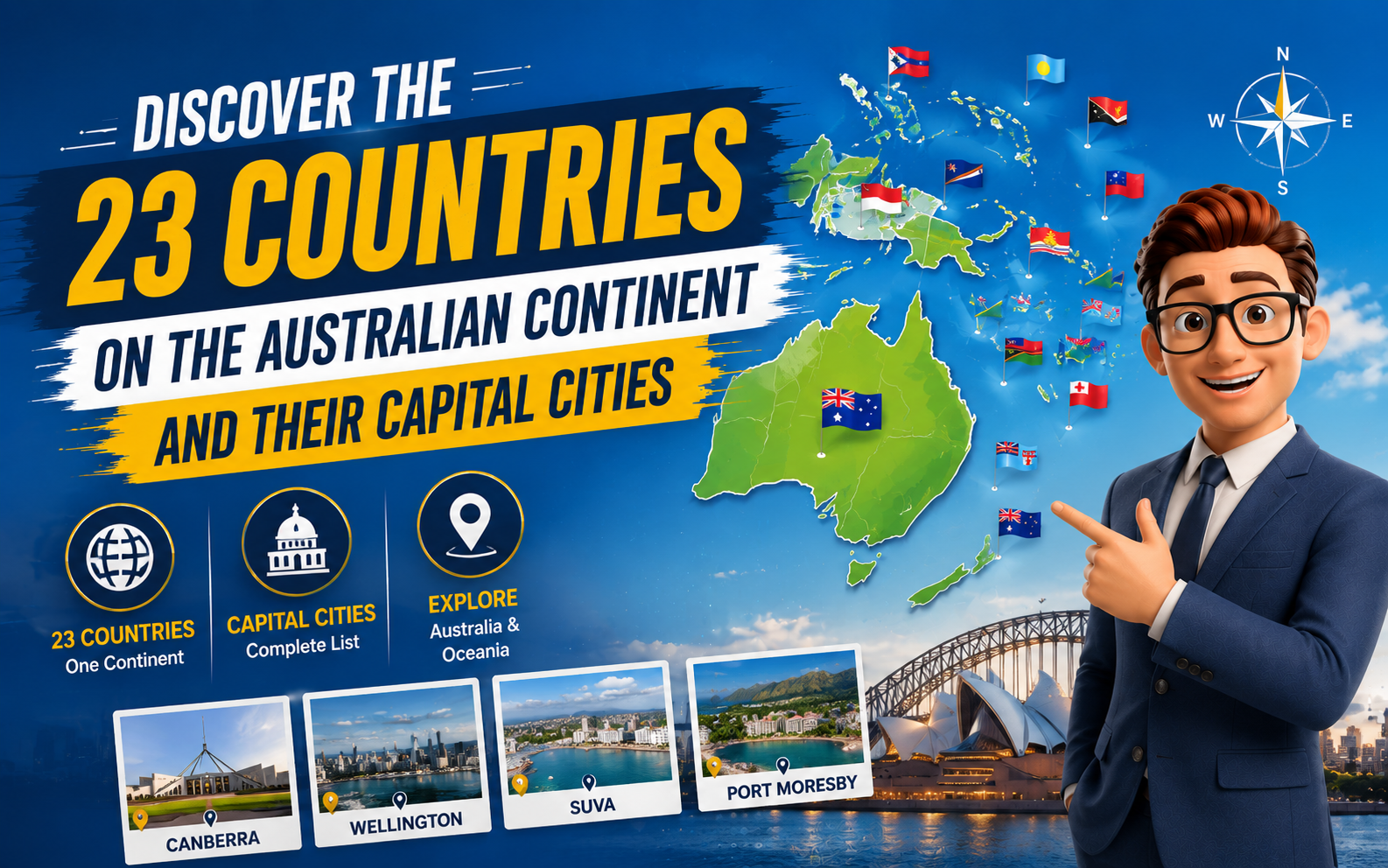
Exploring the Australian continent reveals a fascinating mix of countries and cultures. Each nation offers unique experiences and historical backgrounds. Here’s an educational guide to the 23 countries on the Australian continent and their capital cities, perfect for your next travel adventure.
What Is the Australian Continent?
The Australian continent, often referred to as Oceania, is a diverse region consisting of Australia, New Zealand, Papua New Guinea, and numerous island nations scattered across the Pacific Ocean. While some sources identify only a limited number of sovereign states, broader geographic classifications often include dependent territories and self-governing islands within the region.
The continent is known for its unique ecosystems, rich cultural diversity, and strategic importance in the Pacific. From Australia’s vast deserts and modern cities to the tropical islands of Polynesia, Melanesia, and Micronesia, the Australian continent offers a wide range of landscapes and cultural experiences.
How Many Countries Are in the Australian Continent?
Many people search online for terms such as “How many countries are in Australia?”, “What are the 23 countries in Oceania?”, and “Countries in the Australian continent and their capitals.” The answer varies depending on whether only sovereign nations or both territories and self-governing islands are included. In this guide, we provide a comprehensive list of 23 countries and territories commonly associated with the Australian continent and Oceania region.
The number of countries in the Australian continent depends on the classification system used. Some educational references mention 14 independent countries, while broader geographic classifications include up to 23 countries and territories across Oceania.
This article follows the broader classification and presents 23 countries and territories commonly associated with the Australian continent, along with their capital cities. Understanding these countries helps travelers, students, and geography enthusiasts gain a clearer picture of the Pacific region.
List of Countries on the Australian Continent and Their Capitals
Below is a comprehensive list of countries and territories located within the Australian continent region, together with their respective capital cities.
| Country | Capital City |
|---|---|
| Australia | Canberra |
| New Zealand | Wellington |
| Papua New Guinea | Port Moresby |
| Fiji | Suva |
| Samoa | Apia |
| Tonga | Nukuʻalofa |
| Vanuatu | Port Vila |
| Solomon Islands | Honiara |
| Kiribati | South Tarawa |
| Tuvalu | Funafuti |
| Nauru | Yaren |
| Palau | Ngerulmud |
| Marshall Islands | Majuro |
| Federated States of Micronesia | Palikir |
| Cook Islands | Avarua |
| Niue | Alofi |
| Tokelau | Fakaofo |
| French Polynesia | Papeete |
| New Caledonia | Nouméa |
| Guam | Hagåtña |
| Northern Mariana Islands | Saipan |
| American Samoa | Pago Pago |
| Pitcairn Islands | Adamstown |
The countries and territories of the Australian continent and Oceania region vary significantly in size, population, culture, and economic development. While Australia and New Zealand are the largest and most developed nations, many Pacific island countries play important roles in regional tourism, trade, and environmental conservation.
Australia
Capital City: Canberra
Australia is the largest country on the continent, known for its stunning landscapes, iconic landmarks like the Sydney Opera House, and vibrant cities.
New Zealand
Capital City: Wellington
New Zealand is famous for its breathtaking scenery, including mountains, lakes, and beaches, along with a rich Maori heritage.
Papua New Guinea
Capital City: Port Moresby
Papua New Guinea boasts diverse cultures and languages, with beautiful highlands and coastal areas perfect for exploring.
Fiji
Capital City: Suva
Fiji consists of more than 300 islands, known for their beautiful beaches, clear waters, and friendly locals.
Samoa
Capital City: Apia
Samoa offers lush landscapes, waterfalls, and a strong sense of Polynesian culture and tradition.
Tonga
Capital City: Nuku’alofa
Tonga is a Polynesian kingdom with beautiful beaches, coral reefs, and rich traditions.
Vanuatu
Capital City: Port Vila
Vanuatu is known for its active volcanoes, lush rainforests, and rich cultural traditions.
Solomon Islands
Capital City: Honiara
The Solomon Islands offer stunning diving spots, World War II history, and vibrant local culture.
Kiribati
Capital City: South Tarawa
Kiribati comprises 33 atolls and reef islands, known for their unique culture and remote beauty.
Tuvalu
Capital City: Funafuti
Tuvalu is one of the world’s smallest and least-visited countries, known for its remote islands and unique culture.
Nauru
Administrative Center: Yaren
Nauru does not have an official capital city. However, Yaren serves as the country’s administrative center and hosts most government offices.
Palau
Capital City: Ngerulmud
Palau is famous for its pristine marine environment, offering some of the world’s best diving and snorkeling spots.
Marshall Islands
Capital City: Majuro
The Marshall Islands are known for their atolls, coral reefs, and World War II history.
Federated States of Micronesia
Capital City: Palikir
Micronesia consists of four states, known for their stunning underwater scenery and rich cultural heritage.
Cook Islands
Capital City: Avarua
The Cook Islands are known for their stunning lagoons, friendly locals, and rich Polynesian culture.
Niue
Capital City: Alofi
Niue, known as the “Rock of Polynesia,” offers rugged landscapes, caves, and a rich cultural history.
Tokelau
Administrative Center: Fakaofo
Tokelau consists of three atolls: Fakaofo, Atafu, and Nukunonu. These remote Pacific islands are known for their traditional Polynesian culture and untouched natural beauty.
French Polynesia
Capital City: Papeete
French Polynesia, including the famous Bora Bora, is renowned for its luxury resorts, clear lagoons, and Polynesian culture.
New Caledonia
Capital City: Nouméa
New Caledonia features a blend of French and Melanesian cultures, with stunning coral reefs and beautiful beaches.
Guam
Capital City: Hagåtña
Guam is an island territory known for its historic sites, beautiful beaches, and vibrant Chamorro culture.
Northern Mariana Islands
Capital City: Saipan
The Northern Mariana Islands offer stunning landscapes, World War II history, and a mix of Chamorro and Carolinian cultures.
American Samoa
Capital City: Pago Pago
American Samoa features rugged landscapes, traditional villages, and a vibrant Samoan culture.
Pitcairn Islands
Capital City: Adamstown
Pitcairn Islands is one of the most remote inhabited territories in the world. Located in the southern Pacific Ocean, it is known for its small population, rich maritime history, and stunning natural landscapes.
Why Do Some Sources Mention 14 Countries While Others Mention 23?
The difference comes from the classification system being used. Some educational resources count only sovereign countries in Oceania, resulting in a list of around 14 independent nations. Other sources include territories, dependencies, and self-governing islands throughout the Pacific region, increasing the total to 23 or more.
For this guide, we use a broader classification that includes countries and territories commonly associated with the Australian continent and Oceania. This approach provides a more comprehensive overview of the region and helps readers better understand its geographical diversity.
Many online searches such as “How many countries are in Australia?”, “What are the 14 countries in Oceania?”, and “List of countries in the Australian continent” often produce different answers because they follow different geographical and political classifications. Understanding the distinction between sovereign states and territories helps explain these variations.
Regions of Oceania: Melanesia, Micronesia, and Polynesia
The countries and territories of Oceania are commonly divided into three major geographical and cultural regions: Melanesia, Micronesia, and Polynesia.
Melanesia includes Papua New Guinea, Fiji, Solomon Islands, and Vanuatu. These countries are known for their cultural diversity, tropical landscapes, and rich indigenous traditions.
Micronesia includes Palau, Nauru, Kiribati, Marshall Islands, and the Federated States of Micronesia. The region consists mainly of small islands and coral atolls spread across the western Pacific Ocean.
Polynesia includes Samoa, Tonga, Tuvalu, Cook Islands, Niue, Tokelau, and French Polynesia. These islands share many cultural similarities and are famous for their ocean navigation history, beautiful beaches, and unique traditions.
Understanding these three regions helps explain the cultural and geographical diversity found throughout the Australian continent and Oceania.
Frequently Asked Questions About Countries in the Australian Continent
How many countries are in the Australian continent?
The answer depends on the definition used. Some sources recognize 14 sovereign countries in Oceania, while broader classifications include up to 23 countries and territories associated with the Australian continent.
What is the largest country in the Australian continent?
Australia is the largest country in the Australian continent by both land area and population. It occupies the majority of the continental landmass and serves as a major economic and political center in the region.
Is New Zealand part of the Australian continent?
Yes. New Zealand is generally considered part of the broader Australian continent or Oceania region. Although geographically separated from mainland Australia, it shares historical, economic, and regional ties within the Pacific.
What is the capital city of Australia?
The capital city of Australia is Canberra. Many people mistakenly assume Sydney or Melbourne is the capital because they are larger and more internationally recognized cities.
Why is Oceania sometimes called the Australian continent?
The terms are often used interchangeably in educational materials. Oceania refers to the broader geographic region, while the Australian continent focuses on the continental and island areas associated with Australia and the Pacific.
What continent is Australia located in?
Australia is both a country and a continent. It forms the largest landmass within the Oceania region and is often referred to as the Australian continent.
Which country has the smallest population in Oceania?
Tokelau and Pitcairn Islands have some of the smallest populations in Oceania, with only a few thousand residents combined.
What are the major regions of Oceania?
Oceania is commonly divided into four regions: Australasia, Melanesia, Micronesia, and Polynesia.
Conclusion
The Australian continent is a fascinating region that includes a diverse collection of countries and territories spread across the Pacific Ocean. Whether you are studying world geography, planning international travel, or simply expanding your knowledge, understanding the countries and capital cities of the Australian continent provides valuable insight into one of the world’s most unique regions.
From Australia and New Zealand to the many island nations of Polynesia, Melanesia, and Micronesia, each destination contributes to the rich cultural and geographic diversity that defines the Australian continent today.
Planning a trip to Australia, New Zealand, or other countries in Oceania? Azra Solutions can assist with visa applications, travel documentation, immigration consultations, and other international travel requirements. Contact our team today to ensure a smooth and hassle-free travel experience.
Embark on a journey to explore the diverse nations of the Australian continent. From the bustling cities of Australia to the remote islands of Tuvalu, each destination offers a unique cultural and natural experience. #ExploreAustralia #TravelWithAzra #CulturalJourney