
Foreigners considering property in Bali may need more than a property agent or transaction coordinator. Legal questions can arise before signing a purchase or lease, when reviewing land and property documents, when structuring a transaction, or after a disagreement develops with a seller, landlord, developer, business partner or another party.
A property lawyer in Bali can help a foreign client assess the legal position, review relevant documents and agreements, identify potential risks and advise on appropriate next steps. Legal support can be useful not only before a transaction, but also when a foreigner already has a property-related concern or dispute.
Indonesian property law distinguishes between different land rights and legal structures. Government Regulation No. 18 of 2021 on Management Rights, Land Rights, Apartment Units and Land Registration remains in force and replaced PP No. 103 of 2015 in this regulatory area. It also contains provisions concerning residential ownership by foreigners, subject to the applicable requirements and limitations.
This guide explains when foreigners may need a property lawyer in Bali, what property legal services may involve, what due diligence can cover, how foreign-property structures should be approached, common property problems and disputes, and what to consider when choosing professional legal support in Indonesia.
1. Property Lawyer in Bali: What Can They Help Foreigners With?
What Does a Property Lawyer Do?
A property lawyer provides legal advice and assistance concerning property and land matters. Depending on the matter, this may include reviewing documents, analysing contractual rights and obligations, identifying legal risks, assisting with negotiations, preparing or reviewing agreements, and supporting a client when a dispute arises.
The exact role depends on the professional engagement. A lawyer may also work alongside a notary, land official, tax professional, architect, property consultant or other specialist where a matter requires several types of expertise.
Who May Need a Property Lawyer in Bali?
Foreign buyers, investors, leaseholders, villa operators and other foreign clients may consider professional legal support when a property transaction involves significant value, complicated documentation, an unfamiliar legal structure or potential legal risk.
Legal review can also be relevant after a transaction has already taken place. A client may discover an inconsistency in documents, a disagreement over contractual rights, a problem with a property partner or a question about how the property is legally held or used.
What Property Matters Can a Lawyer Help With?
Property legal work can cover transactions, due diligence, land and title document review, leasehold arrangements, contracts, legal opinions, development-related matters, compliance questions and disputes. The appropriate scope should be defined after the lawyer understands the facts and documents involved.
When Does a Property Matter Become a Legal Issue?
A property matter may require legal advice when the parties’ rights or obligations are unclear, when documents do not appear to match the transaction, when a contract needs legal interpretation, or when a disagreement cannot be resolved through ordinary commercial communication.
The earlier a legal issue is identified, the more options may be available for addressing it. This does not mean every property matter requires litigation or formal legal representation. In many cases, the appropriate response may be document review, legal advice, negotiation or clarification of the contractual position.
2. Do Foreigners Need a Property Lawyer in Bali?
Before Buying or Leasing Property
Not every property transaction requires a lawyer, but legal review can be valuable before a foreigner commits to a significant property purchase or lease. A lawyer can help identify questions about the land or property rights, transaction documents, contractual obligations and the legal structure being proposed.
This is particularly relevant when the transaction involves substantial funds or when the buyer is relying on representations from a seller, developer, intermediary or business partner.
Before Signing a Property Agreement
A property agreement can contain obligations concerning price, payment schedules, possession, use, maintenance, taxes, termination, renewal, default and dispute resolution. A legal review can help a foreign client understand what the agreement actually requires before signing it.
Before Transferring a Significant Amount of Money
A large payment should not be treated as a substitute for legal verification. Before transferring significant funds, a foreign buyer may want to understand who has the legal authority to enter the transaction, what rights are being transferred or granted, and whether the supporting documents are consistent with the proposed arrangement.
When Property Documents Are Unclear
If documents contain inconsistencies, missing information, unclear parties, unclear rights or unexplained contractual arrangements, obtaining legal advice before proceeding can reduce the risk of relying on an incorrect assumption.
When a Property Dispute Begins
A property lawyer may become particularly important when a dispute concerns ownership or control, lease rights, contractual obligations, payments, development, construction, boundaries or another property-related issue. Early advice can help a client understand the legal position and available options before taking further action.
When You Are Unsure About Your Legal Position
Foreign clients may encounter Indonesian legal terminology, land-right structures and contractual concepts that differ from those used in their home country. If you are unsure what rights you have or what a proposed transaction actually means, a qualified Indonesian legal professional can assess the matter based on the applicable documents and law.
3. Property Legal Services in Bali for Foreigners

Property Legal Consultation
A property legal consultation can help a client understand a proposed transaction, an existing property arrangement or a developing dispute. The lawyer may begin by reviewing the client’s objectives, identifying the relevant parties and documents, and determining which legal questions require further investigation.
Property Due Diligence
Property due diligence involves reviewing relevant information and documents before a transaction or other significant property decision. The scope can vary depending on the property, land right, transaction structure and intended use.
A due diligence review may identify issues that should be resolved, clarified or investigated before the client proceeds.
Land and Title Document Review
Land and title documents are central to many property transactions. Legal review may consider the documents presented by the parties, the nature of the relevant land right, the identity and authority of the parties, and whether the documentation appears consistent with the proposed transaction.
Leasehold and Property Agreement Review
Lease arrangements should be reviewed according to their actual terms rather than relying only on informal descriptions such as a ‘long-term lease.’ Important provisions may concern the duration, payment, possession, permitted use, renewal, transfer, termination, default, improvements and what happens when the agreement ends.
Property Transaction Legal Support
Legal support during a transaction can include reviewing transaction documents, identifying legal issues, communicating legal concerns, assisting with negotiations and coordinating with other professionals where appropriate.
Contract Drafting and Review
Property contracts should clearly establish the parties, subject matter, consideration, rights and obligations, timing, default provisions and dispute mechanisms. A lawyer can review an existing agreement or assist with drafting terms that reflect the parties’ intended arrangement.
Property Legal Opinion
A legal opinion may be appropriate when a client needs a professional assessment of a specific legal question. The scope should be defined clearly, because a legal opinion based on incomplete documents or incomplete facts may not answer the client’s actual legal problem.
Property Dispute Support
When a property matter becomes contentious, legal support may include reviewing the contractual and documentary position, advising on communications, assisting with negotiation or mediation, and determining whether formal representation or litigation-related assistance is appropriate.
4. Foreigners and Indonesian Property Rights
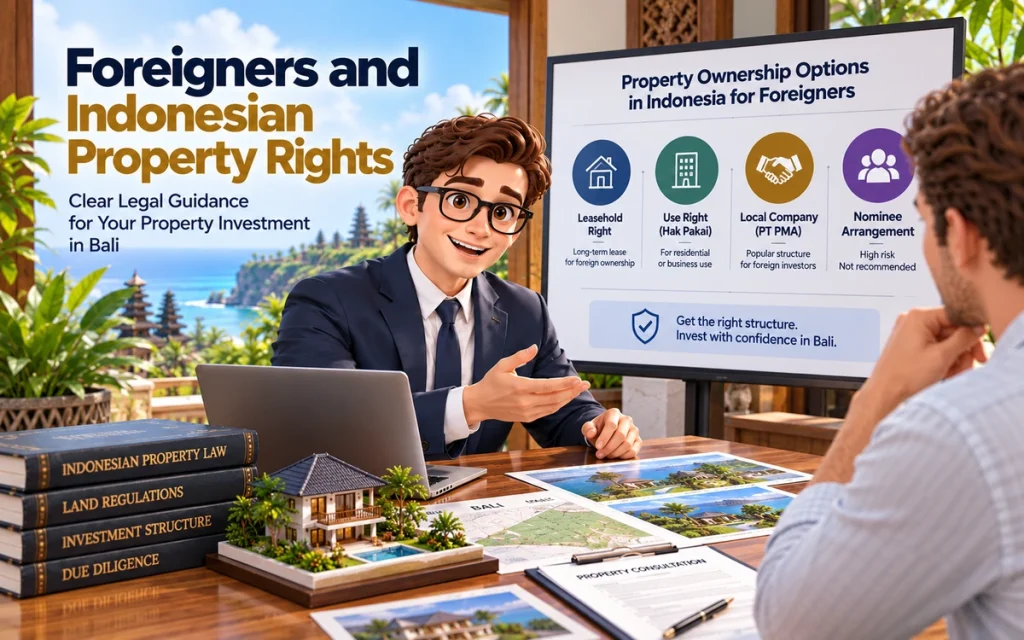
Foreigners should not assume that paying for a property automatically creates the same legal rights as ownership in their home country. Indonesian land law recognises different categories of rights, and eligibility can depend on the type of right, the person or entity holding it, the property and the applicable regulations.
For residential property, PP No. 18 of 2021 provides a framework for ownership of certain homes or residential units by foreigners, with requirements and limitations that can include minimum price, land area, number of plots or units and use. The precise position should be assessed against the current rules and the facts of the property.
This is why a property lawyer should identify the actual legal right and transaction structure rather than relying on informal terms such as ‘ownership,’ ‘freehold,’ or ‘long-term control’ without examining the underlying documents.
5. Property Due Diligence in Bali: What Should Be Checked?

Land and Property Documents
The first step is to identify the documents relevant to the property and transaction. Depending on the matter, this can include land documents, agreements, identification documents, corporate records, permits and other supporting materials. The documents required will vary according to the property and legal structure. A lawyer should assess the actual document set rather than applying a one-size-fits-all checklist. The review should also consider what each document is intended to establish, whether the parties and property descriptions are consistent, and whether additional verification is required.
Land Rights and Legal Structure
The legal structure matters because Indonesian law recognises different forms of land rights and different eligibility rules. PP No. 18 of 2021 includes provisions concerning Hak Pakai and foreigners. For a foreign client, the question is therefore not simply whether a property is ‘owned’ but what legal right, structure and documentation actually govern the client’s position. The lawyer should identify the actual land right involved, who holds it, what rights are being granted or transferred, and whether the proposed structure is legally available to the relevant parties.
Ownership and Control Issues
A lawyer may examine whether the person or entity entering the transaction has the legal authority to do so and whether the contractual arrangement accurately reflects the rights being granted. Control arrangements should be examined carefully rather than assumed to create ownership rights that Indonesian law does not recognise. This can be particularly important where a foreign client expects contractual control to provide an ownership position. The legal documents should be assessed against the rights recognised under Indonesian law.
Leasehold Documentation
Leasehold arrangements should be reviewed for duration, renewal, payment, possession, permitted use, transfer, termination, default and obligations at the end of the term. The legal effect of each provision depends on the agreement and applicable law.
Building and Property Permits
Where a property includes buildings or commercial use, relevant approvals, permits and compliance documents may need to be reviewed. The scope will depend on the property’s location, use, development history and applicable requirements.
Existing Agreements and Encumbrances
Existing leases, security interests, easements, management agreements, development agreements or other obligations can affect a property’s legal and commercial position. These should be identified where relevant to the transaction. The purpose is to identify obligations or third-party interests that could affect the transaction, use, transfer or value of the property.
Corporate or Company Structure
If a property transaction involves an Indonesian company, a lawyer may need to review corporate documents, authority to enter the transaction, shareholder arrangements and agreements connected with the property. The legal analysis should distinguish company rights from an individual’s personal rights.
Contractual Obligations
The lawyer should identify obligations that continue after completion, such as maintenance, payments, taxes, operational responsibilities, renewal conditions, restrictions on use or requirements to obtain additional approvals.
Potential Legal and Regulatory Risks
Due diligence is not a guarantee that every future problem can be prevented. Its purpose is to identify material issues that can be assessed before the client proceeds. If a risk is identified, the client can then consider whether to resolve it, renegotiate the transaction, obtain further advice or not proceed.
Nominee Property Arrangements: Why Legal Review Matters
Some foreigners may encounter arrangements described informally as nominee ownership, where an Indonesian individual is placed in a legal position connected with property while the foreign party provides funds or expects to control or benefit from the asset. Such arrangements require careful legal review because the contractual structure, underlying land rights and intended rights of the parties may not operate in the way the parties assume.
A private agreement should not be assumed to create a property right that Indonesian land law does not recognise. If a foreigner is considering, already using, or trying to unwind such an arrangement, the documents and legal position should be reviewed by an appropriately qualified Indonesian legal professional before further action is taken.
6. Property and Land Issues Foreigners Commonly Face in Bali
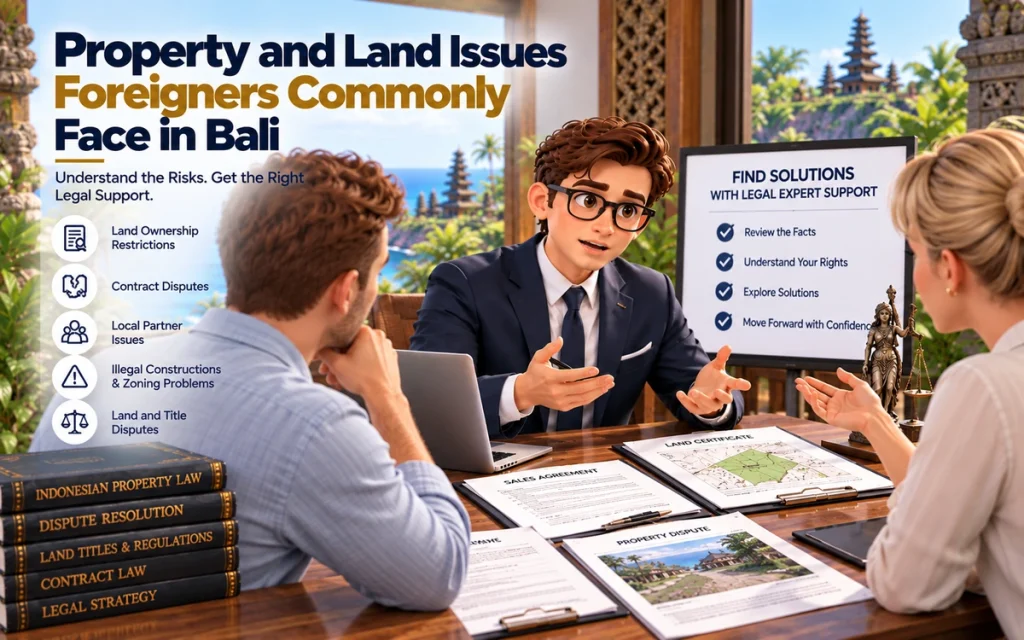
Unclear Property Documentation
Problems can arise when documents are incomplete, inconsistent or difficult to reconcile. A lawyer can help establish what documents exist, what they appear to establish and what further verification may be required. The legal question is not only whether documents exist, but whether they are consistent and sufficient for the transaction or legal position being relied upon.
Leasehold Contract Problems
Lease disputes can involve renewal, payment, possession, permitted use, termination, improvements or the parties’ understanding of what happens when the lease ends. The written agreement is usually an important starting point for assessing the dispute.
Land Boundary or Certificate Issues
Boundary or certificate questions may require specialist land and legal review. The appropriate response depends on the documents, land records, physical circumstances and nature of the disagreement.
Property Ownership and Control Disputes
A dispute may arise when the parties disagree about who has rights to use, control, transfer or benefit from a property. For foreign clients, the underlying legal structure should be examined carefully before conclusions are drawn. A lawyer may begin by reviewing the underlying land right, agreements and evidence before advising on negotiation, mediation or other available options.
Problems With Property Developers or Sellers
Disputes with developers or sellers can concern representations, construction obligations, payments, completion, defects, documents or contractual performance. Legal review can help determine what the contract requires and what remedies may be available. The appropriate legal response may begin with contract and evidence review before any demand, negotiation or formal dispute process is considered.
Disputes With Business Partners
Property may be connected to a business relationship, investment arrangement or partnership. When the parties disagree, the lawyer may need to review both the property documents and the underlying business agreements. Because the property and business arrangements can overlap, the legal review may need to consider both sets of documents and the authority of the parties involved.
Construction and Contractor Disputes
Construction disputes can involve scope of work, payment, delays, defects, variations, completion or responsibility for additional costs. The relevant contracts, evidence and project records should be reviewed before determining the appropriate legal response.
Permit and Compliance Problems
A property may also raise questions about building, business, tourism or other regulatory compliance. The appropriate legal analysis depends on the property’s use, location, development history and the applicable regulatory framework. The first step is to identify which requirement applies to the property’s actual use and circumstances rather than assuming that a general property label determines compliance.
Property Payment or Contract Disputes
Payment disputes may concern deposits, instalments, refunds, completion payments, contractual deductions or other financial obligations. A lawyer can review the agreement and supporting evidence to determine the contractual position and possible next steps.
7. Can a Property Lawyer Help With a Bali Villa?

Buying or Leasing a Villa
A villa transaction can involve land rights, building documentation, contracts, operational arrangements and intended use. A property lawyer can help a foreign client understand which aspects should be legally reviewed before proceeding.
Villa Legal Due Diligence
Villa due diligence can involve reviewing the property documents, agreements, relevant approvals and the relationship between the land, building and intended use. The depth of the review should match the transaction and the risks involved.
Villa Contracts and Agreements
Villa-related agreements may cover purchase, lease, management, operation, revenue sharing, maintenance, construction or other arrangements. Legal review can help identify obligations and provisions that could create future disputes.
Villa Business and Operational Issues
If a villa is operated commercially, the legal review may extend beyond the property itself to contracts, business structure, operational arrangements and applicable compliance matters.
Villa Permit and Compliance Matters
The relevant compliance requirements depend on the property’s use and circumstances. A legal professional can help identify which questions need to be reviewed and which specialist professionals may be required.
Villa Disputes
Villa disputes may involve landlords, tenants, sellers, developers, operators, contractors, partners or other parties. The appropriate legal response depends on the agreements, documents and facts of the dispute.
8. Property Lawyer vs Property Consultant in Bali
What Does a Property Consultant Usually Do?
A property consultant may assist with commercial property matters such as identifying properties, market information, negotiations, transaction coordination or other services within the consultant’s role. The exact services depend on the provider.
What Does a Property Lawyer Do?
A property lawyer focuses on legal issues, including legal interpretation, document and contract review, legal risk assessment, legal advice and, where appropriately qualified and engaged, legal representation.
When Do You Need Legal Advice?
Legal advice becomes particularly relevant when the client needs an assessment of rights, obligations, legal risk or the effect of a contract or property structure. A property consultant may provide useful commercial information, but commercial advice and legal advice are not the same function.
Can Property Consultants and Lawyers Work Together?
Yes. A transaction may benefit from both commercial and legal expertise. The important point is to understand which professional is responsible for each part of the work and whether the client has received formal legal advice where it is needed.
Why Should Foreign Buyers Understand the Difference?
Foreign buyers may assume that a person coordinating a transaction is also responsible for confirming its legal validity. Understanding professional roles helps the client identify when independent legal review is appropriate.
9. Property Lawyer vs Notary in Indonesia

What Does an Indonesian Notary Do?
Notaries in Indonesia have specific legal functions under Indonesian law, including preparing authentic deeds and carrying out other duties within their statutory authority. In property transactions, a notary or Land Deed Official may have an important role depending on the transaction.
What Does a Property Lawyer Do?
A property lawyer provides legal advice and assistance from the client’s legal perspective. This can include analysing risks, reviewing agreements, advising on rights and obligations and assisting with disputes.
When Might You Need Both?
Some transactions may require both legal advice and notarial or land-deed services. The professionals can perform different functions, and the need for each should be assessed according to the transaction. A foreign buyer should not assume that having a transaction documented by a notary means every aspect of the transaction has been independently reviewed from the buyer’s legal perspective.
Why Professional Roles Should Be Clearly Defined
A foreign client should understand who is responsible for legal advice, document preparation, deed execution, registration or other parts of the transaction. Clear roles can reduce confusion about what has and has not been legally reviewed.
10. When Should You Hire a Property Lawyer in Bali?
Before Buying Property
Consider legal review before committing to a purchase, especially where the transaction is high-value, the documents are complex, the property has an unusual legal structure or you are unfamiliar with the relevant Indonesian land and property rules.
Before Entering a Leasehold Arrangement
Legal review can help you understand the lease term, renewal, payment obligations, permitted use, termination, default and other contractual provisions before you commit.
Before Signing a Contract
If you are asked to sign a property agreement that you do not fully understand, obtaining legal advice before signing can help identify obligations and risks.
Before Making a Major Payment
Before making a substantial payment, consider whether the relevant parties, documents, rights and contractual conditions have been sufficiently reviewed.
Before Starting a Property Development
Development can involve land rights, construction contracts, approvals, contractors, financing and operational considerations. Legal support can help identify issues before significant commitments are made.
When You Discover a Documentation Problem
If you discover missing, inconsistent or unexpected documents, avoid assuming that the issue is merely administrative. A legal review can help determine its significance.
When a Dispute Starts
Early legal advice can help you understand the dispute, preserve relevant evidence, communicate appropriately and assess possible resolution options.
When You Receive a Legal Notice
If a seller, landlord, partner, developer, contractor or another party sends a formal legal notice, consider obtaining professional advice before making substantive admissions or signing a response.
11. How Much Does a Property Lawyer in Bali Cost?
What Determines Property Legal Fees?
Property legal fees can depend on the complexity of the matter, the number and type of documents, the amount of legal analysis required, the urgency, negotiations, due diligence scope and whether a dispute or representation is involved.
Consultation Fees
A lawyer may charge for an initial consultation or assessment. Before the consultation, ask what is included and whether document review is part of the fee.
Due Diligence Fees
Due diligence fees can vary according to the property, documents, legal structure and scope of investigation. A more complex property may require more professional time and specialist coordination.
Contract Review Fees
Contract review fees may depend on the length and complexity of the agreement and whether negotiation or drafting is also required.
Legal Opinion Fees
A formal legal opinion may require detailed research and analysis. The lawyer should define the question to be answered and the documents on which the opinion will be based.
Property Dispute and Representation Fees
Dispute-related fees can vary significantly because disputes may involve negotiation, mediation, document review, evidence, correspondence, hearings or other legal work.
Why Property Legal Fees Vary
There is no single fee that applies to every property matter. The appropriate scope and fee depend on the actual circumstances.
How to Confirm the Scope and Fee
Ask for a clear description of the work, what is included, what is excluded, the fee arrangement and any additional costs that may arise. A written engagement can help both sides understand the professional relationship.
12. How to Choose a Property Lawyer in Bali
Choose Experience Relevant to Your Property Matter
Look for experience relevant to the type of issue you have, whether it is a transaction, leasehold, due diligence, development, contract or dispute.
Check Experience With Foreign Clients
Foreign clients may benefit from a professional who understands the questions international clients commonly have about Indonesian property law and who can explain legal concepts clearly.
Understand the Lawyer’s Practice Area
Property matters can overlap with corporate, contract, construction, dispute and regulatory law. Ask whether the professional has experience with the specific legal issues involved.
Confirm Professional Qualifications
If you require formal legal advice or representation, confirm the professional’s relevant qualifications and understand who will be responsible for the legal work.
Ask Who Will Handle the Matter
Understand whether the person you speak with will personally handle the legal work or whether the matter will be referred or assigned to another professional.
Request a Clear Scope of Work
The engagement should make clear what the lawyer will review or do and what is outside the agreed scope.
Understand the Fee Arrangement
Ask how fees are calculated, when payments are due and whether additional work requires separate approval.
Review the Engagement Terms
Before work begins, review the engagement terms so that you understand the professional relationship, scope, communication process and applicable fees.
13. Property Lawyer in Bali for Foreigners: Frequently Asked Questions
Do foreigners need a property lawyer in Bali?
Not every foreigner needs a lawyer for every property matter. However, professional legal review can be valuable when a transaction involves significant funds, complex documents, unfamiliar land rights, a complicated contractual structure or an existing dispute.
What does a property lawyer in Bali do?
A property lawyer can provide legal advice and assistance concerning property transactions, due diligence, contracts, land and property documents, legal risk and disputes, depending on the scope of the engagement.
Can a property lawyer help foreigners with a villa?
Yes. A lawyer may assist with legal review of a villa transaction, lease, contracts, documents, development or dispute. The scope depends on the property’s structure and intended use.
Can a property lawyer review a leasehold agreement?
Yes. A lawyer can review the contractual terms and explain provisions concerning duration, payment, renewal, permitted use, termination, default and other obligations.
Can a property lawyer check property documents in Bali?
A lawyer can review documents relevant to the legal issue or transaction and identify questions requiring further verification. The exact scope depends on the documents and property structure.
Can a lawyer help with land disputes in Bali?
A lawyer may assist with legal assessment, document review, negotiation, mediation or representation where appropriate. The available options depend on the facts and legal position.
Can a property lawyer help with a property developer dispute?
Yes. A lawyer can review the relevant contract, payment records, communications and other evidence and advise on possible legal and dispute-resolution options.
What is the difference between a property lawyer and a notary in Indonesia?
They can have different statutory and professional functions. A lawyer provides legal advice and assistance, while an Indonesian notary performs specific notarial functions under Indonesian law. Certain property transactions may involve both.
How much does a property lawyer in Bali cost?
There is no single standard fee for every property matter. Fees depend on the scope, complexity, documents, urgency and whether the matter involves due diligence, contract work, negotiation or a dispute.
Can a property lawyer help if I already own property in Bali?
Yes. A property lawyer may assist even after a transaction has been completed. Depending on the circumstances, legal support may involve reviewing existing property documents, lease or ownership arrangements, contractual obligations, potential compliance issues or a dispute with another party. The appropriate approach depends on the legal structure and documents involved.
When should I hire a property lawyer in Bali?
Consider obtaining legal advice before a major purchase, lease, contract or payment, or when you discover a documentation issue, receive a legal notice or become involved in a dispute.
14. Get Property Legal Assistance in Bali
If you are buying, leasing, developing, operating or dealing with a property matter in Bali, the appropriate legal support depends on the facts, documents and legal structure involved.
AzraID can help you understand what type of professional support may be appropriate and, where a matter requires formal legal advice, advocacy or representation, coordinate with an appropriately qualified Indonesian legal professional.
If you already have a property agreement, relevant documents or a dispute, providing those materials during an initial consultation can help the professional understand the situation and determine the appropriate next step.
Need legal help with a property in Bali? Contact AzraID to discuss your situation and understand what property legal support may be available.
Legal Disclaimer
This article provides general information about property law and legal services in Indonesia and should not be treated as legal advice. Property regulations, transaction requirements and legal circumstances may vary depending on the property, transaction structure and applicable Indonesian law. Where a matter requires formal legal advice, advocacy or representation, foreigners should consult an appropriately qualified Indonesian legal professional.
Official Indonesian Property Law Sources
For current property and land regulations, readers should refer to official Indonesian government sources, including the Ministry of Agrarian Affairs and Spatial Planning/National Land Agency (ATR/BPN) legal database. Key references include Government Regulation No. 18 of 2021 and relevant ATR/BPN regulations. PP No. 18 of 2021 is listed as in force by JDIH ATR/BPN.
The Basic Agrarian Law, Law No. 5 of 1960, remains in force and provides the foundational framework for Indonesian agrarian law.
Basic Agrarian Law (Law No. 5 of 1960): JDIH BPK
Government Regulation No. 18 of 2021: JDIH ATR/BPN