Indonesia has become one of Southeast Asia’s most attractive destinations for foreign property investors. Whether purchasing a holiday villa in Bali, investing in commercial real estate, or planning a retirement home, understanding Indonesia’s property ownership system is one of the most important steps before making any investment.
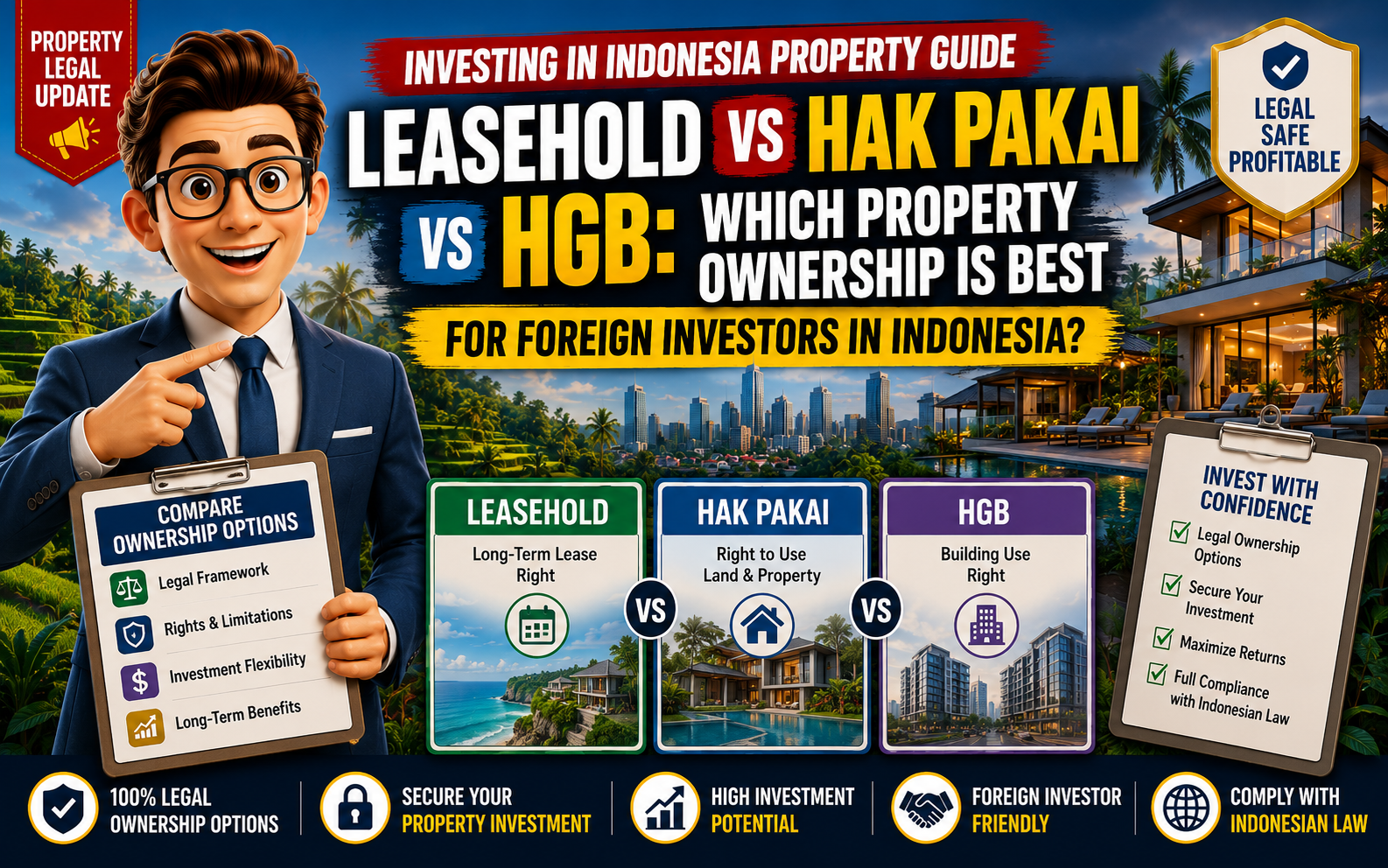
One of the most common questions foreign buyers ask is whether they should choose Leasehold (Hak Sewa), Hak Pakai (Right to Use), or Hak Guna Bangunan (HGB) through a PT PMA.
Each ownership structure offers different legal rights, investment opportunities, costs, and long-term benefits. Choosing the wrong option may limit your investment flexibility or expose you to unnecessary legal risks.
In this guide, we’ll explain the key differences between Leasehold, Hak Pakai, and HGB, compare their advantages and disadvantages, and help you determine which ownership structure best fits your investment goals in Indonesia.
What Is Leasehold (Hak Sewa)?
Leasehold (Hak Sewa) is one of the most common property arrangements used by foreign nationals in Indonesia, particularly in popular destinations such as Bali and Lombok.
Rather than purchasing ownership of the land, the foreign buyer enters into a legal agreement with the Indonesian landowner to lease the property for a specified period. Lease terms commonly range from 25 to 30 years and may include options for extension, depending on the agreement between both parties.
Leasehold is widely used for residential villas, holiday homes, and lifestyle investments because it generally requires lower upfront capital compared to establishing a PT PMA or acquiring other forms of property rights.
Advantages of Leasehold
- Lower initial investment.
- Faster transaction process.
- Suitable for holiday homes and private residences.
- Flexible for medium-term investment strategies.
Things to Consider
- Ownership remains with the landowner.
- Lease extensions depend on future negotiations.
- Property rights expire at the end of the lease period unless renewed.
What Is Hak Pakai (Right to Use)?
Hak Pakai (Right to Use) is a legal land right provided under Indonesian law that allows eligible foreign nationals to occupy and use residential property in Indonesia.
Unlike Leasehold, Hak Pakai is an officially registered land right issued by the Indonesian government and may be recorded under the foreign national’s name, provided the applicable immigration and legal requirements are satisfied.
Hak Pakai is commonly chosen by expatriates, retirees, and foreign residents who intend to live in Indonesia on a long-term basis rather than operate commercial businesses.
Advantages of Hak Pakai
- Government-recognized land right.
- Can provide long-term legal certainty.
- Suitable for personal residential use.
- May be extended in accordance with Indonesian regulations.
Things to Consider
- Intended primarily for residential purposes rather than commercial investment.
- Generally requires a valid Indonesian stay permit.
- Subject to minimum property value requirements.
What Is HGB Through a PT PMA?
Hak Guna Bangunan (HGB) is commonly regarded as the strongest legal property structure available to foreign investors conducting business in Indonesia through a Foreign Investment Company (PT PMA).
Instead of the individual owning the property, the PT PMA holds the HGB title, allowing the company to construct, use, and manage buildings for commercial purposes in accordance with Indonesian regulations.
This ownership structure is frequently used for hotels, resorts, rental villas, restaurants, office buildings, and other commercial developments.
Advantages of HGB
- Suitable for commercial investment.
- Strong legal protection for business assets.
- Supports long-term business operations.
- Easier transfer of business assets through the company.
Things to Consider
- Requires establishing and maintaining a PT PMA.
- Subject to corporate, tax, and investment reporting obligations.
- Higher setup and compliance costs than Leasehold.
Leasehold vs Hak Pakai vs HGB: Side by Side Comparison
| Feature | Leasehold | Hak Pakai | HGB via PT PMA |
|---|---|---|---|
| Ownership Type | Lease Agreement | Government Land Right | Corporate Land Right |
| Typical Duration | 25–30 Years | According to applicable regulations | According to applicable regulations |
| Renewable | Depending on agreement | Yes, subject to regulations | Yes |
| Residential Use | ✅ | ✅ | ✅ |
| Commercial Use | Limited | Limited | ✅ |
| PT PMA Required | No | No | Yes |
| KITAS Required | No (depending on case) | Generally Yes | No (company structure applies) |
| Suitable for Business | Limited | Limited | Excellent |
| Legal Protection | Medium | High | Very High |
Which Property Ownership Structure Should You Choose?
There is no single ownership structure that is suitable for every foreign buyer. The best option depends on your investment objectives, residency status, and long-term plans in Indonesia.
Below are general recommendations based on common investment scenarios.
Best for Retirees
Foreign retirees planning to live in Indonesia for an extended period often prefer Hak Pakai because it offers long-term residential security under a government-recognized ownership structure.
Best for Holiday Homes
Individuals purchasing a holiday villa for personal use often choose Leasehold because of its lower initial investment and straightforward transaction process.
Best for Commercial Investors
Foreign entrepreneurs planning to operate hotels, restaurants, rental villas, or commercial developments generally benefit most from using HGB through a PT PMA.
Best for Long-Term Business Expansion
Investors intending to expand their operations, employ staff, and acquire multiple commercial assets should consider establishing a PT PMA with HGB ownership.
Common Mistakes Foreign Investors Make
Choosing the wrong ownership structure is one of the most common mistakes made by foreign property buyers in Indonesia.
Common mistakes include:
- Using nominee arrangements.
- Selecting Leasehold for long-term commercial projects.
- Purchasing property without legal due diligence.
- Ignoring zoning regulations.
- Establishing the wrong business structure.
- Signing agreements without professional legal review.
Working with qualified legal professionals before completing a property transaction can help minimize these risks.
Frequently Asked Questions (FAQ)
Can foreigners own Freehold property (Hak Milik) in Indonesia?
No. Under Indonesian law, Hak Milik (Freehold Title) is reserved exclusively for Indonesian citizens. Foreign nationals cannot directly own land under Hak Milik but may legally acquire property through alternative ownership structures such as Hak Pakai, Hak Guna Bangunan (HGB) through a PT PMA, or leasehold agreements.
Is Leasehold property legal in Indonesia?
Yes. Leasehold (Hak Sewa) is a legally recognized arrangement under Indonesian law. It allows foreign nationals to lease property from an Indonesian owner for a specified period, subject to the terms agreed upon in the lease contract.
Is Hak Pakai better than Leasehold?
Neither option is universally better, as each serves different purposes.
Hak Pakai is generally more suitable for foreigners who intend to reside in Indonesia long-term and meet the applicable immigration requirements.
Leasehold is often preferred by buyers seeking lower initial costs and greater flexibility without establishing a company.
Can foreigners obtain HGB without establishing a PT PMA?
Generally, Hak Guna Bangunan (HGB) used for foreign commercial investment is held through a PT PMA (Foreign Investment Company).
Investors planning commercial activities should obtain professional advice regarding the most appropriate ownership structure for their business.
Which ownership structure is best for investing in Bali?
The most suitable ownership structure depends on the purpose of the investment.
Many private buyers choose Leasehold or Hak Pakai for residential use, while commercial investors operating hotels, rental villas, or tourism businesses commonly utilize HGB through a PT PMA.
Can Leasehold agreements be extended?
In many cases, yes.
Lease extension depends on the agreement between the property owner and the lessee. Buyers should ensure that extension clauses are clearly addressed within the lease agreement before signing.
Can foreigners sell Leasehold property?
Leasehold rights may be transferred or assigned under certain circumstances, subject to the terms of the lease agreement and applicable Indonesian regulations.
Professional legal advice should always be obtained before transferring leasehold interests.
Does Hak Pakai require a KITAS or KITAP?
In general, foreigners applying for Hak Pakai are expected to hold a valid Indonesian stay permit such as a KITAS or KITAP, subject to the prevailing regulations.
Applicants should verify the latest immigration requirements before purchasing property.
Is HGB suitable for rental villa businesses?
Yes.
HGB held through a PT PMA is commonly used for commercial property investments, including villa rentals, hotels, restaurants, and other hospitality-related businesses.
This ownership structure offers stronger legal certainty for long-term commercial operations.
Which ownership option offers the highest level of legal protection?
For commercial investment purposes, HGB through a PT PMA is generally regarded as one of the strongest legal structures available to foreign investors.
For residential use, Hak Pakai provides government-recognized legal rights for eligible foreign nationals.
Can foreigners inherit property in Indonesia?
Inheritance rights depend on the type of land right involved and the legal status of the beneficiary.
Foreign buyers should obtain professional legal advice to understand how inheritance laws apply to their specific ownership structure.
Should I consult a legal professional before purchasing property?
Yes.
Indonesia’s property laws differ significantly from those in many other countries. Working with qualified legal professionals, licensed notaries, and experienced property consultants helps ensure that the transaction complies with Indonesian regulations while minimizing legal and financial risks.
Conclusion
Leasehold, Hak Pakai, and HGB each serve different purposes under Indonesian property law. The most suitable ownership structure depends on whether you are purchasing a private residence, investing in commercial property, or establishing a long-term business in Indonesia.
Before making any investment decision, foreign buyers should understand the legal implications of each ownership option, conduct proper due diligence, and seek professional advice to ensure full compliance with Indonesian regulations.
Choosing the right ownership structure from the beginning can provide greater legal certainty, protect your investment, and support your long-term objectives in Indonesia.
Need Professional Assistance?
Understanding Indonesia’s property ownership regulations can be challenging, particularly for foreign investors unfamiliar with local legal requirements.
At Azra Solutions, we provide professional assistance for:
- Property ownership consultation.
- PT PMA establishment.
- Investor Visa and Stay Permit applications.
- Property legal due diligence.
- Business licensing.
- Immigration and investment consultation.
Contact Azra Solutions today to receive professional guidance and identify the most suitable property ownership structure for your investment goals in Indonesia.