Introduction
Foreign sports professionals considering an assignment in Indonesia should understand the difference between providing strategic advice, delivering practical coaching, managing a sports organisation, and participating in a sporting event. These activities may look similar from the outside, but they can raise different immigration, employment, and sports-sector compliance questions. Choosing a visa simply because a person works in the sports industry is not a reliable approach. The actual duties, contractual arrangement, host organisation, duration, and purpose of the visit must be considered together.
This guide explains the main considerations for foreign sports consultants who plan to advise clubs, academies, federations, event organisers, schools, or other sports organisations in Indonesia. It also explains why a consultant should not automatically assume that a business visit visa, a sports activity visit visa, or a work-related stay permit is appropriate. The correct route depends on what the individual will actually do in Indonesia and the rules in force when the application is submitted.
Indonesia’s sports legislation also contains requirements for certain foreign sports personnel assigned to sports organisations or institutions. Depending on the role, qualifications, competency evidence, recommendations, government permissions, and knowledge-transfer obligations may be relevant. Immigration approval and sports-sector compliance should therefore be assessed as related but distinct matters.
Azra Solutions can help review the proposed activities, supporting documents, sponsor arrangements, and potential immigration route before travel or engagement begins. The purpose of an initial review is to identify the questions that must be resolved—not to promise that a particular visa will be approved.
Understanding the Role of a Sports Consultant in Indonesia
For readers researching a Sports Consultant Visa Indonesia, the first step is to define the services and determine whether the assignment is advisory, operational, or employment-based.
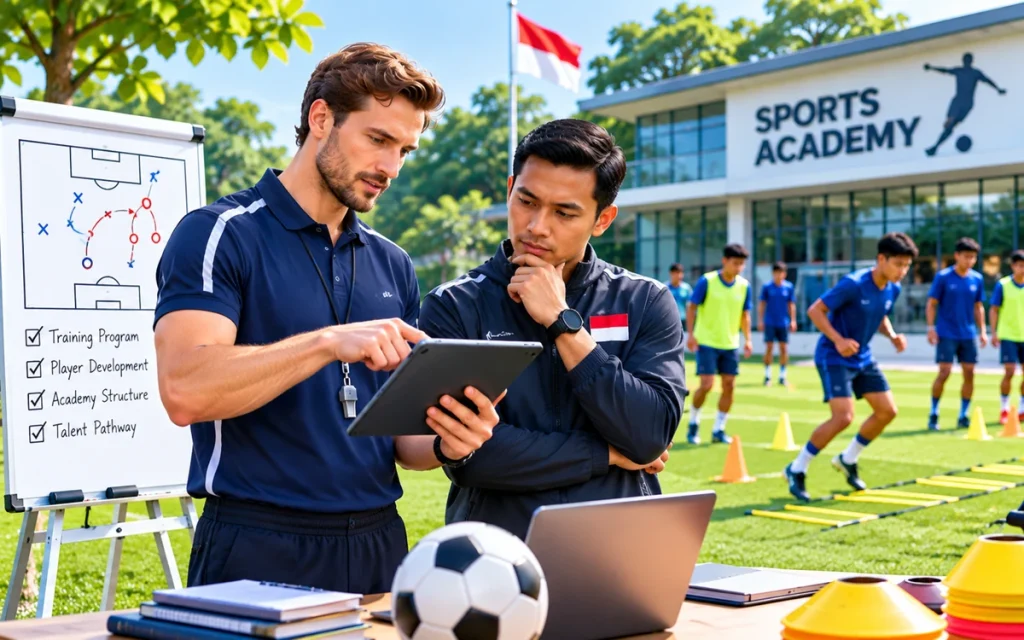
A sports consultant provides specialist advice, analysis, planning, or recommendations to help an organisation improve its sporting activities or operations. The work may involve reviewing a club’s development strategy, assessing athlete pathways, advising on performance systems, evaluating a sports academy, or helping an organisation plan a programme. The title used in a contract or business card is not enough to determine the legal character of the activity. Authorities and counterparties may need to understand the actual services being delivered.
For example, a consultant who reviews an academy’s governance structure and submits a written improvement plan may have a different activity profile from a person who regularly conducts on-field training sessions, supervises athletes, or performs the duties of a team coach. A specialist who advises on sports science systems may also have different responsibilities from a person who personally provides treatment or clinical services. The distinction must be described accurately.

Types of Foreign Sports Consultants
Foreign sports consultants may specialise in different areas of the sports industry. Some focus on long-term strategy and organisational development, while others advise on performance systems, sports science, academy structures, event planning, or programme delivery. These examples help explain the nature of the work, but the professional label alone does not determine the immigration route. The actual duties, host organisation, contractual arrangement, and any sector-specific requirements must still be assessed.
Sports strategy and development consultants
These professionals advise on long-term plans for clubs, academies, federations, community programmes, or sports businesses. Their work may include participation strategies, athlete development pathways, organisational reviews, governance recommendations, and programme evaluation. Deliverables may include written reports, strategic plans, workshops, or recommendations to senior management.
Sports performance and sports science consultants
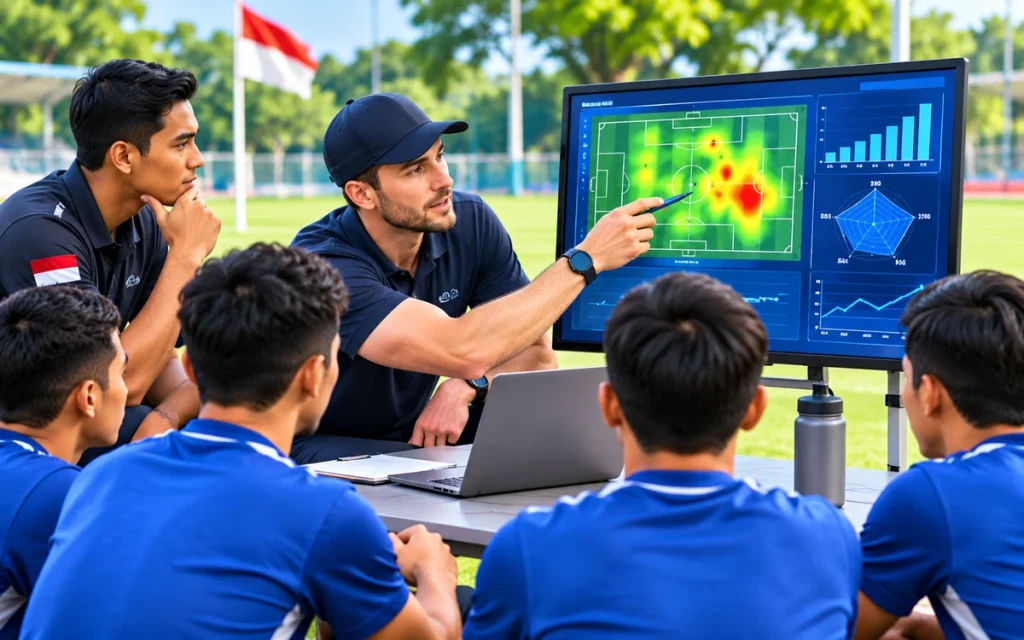
These consultants advise sports organisations on how to evaluate and improve athlete and team performance. Their work may include reviewing performance data, assessing training systems, recommending testing methods, analysing movement or workload information, and helping a club design evidence-based performance programmes. The assignment may be advisory, with findings presented through reports and recommendations. If the professional also provides hands-on coaching, clinical treatment, rehabilitation, or other regulated services, those additional activities must be identified and assessed separately.
Sports management and governance consultants
A Foreign Sports Consultant in Indonesia may advise a club or academy on governance, performance systems, or development strategy, but direct operational duties require a separate review.
A Sports Management Consultant Indonesia engagement may focus on governance, commercial planning, or organisational development, but the actual duties still determine the relevant compliance analysis.
Sports management consultants may advise on organisational structures, club operations, event administration, commercial strategy, sponsorship, risk management, or federation development. Some assignments are advisory; others may place the foreign national inside the organisation as a manager or operational decision-maker. The latter can raise different employment and sports-sector requirements.
Talent development and academy consultants
These specialists may assess an academy’s curriculum, talent identification processes, player pathways, coaching standards, or development framework. If they also coach athletes, conduct regular training, select teams, or supervise technical sessions, the actual role may extend beyond advisory work. A contract should distinguish the consultancy deliverables from any coaching or instruction responsibilities.
Sports event and programme consultants
Sports event and programme consultants may advise organisers on event planning, competition operations, participant pathways, scheduling, logistics, risk management, or the evaluation of sports development programmes. A short assignment to advise on an event is not necessarily the same as taking an operational position, officiating, coaching participants, or delivering a commercial service in Indonesia. The invitation, event role, itinerary, and actual responsibilities should clearly describe what the consultant will do.
Do Foreign Sports Consultants Need a Visa or Work Permit in Indonesia?
A foreign national must hold immigration permission that matches the purpose and activities of their stay in Indonesia. A visa used for tourism or a general business visit should not be treated as blanket permission to perform professional services. At the same time, not every meeting, conference appearance, or short consultation has the same immigration profile as taking an ongoing position with an Indonesian organisation. The activity and applicable visa conditions must be assessed individually.
The key questions include whether the individual is merely attending meetings, negotiating or discussing a potential project, speaking at a qualifying event, participating in a non-commercial sports activity, providing services to an Indonesian organisation, or working under an employment or assignment arrangement. The answers should be supported by the invitation, contract, itinerary, job description, and other relevant evidence.
A consultant should not assume that receiving payment from an overseas company makes every activity permissible under a visitor category. The place where the service is performed, the identity of the host, the nature of the activity, and the applicable visa conditions all matter. Calling a service “consulting” does not automatically make it a permitted business-visit activity.
Before travel, the proposed activity should be mapped against the official visa classification and the current application process on the Directorate General of Immigration visa information portal and the official eVisa portal. The correct classification must be confirmed for the specific case.
Indonesia Visa Options for Sports Consultants
There is no single visa category that should be described as the universal “sports consultant visa” for every foreign professional. Indonesia’s visa classification contains different categories for business visits, sports activities, speaking engagements, and employment-related stays. The appropriate option depends on the activity actually permitted under the relevant index and the applicant’s circumstances.
E23 and employment-related assignments
A Sports Consultant Work Permit Indonesia assessment should therefore begin with the proposed position, sponsor, and contractual structure—not the job title alone.
E23 is a work-related stay permit category appearing in Indonesia’s visa classification. It may be relevant where a foreign professional is engaged to work in Indonesia under an arrangement that meets the applicable immigration and manpower requirements. However, the fact that a person is called a sports consultant does not itself establish eligibility for E23. The proposed position, sponsor, employment documentation, work authorisation requirements, and the relevant subcategory must be reviewed.
C8 sports activity visit visa
The C8 category is identified in the 2025 visa classification for participation in non-commercial sports activities, including activities carried out at the invitation of the Indonesian Government, international-level sports championships, or sports activities organised by international sports organisations. The classification describes permitted sports-related activities and also states restrictions, including limits concerning selling goods or services and entering into an employment relationship with an individual or corporation in Indonesia.
C8 should not be presented as a general visa for a consultant to sell professional services to Indonesian clubs or businesses. A person invited to participate in a qualifying non-commercial sports activity must still check whether the exact role and itinerary fit the category. A consultancy contract, recurring service arrangement, or paid operational position may point to a different analysis.
C8A and C8B: Athletes and Sports Officials
The published classification identifies C8, C8A, and C8B for the single-entry sports activity route. The multiple-entry classification identifies D8 for the corresponding qualifying sports activity. The current online visa list may display category labels differently, so applicants should verify the exact selectable index and conditions in the live eVisa process before filing.
The 2025 classification also identifies C8A for athletes and C8B for officials participating in the qualifying sports activities described for C8. These are role-specific categories, not a general route for an adviser or consultant. A consultant should not select an athlete or officials category merely because the assignment is connected with a tournament; the applicant’s actual function must match the permitted activity and supporting event documents.
D8 Multiple-Entry Sports Activity Visa
D8 is the multiple-entry category for the qualifying non-commercial sports activities described in the 2025 classification. It should not be interpreted as unlimited permission to remain in Indonesia, work for an Indonesian organisation, or provide any service on repeated visits. Each visit must remain within the permitted purpose, stay period, and visa conditions.
A consultant expecting repeated visits for qualifying sports activities may assess D8. However, recurring paid consulting services or a continuing operational role should not be re-labelled as non-commercial sports participation simply to accommodate frequent travel. The underlying activity remains decisive.
C10 speaking engagements and business events
C10 is a visit category associated with speaking at business activities. It may be relevant to a consultant invited to deliver a qualifying talk or presentation at a business event, depending on the precise scope and conditions. It should not be assumed to cover a broader programme of consultancy, practical coaching, or ongoing services to a sports organisation. A speaking engagement and a professional assignment are not interchangeable.
How to compare the possible routes
Start by describing the activity in plain language, without choosing a preferred visa index first. Identify the host, contract or invitation, duration, deliverables, payment arrangement, and whether the individual will directly instruct, manage, or provide services. Then compare those facts with the official classification. If the facts do not clearly fit a visitor category, obtain advice on the appropriate work-related route before travel.
Sports Consultant vs Sports Coach: Understanding the Difference
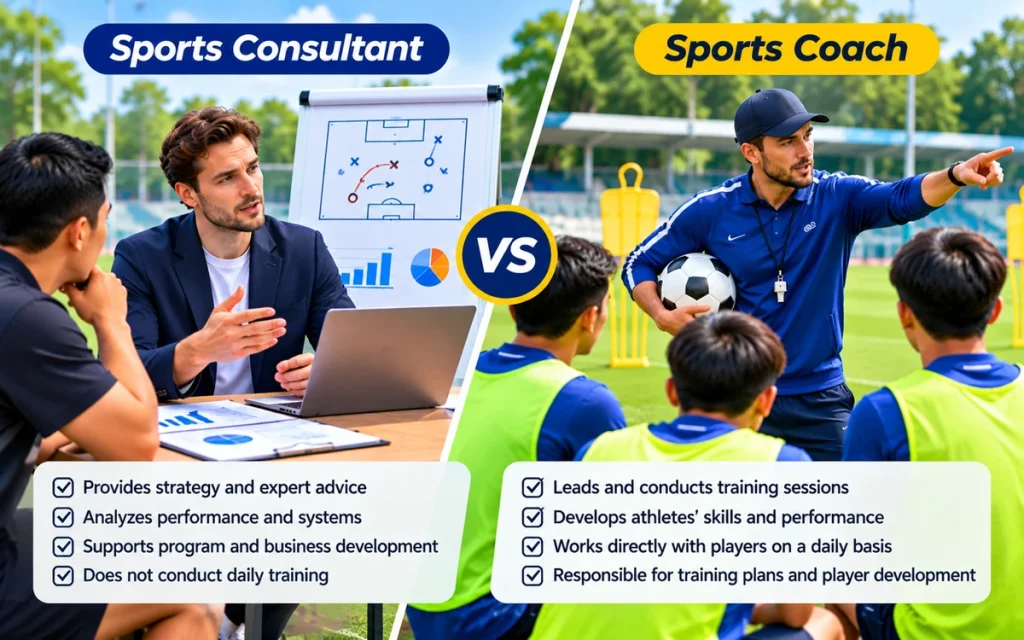
The distinction between a consultant and a coach is important but it is not determined by job title alone. A consultant commonly analyses a system, provides recommendations, and delivers defined advisory outputs. A coach commonly instructs athletes, plans and supervises training, evaluates performance, and provides direct technical guidance. In practice, one person may perform both types of duties.
For example, reviewing an academy’s training methodology and delivering a written report may be consultancy. Leading weekly training sessions, correcting athletes’ technique, selecting a squad, and supervising competition preparation may be coaching or another sports personnel function. A person who does both should have both sets of duties reviewed. A consultancy agreement cannot make practical coaching disappear from the factual picture.
AzraID has a separate guide for foreign sports coaches. Applicants whose principal duties involve regular coaching or instruction should review the Indonesia Sports Coach Work Visa guide as well as the rules applicable to their specific assignment. This article focuses on consultancy and advisory roles.
Requirements for Foreign Sports Consultants
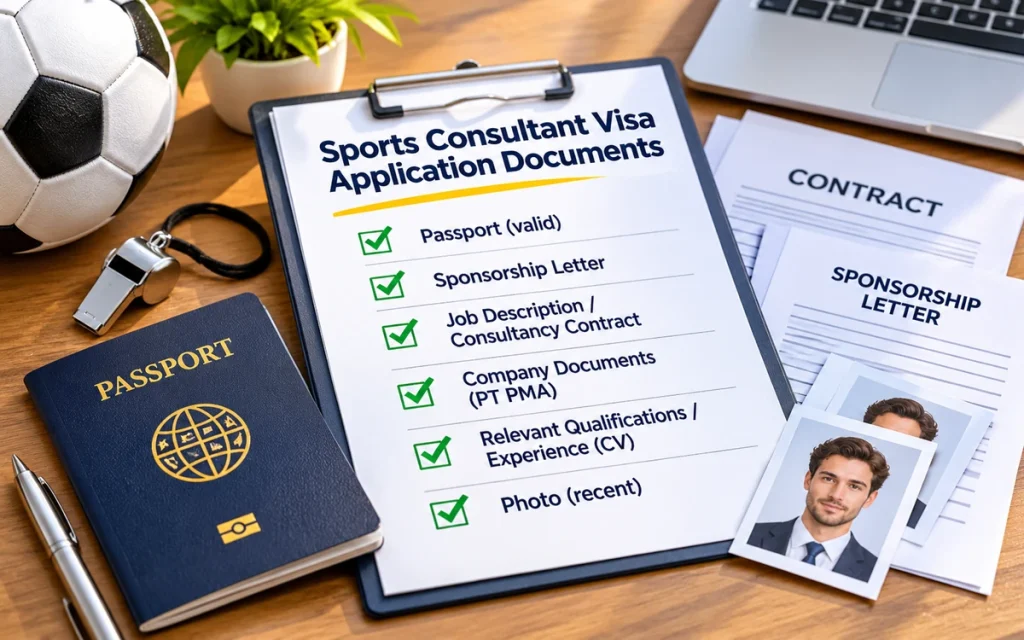
There is no universal document checklist for every sports consultant. Requirements depend on the visa route, host organisation, type of service, applicant’s professional background, and current immigration process. The following items are examples of evidence that may be relevant, not a guaranteed or exhaustive checklist.
Identity and travel documents
Applicants should be prepared to provide a valid passport or other accepted travel document and the personal information required by the current application system. The passport validity and any blank-page requirements should be checked against the live instructions for the selected visa category.
Professional qualifications and experience
A curriculum vitae, professional certificates, academic qualifications, coaching or technical credentials, portfolio, and evidence of relevant experience may help explain the applicant’s expertise. Where the assignment falls within the sports-sector provisions for foreign sports personnel, the applicable qualification and competency requirements must be considered. A certificate should be relevant to the actual role and, where required, issued or recognised by the appropriate body.
Invitation, contract, and scope of work
The invitation or agreement should explain who is engaging the consultant, why the expertise is required, what services will be delivered, where the services will be performed, and the expected duration. It should avoid vague descriptions such as “sports activities” where a more precise description is possible. The documents should be consistent with the visa application and itinerary.
Sponsor and host organisation documents
Depending on the route, the application may require information or documents from an Indonesian sponsor, inviting organisation, event organiser, or employer. The organisation should be able to explain its legal identity and its role in the engagement. The required documents vary by category and should be confirmed before submission.
Itinerary and supporting evidence
A detailed itinerary can help demonstrate whether the planned activities fit the selected category. It may identify meeting dates, event dates, venues, workshop sessions, presentations, and other activities. If the itinerary changes materially, the applicant and sponsor should check whether the change affects the permitted scope of stay.
Sponsorship and Indonesian Sports Organisations
The identity and role of the Indonesian host are important. A sports club, academy, federation, event organiser, school, sports institution, or private company may have different legal and operational responsibilities. The organisation should understand whether it is acting as an inviter, sponsor, employer, service recipient, or event organiser, and the documentation should reflect that role accurately.
For a work-related assignment, the sponsor and employment structure must be assessed under the relevant immigration and manpower rules. For a qualifying sports visit, the invitation and event documents should demonstrate the nature of the sports activity and the applicant’s role. A sponsorship letter alone does not turn an otherwise impermissible activity into a permitted one.
Regulatory Requirements for Foreign Sports Professionals
Immigration permission is only one part of the compliance picture. Law No. 11 of 2022 on Sports contains provisions concerning foreign sports coaches and foreign sports personnel assigned to sports organisations or sports institutions. The precise provision that applies depends on the person’s function and legal classification under the sports legislation.
Foreign sports coaches and sports development roles
Article 68 of Law No. 11 of 2022 addresses foreign sports coaches assigned to sports organisations or sports institutions. It sets out requirements that include qualifications and competencies, a recommendation from the relevant national sports federation, permission from the competent central government institution, compliance with local norms and culture, and transfer of knowledge and skills related to sports development. Whether a consultant is covered depends on the actual role and applicable legal interpretation.
A foreign consultant whose duties effectively involve sports coaching or sports development should not assume that describing the role as consultancy avoids these provisions. The actual responsibilities and the applicable statutory definition should be reviewed. The requirement for knowledge transfer should be considered in the design of the engagement where the provision applies.
Foreign sports personnel
Article 69 identifies a range of sports personnel, including coaches, assistant coaches, teachers or lecturers, referees, judges, managers, promoters, administrators, guides, instructors, health workers, biomechanics experts, psychologists, doping-control personnel, volunteers, technical personnel, and other designations that fit their specialisation and participate in organising sports activities. Article 71 sets out obligations for foreign sports personnel assigned to sports organisations or institutions, including qualifications and competency certification, a recommendation from the relevant sports federation or another relevant institution, government permission, and compliance with local norms and customs. A consultant may fall within these provisions depending on the actual function and legal interpretation.
A sports consultant may or may not fall within these provisions depending on the actual function performed and the relevant legal interpretation. It would be unsafe to state that every consultant is automatically a sports personnel member—or that no consultant can be covered. Where the assignment includes technical, managerial, coaching, or operational duties within a sports organisation, the classification should be checked with the relevant authorities and professional advisers.
Recommendations and knowledge transfer
Where a recommendation from a national sports federation or another relevant institution is required, the applicant and host should identify the appropriate body for the sport and role. They should not assume that a general invitation from a club is a substitute for a statutory recommendation. If knowledge transfer is required, the parties may need to document mentoring, workshops, staff development, methodology transfer, or other relevant activities.
How to Apply for an Indonesia Sports Consultant Visa
The application process should begin with activity assessment, not with selecting a visa label. A careful review reduces the risk of applying under a category that does not match the assignment. The exact online process, required fields, fees, and supporting documents may change, so applicants should use the official eVisa portal and current immigration guidance.
Step 1: Define the actual assignment
Prepare a clear description of the work. State whether the consultant will provide reports, strategy sessions, technical assessments, workshops, direct coaching, management services, or event support. Identify whether the activity is one-off or recurring and whether it takes place at a sports organisation, event venue, office, or academy.
Step 2: Identify the host and contractual structure
Confirm the Indonesian host, the party paying the consultant, the contractual relationship, and the organisation responsible for the project. If the individual will occupy an ongoing position or work under the direction of an Indonesian organisation, obtain advice on the work-related route and relevant manpower requirements.
Step 3: Check sports-sector requirements
Assess whether the role falls within the provisions for foreign sports coaches or sports personnel. If qualifications, competency certification, federation recommendations, government permissions, or knowledge-transfer obligations apply, identify the responsible institution and obtain the necessary documents before the application is filed.
Step 4: Match the activity to the official visa classification
Compare the proposed duties with the current official visa classification. Review the permitted activity, rights, obligations, prohibitions, sponsor requirements, and stay conditions. Do not choose C8 or D8 merely because the project is sports-related, and do not assume that E23 is suitable without checking the work arrangement and applicable subcategory.
Step 5: Prepare consistent supporting documents
Ensure the passport details, invitation, contract, itinerary, job description, professional evidence, and sponsor information are consistent. Inconsistencies can create questions about the true purpose of the visit. Avoid submitting a generic itinerary that does not explain the consultant’s role.
Step 6: Submit through the applicable process and wait for approval
Submit the application through the official process applicable to the selected category. Do not make non-refundable travel or work commitments based solely on an assumption that the application will be approved. The applicant should wait for the required approval and follow the conditions attached to the visa and stay permit.
Step 7: Follow the approved scope during the stay
After approval, the foreign professional should carry out only the activities permitted by the visa and stay permit conditions. The consultant and host organisation should keep the approved documents, invitation, contract, itinerary, and relevant correspondence available in case they need to demonstrate the purpose of the stay. Any material change to the role, host, work location, duration, or activities should be reviewed before it is implemented. Approval for one activity should not be treated as permission to take on additional coaching, employment, or consultancy duties that were not covered by the approved arrangement.
Can a Foreign Sports Consultant Work Independently in Indonesia?
“Work independently” can describe different arrangements: operating a consultancy business, providing services to Indonesian clients, working remotely for an overseas company, or entering Indonesia for a short advisory project. These arrangements do not necessarily have the same immigration or business-law treatment. Self-employment, overseas invoicing, or the absence of an Indonesian employment contract does not automatically remove the need to comply with Indonesian rules.
Where the consultant intends to establish or operate a business in Indonesia, corporate and investment rules may also become relevant. A company structure does not itself grant an individual permission to work, and an investor status should not be treated as blanket permission to perform any professional service. The individual’s actual activities and immigration status must be assessed separately from the company’s legal structure.
For a short visit, assess whether the proposed meetings or activities fit a permitted visitor category. For an ongoing professional engagement, assess the relevant work-related route and any manpower, licensing, or sports-sector requirements. The answer must be based on the actual facts, not a blanket statement that consultants can or cannot work independently.
Sports Consultant Visa vs Other Professional Visa Categories
A sports consultant may encounter several visa categories when researching an assignment in Indonesia. Compare them by permitted activity rather than broad industry labels. A sports activity visitor category is not automatically suitable for paid consultancy; a business-event speaking category is not a general consultancy authorisation; and a work-related stay permit must be assessed against the actual position and applicable requirements.
For related roles, see AzraID’s separate guides: Indonesia Sports Coach Work Visa and Indonesia Work Visa for Sports and Entertainment Professionals. These pages cover different activity profiles and should not replace a case-specific assessment.
The distinction between consultancy and coaching is particularly important. If the foreign professional’s main duties involve direct instruction, training, athlete supervision, or technical coaching, the separate sports coach guidance may be more relevant. If the assignment is to perform on-stage entertainment or artistic activity, a performer category may be relevant instead. If the person is attending a qualifying international sports event, a sports activity category may need to be assessed.
Common Immigration Mistakes Made by Foreign Sports Consultants
Many compliance problems arise when the planned activity is described too generally or the visa category is selected before the assignment has been properly assessed. The following mistakes can create avoidable risks for both the foreign professional and the Indonesian host organisation.
Choosing a visa based only on the job title
A job title such as consultant, adviser, performance expert, or sports manager does not establish the correct visa category. Authorities may consider the actual services, contract, itinerary, host, and relationship between the parties. Describe the work accurately and select the route only after reviewing those facts.
Treating a sports visit visa as a general work permit
A category intended for qualifying non-commercial sports activities should not be treated as permission to sell consulting services or take an ongoing role in an Indonesian organisation. The permitted activity and restrictions must be read together.
Ignoring sports-sector recommendations and permissions
Some foreign sports roles may require recommendations, qualifications, competency certification, or government permission under sports legislation. Focusing only on immigration paperwork can leave important sector-specific requirements unresolved.
Using a vague invitation or itinerary
An invitation that says only “sports activities” may not explain whether the visitor is an athlete, official, speaker, consultant, or coach. A clear itinerary and role description help demonstrate the real purpose of the visit.
Starting activities before approval
A consultant should not begin professional duties merely because an invitation has been issued or an application has been submitted. The required approval must be obtained and the approved scope must be followed.
Immigration and Compliance Considerations
Immigration rules, visa classifications, online application procedures, fees, and document requirements can change. The official visa index and eVisa portal should be checked at the time of application. A category appearing in a published classification may still have operational requirements or eligibility details that must be confirmed in the live system.
Frequently Asked Questions
The answers below address common questions about visa categories, work arrangements, sports-sector requirements, and supporting documents. The correct outcome in an individual case depends on the actual activities, the host and contractual structure, and the rules in force when the application is made.
1. Is there a specific Indonesia Sports Consultant Visa?
There is no single visa category that automatically applies to every foreign sports consultant. The appropriate route depends on the actual activity, contractual arrangement, host, duration, and applicable immigration rules. Work-related and visitor categories should be assessed individually.
2. Can a foreign sports consultant use E23 in Indonesia?
E23 is a work-related category that may be relevant to certain employment assignments. Whether it applies to a sports consultant depends on the position, sponsor, work arrangement, applicable subcategory, and current requirements. The job title alone is not enough.
3. Can a sports consultant use C8?
C8 is associated with specified non-commercial sports activities, including participation by invitation in qualifying government, international championship, or international sports organisation activities. The classification permits sports-related activities and receipt of compensation or facilities for the activity, but prohibits selling goods or services and entering an employment relationship with an individual or corporation in Indonesia. It should not be assumed to authorise a separate consultancy service or ongoing role.
4. What is the difference between C8 and D8?
C8 is listed as a single-entry sports activity visit category, while D8 is listed as a multiple-entry sports activity category. Both must be used only for activities permitted under their respective conditions. Multiple entry does not mean unrestricted work or unlimited stay.
5. Can a foreign sports consultant work for an Indonesian football club?
Possibly, but the correct route depends on whether the person provides occasional advice, holds an ongoing role, coaches players, manages operations, or performs another function. The club should review immigration, manpower, and sports-sector requirements before the assignment begins.
6. Does a sports consultant need a recommendation from a national sports federation?
A recommendation may be required where the person falls within the relevant provisions for foreign sports coaches or sports personnel. The exact requirement depends on the person’s function and applicable law. The host should identify the relevant federation or institution before the assignment begins.
7. Can a sports consultant also coach athletes?
A person may perform more than one function, but direct coaching can change the legal analysis. The duties should be described honestly, and the applicable immigration and sports-sector requirements for coaching should be checked as well as those for consultancy.
8. Can a foreign consultant visit Indonesia for meetings with a sports academy?
A meeting or discussion may have a different immigration profile from delivering ongoing services or training. The visitor should check the exact permitted activities under the selected category and ensure the itinerary accurately describes the meetings.
9. What documents are usually relevant for a sports consultant visa application?
Potentially relevant documents include a passport, professional CV, qualifications, invitation or contract, detailed scope of work, itinerary, and sponsor or host information. The official checklist depends on the selected visa category and current application process.
10. Can a foreign sports consultant be self-employed in Indonesia?
Self-employment does not automatically remove immigration, business, manpower, or professional requirements. The consultant’s business structure and personal permission to carry out activities in Indonesia should be assessed separately.
11. Can a sports consultant travel to Indonesia several times a year?
A multiple-entry category may be relevant for certain qualifying sports activities, but repeated travel does not itself authorise ongoing paid consultancy. The purpose and scope of every visit must remain within the visa conditions.
12. How can Azra Solutions help foreign sports consultants?
Azra Solutions can review the proposed role, host organisation, contract, itinerary, qualifications, and possible immigration route. The review helps identify the relevant requirements and documents before an application is prepared. Final eligibility and approval remain subject to the competent Indonesian authorities.
Conclusion
Foreign sports consultants planning to work with Indonesian clubs, academies, federations, event organisers, or sports institutions should assess their activities before travelling. The distinction between strategic advice, direct coaching, sports management, event participation, and business-event speaking can affect the immigration route and the additional requirements that apply.
C8 and D8 are sports activity visit categories with defined purposes and restrictions; they should not be treated as general permissions to sell consultancy services or take an ongoing role. E23 may be relevant to certain work-related assignments, but eligibility depends on the actual position and applicable requirements. Sports legislation may also require qualifications, recommendations, permissions, and knowledge transfer for certain foreign sports roles.
If you are planning a sports consultancy assignment in Indonesia, Azra Solutions can help assess the proposed activities and supporting documents before you proceed. Contact our team to discuss your circumstances and identify the next steps.
Official References
Law of the Republic of Indonesia Number 11 of 2022 on Sports – Ministry of Youth and Sports legal database.
Minister of Immigration and Corrections Decree Number M.IP-08.GR.01.01 of 2025 concerning Visa Classification – Official PDF.
Directorate General of Immigration – Indonesia Visa List.
Directorate General of Immigration – Official eVisa Portal.