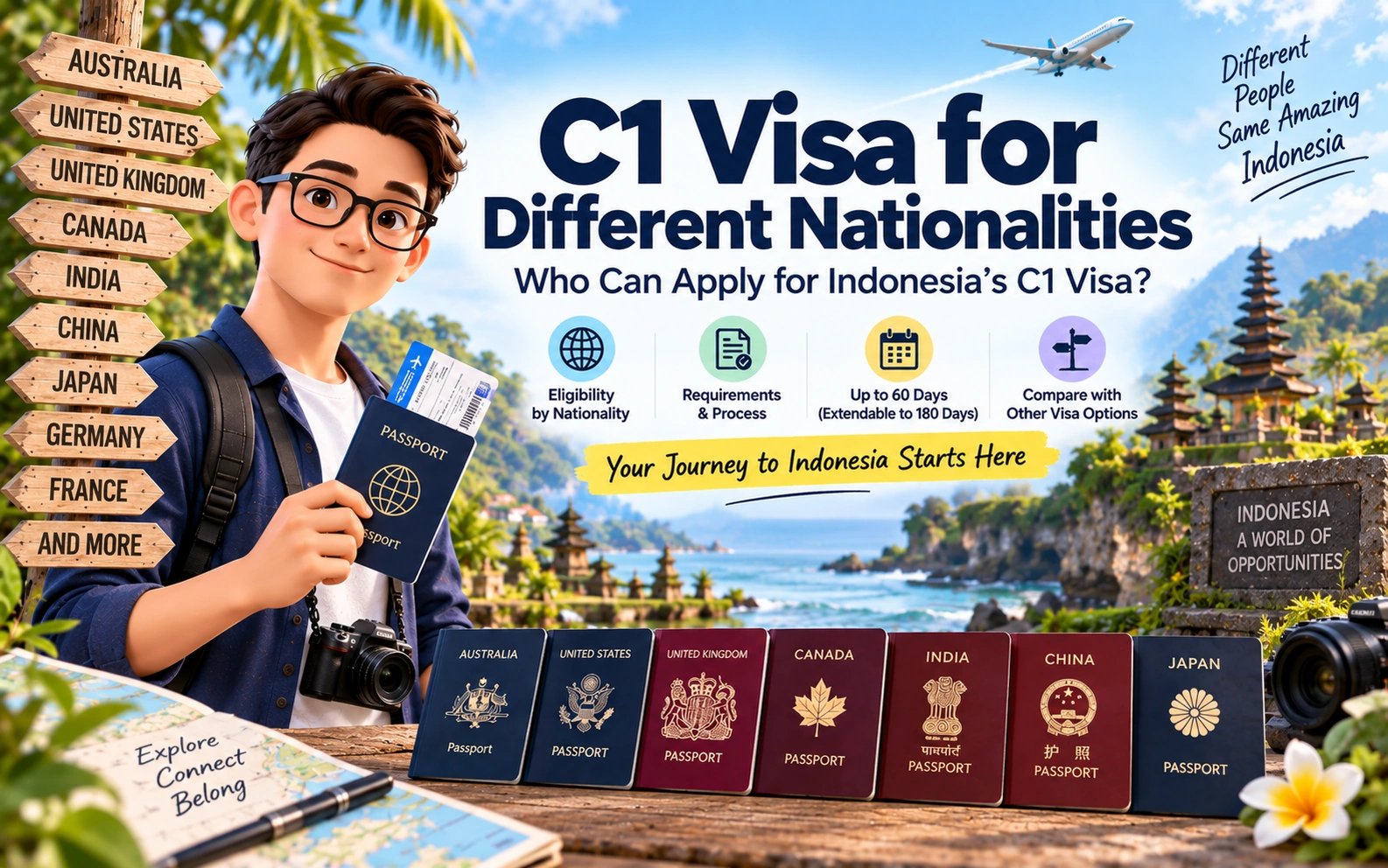
If you are planning to visit Indonesia and hold a foreign passport, you may be wondering whether the C1 Visa is available for your nationality. The C1 Visa is Indonesia’s single-entry visitor visa for eligible foreign nationals who want to visit Indonesia for tourism and other permitted visitor activities. It can provide an initial stay of up to 60 days and, subject to the applicable rules, can be extended for a total stay of up to 180 days.
For most travelers, the basic C1 Visa framework is the same regardless of nationality. However, nationality can matter when determining whether additional immigration conditions apply, including certain sponsor requirements or special rules for particular countries and travel documents. This is why it is important to check the requirements that apply to your specific nationality before submitting an application.
This guide explains how C1 Visa eligibility works by nationality, which major nationalities commonly travel to Indonesia, what requirements may differ, and how the C1 Visa compares with other Indonesian visitor visa options.
1. C1 Visa Eligibility by Nationality: Who Can Apply?
The C1 Visa is available to eligible foreign nationals who intend to visit Indonesia for permitted activities such as tourism. The visa is issued for a single entry and provides an initial stay of up to 60 days from the date of arrival. The stay can be extended several times, subject to the applicable immigration requirements, up to a maximum of 180 days.
For a standard applicant holding a valid national passport, nationality does not normally change the basic C1 Visa structure. The applicant still needs to satisfy the applicable document, financial, and immigration requirements. However, Indonesian Immigration also provides special rules for certain categories of travelers, including stateless persons, holders of non-national travel documents, and citizens of particular countries identified under the current immigration rules.
This means that travelers should not assume that every nationality is subject to exactly the same application process. Before applying, check the current requirements for your passport and travel-document status, especially if your nationality falls under a special immigration category.
The C1 Visa is intended for visitor activities and cannot be used to work in Indonesia or to receive wages or other compensation for work or business activities in Indonesia. If your purpose is employment, investment, or another activity requiring a different immigration status, a different Indonesian visa or stay permit may be more appropriate.
2. C1 Visa Eligibility by Nationality
The C1 Visa is available to eligible foreign nationals who meet Indonesia’s visitor visa requirements. Nationality is one factor that may affect the application process, but it does not mean that every nationality has a completely different C1 Visa category. For most travelers using a valid national passport, the core C1 Visa requirements remain based on the same visitor visa framework.
Under the current Immigration rules, applicants generally need a valid travel document, proof of sufficient funds to support their stay in Indonesia, and a recent photograph. A national passport should generally be valid for at least six months. The current C1 Visa requirements also include proof of living expenses in Indonesia in the form of a three-month bank statement showing at least USD 2,000 or the equivalent in another currency.
However, additional conditions can apply to certain travelers. Indonesian Immigration specifically identifies stateless persons, holders of non-national travel documents, and citizens of particular countries as categories that may be subject to different sponsor or supporting-document requirements. Therefore, nationality should be checked together with the type of passport or travel document being used for the application.
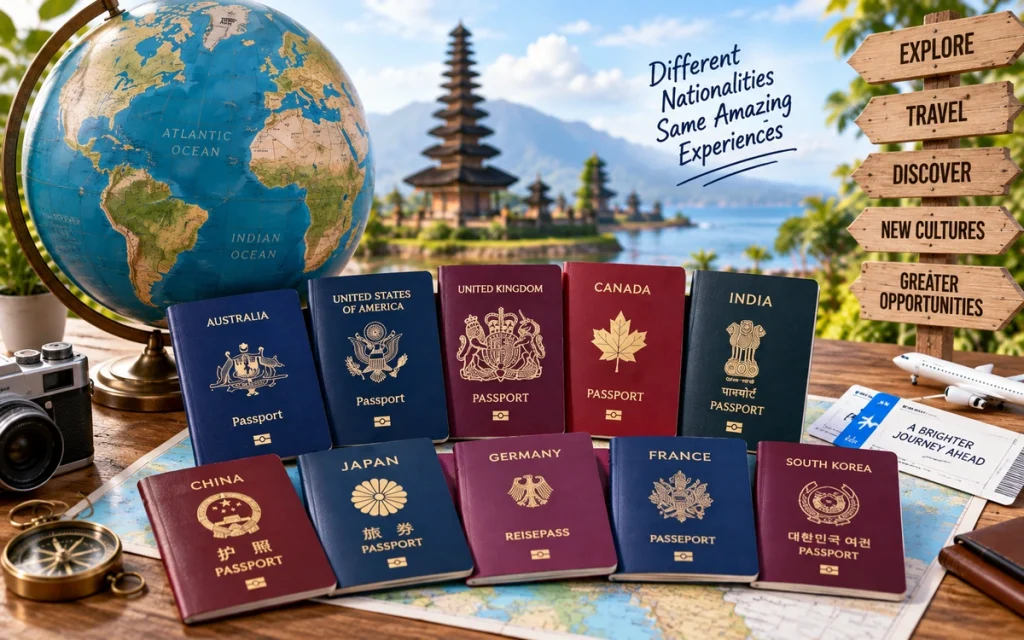
For travelers from major visitor markets such as Australia, China, India, the United States, South Korea, the United Kingdom, Japan, Germany, France, the Netherlands, Canada, New Zealand, Malaysia, Singapore, and Italy, the C1 Visa can be considered within the standard visitor visa framework, subject to the applicant meeting the current immigration requirements and any nationality-specific rules that may apply.
The safest approach is to verify the current C1 Visa eligibility and application conditions for your specific nationality before applying. Immigration requirements can change, and a nationality that follows the standard process may still have different requirements if the traveler uses a non-national travel document or falls under a special immigration category.
3. Do All Nationalities Have the Same C1 Visa Requirements?
The basic C1 Visa requirements are generally the same for eligible foreign nationals, but nationality and travel-document status can affect whether additional immigration conditions apply. Indonesian Immigration states that the C1 Visa does not normally require a sponsor, while exceptions apply to stateless applicants, holders of travel documents that are not national passports, and citizens of certain countries listed under the current immigration rules.
For applicants using a standard national passport, the core requirements include a valid travel document, proof of sufficient funds, and a recent color photograph. The travel document must generally remain valid for at least six months. Applicants using travel documents other than a national passport may be subject to a longer validity requirement and additional supporting documents.
Applicants should therefore check the requirements based on both their nationality and the type of travel document they will use. A nationality may be subject to a specific immigration condition even when the general C1 Visa requirements appear the same for most travelers.
The financial requirement is also applied as part of the general C1 Visa application. Applicants must provide a three-month bank statement showing available funds of at least USD 2,000 or the equivalent amount in another currency, in accordance with the current Immigration requirements.
In practice, this means that nationality should be checked before applying rather than assuming that another traveler’s C1 Visa application process will be identical. The safest approach is to verify the current requirements for the applicant’s nationality and travel document through the official Indonesian Immigration system before submitting the application.
4. C1 Visa Sponsor Requirements by Nationality
For most C1 Visa applicants, a sponsor is not required. Indonesian Immigration states that the C1 Visa can generally be applied for without a sponsor, making the application process relatively straightforward for foreign nationals who meet the standard requirements.
However, there are exceptions. A sponsor is required for applicants who are stateless, hold a travel document other than a national passport, or are citizens of certain countries included in the current immigration list. Therefore, nationality can affect the sponsor requirement even though the standard C1 Visa process does not normally require one.
If you are a national of a country subject to Indonesia’s Calling Visa rules, the C1 application may involve an additional immigration clearance process. See our Calling Visa Indonesia guide to understand the applicable nationality rules, requirements, application process, and processing considerations.
Applicants should also distinguish between nationality and passport type. A traveler may hold a passport or travel document that does not represent a standard national passport, and this can trigger additional requirements regardless of the traveler’s broader circumstances.
Because the list of nationalities subject to special requirements can change, applicants should verify the current sponsor requirement through the official Indonesian Immigration system before applying. The requirement shown for another nationality should not automatically be treated as applicable to every applicant.
For travelers who use a standard national passport and are not included in a special category, the C1 Visa application can generally proceed without a sponsor. The applicant must still meet the standard visa requirements, including the applicable passport validity, proof of sufficient funds, and photograph requirements.
5. C1 Visa Requirements for Travelers from Major Countries

Travelers from major visitor markets such as Australia, China, India, South Korea, the United States, the United Kingdom, Japan, Germany, France, the Netherlands, Canada, New Zealand, Malaysia, Singapore, and Italy can consider the C1 Visa when their travel plans and circumstances meet the applicable Indonesian immigration requirements.
The general C1 Visa framework is the same for eligible travelers from these countries. The visa is a single-entry visitor visa with an initial stay of up to 60 days, and it can be extended subject to the applicable rules. Applicants must also satisfy the required passport or travel-document, financial, photograph, and other immigration conditions.
However, nationality should still be checked individually before an application is submitted. Certain nationalities may be subject to additional immigration conditions, including sponsor requirements or other special procedures. These conditions should be confirmed from the current Indonesian Immigration requirements rather than assumed from the rules that apply to another nationality.
For travelers from countries that are among Indonesia’s major international visitor markets, the C1 Visa may be particularly relevant when a longer continuous stay is preferred over a short tourist visit. The appropriate visa, however, depends on the traveler’s nationality, purpose of travel, intended length of stay, and planned activities in Indonesia.
The C1 Visa remains a visitor visa. Regardless of nationality, it does not authorize the holder to work in Indonesia or receive wages, salary, or other compensation for work or business activities. Travelers whose activities require a different immigration status should consider the visa or stay permit specifically designed for that purpose.
6. C1 Visa Stay Duration for Foreign Nationals
The C1 Visa allows eligible foreign nationals to stay in Indonesia for an initial period of up to 60 days from the date of arrival. This applies to the C1 Visa as a single-entry visitor visa, subject to the conditions attached to the visa and the applicable immigration rules.
The initial 60-day stay does not necessarily represent the maximum period a C1 Visa holder can remain in Indonesia. The visa can be extended several times, subject to the applicable requirements, with the total permitted stay reaching up to 180 days.
The 90-day visa validity period should also be distinguished from the permitted stay in Indonesia. Visa validity refers to the period in which the visa can be used for entry, while the permitted stay determines how long the holder may remain in Indonesia after entering the country.
The stay rules are generally the same for eligible foreign nationals, but applicants should still verify whether their nationality or travel-document status is subject to special immigration conditions. Nationality does not by itself change the standard 60-day initial stay or the maximum 180-day stay available under the C1 Visa framework.
Travelers who need to remain in Indonesia for an extended period should plan their extensions before their permitted stay expires. If the intended travel pattern involves leaving Indonesia and returning during the same period, a multiple-entry visa may be more suitable because the C1 Visa is issued for a single entry.
7. C1 Visa Cost for Different Nationalities
The official C1 Visa fee is generally the same for eligible foreign nationals because the visa fee is determined by the visa category rather than by the applicant’s nationality. The current fee for the C1 Tourism Visitor Visa is IDR 1,000,000.
Applicants should also consider that the visa fee is separate from other costs that may arise during the immigration process. Depending on the applicant’s circumstances, additional expenses may include document preparation, professional assistance, or other services that are not part of the official C1 Visa fee.
Nationality can affect the overall application process when a traveler falls under a special immigration category, such as a nationality for which additional requirements or a sponsor may apply. However, this does not mean that the standard C1 Visa fee automatically changes based on nationality.
Travelers should therefore compare the total cost of a visa based on both the official immigration fee and their actual travel needs. A C1 Visa may offer better value for someone planning a longer continuous stay, while another visa may be more appropriate for a traveler who expects to make multiple entries into Indonesia.
Before applying, applicants should confirm the current official fee and any nationality-specific requirements because Indonesian immigration fees and procedures may be updated.
8. Can C1 Visa Holders Leave and Re-Enter Indonesia?
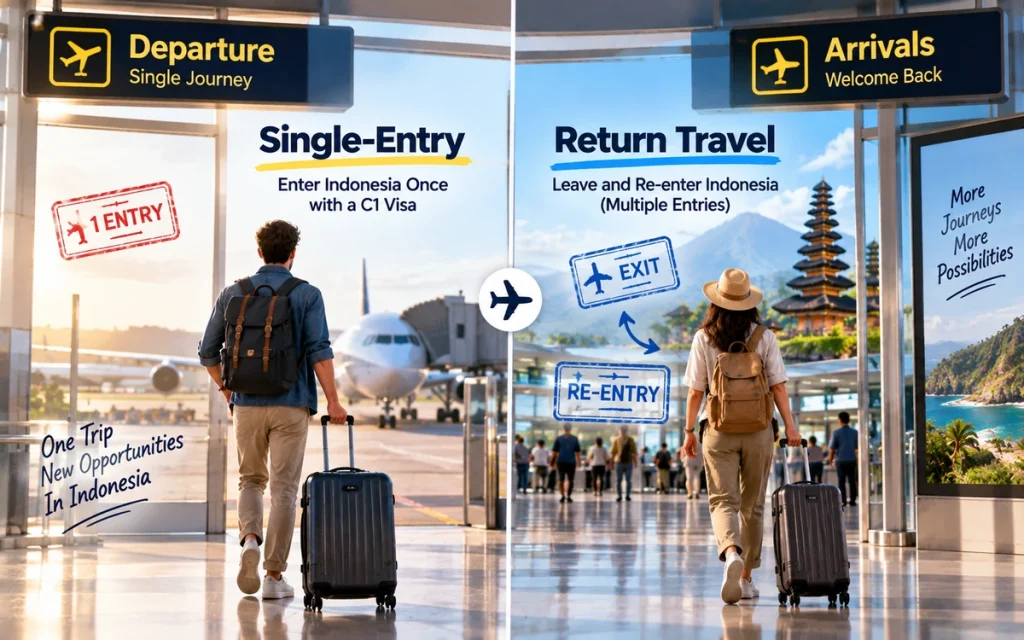
The C1 Visa is a single-entry visitor visa. Once a C1 Visa holder leaves Indonesia, the visa cannot be used to enter Indonesia again. A new visa or another appropriate entry permission must be obtained before returning to Indonesia.
This single-entry feature is important when choosing a visa based on nationality and travel plans. A traveler who intends to stay in Indonesia for an extended period without leaving may find the C1 Visa suitable, particularly because the initial stay can be extended subject to the applicable rules.
By contrast, travelers who expect to leave Indonesia and return during the same travel period should consider a multiple-entry visa instead. The multiple-entry option is designed for travelers who need repeated entries and may be more practical than applying for a new single-entry visa each time they return.
Nationality does not change the basic single-entry nature of the C1 Visa. However, nationality may affect other application conditions, so travelers should confirm the current requirements applicable to their passport before planning international travel during their stay in Indonesia.
If leaving Indonesia is part of the travel plan, the traveler should consider the visa’s entry conditions before departure. Having remaining time on the original permitted stay does not mean that the same C1 Visa can be reused after departure.
9. Can C1 Visa Be Converted to ITAS?
The C1 Visa can be converted into a temporary stay permit, or ITAS, subject to the applicable Indonesian immigration rules. This provides an option for certain foreign nationals who enter Indonesia as visitors but later qualify for a temporary stay permit based on an eligible purpose.
Conversion is not automatic and does not mean that every C1 Visa holder can simply change the visa into an ITAS. The applicant must meet the requirements for the relevant ITAS category and follow the applicable immigration procedure.
The purpose of the intended ITAS is important. Different ITAS categories have different eligibility requirements, sponsors, supporting documents, and conditions. A traveler should therefore determine the appropriate ITAS category before relying on C1 Visa conversion as part of a longer-term immigration plan.
Nationality may also matter because certain nationalities or travel-document holders can be subject to additional immigration conditions. However, the possibility of converting a C1 Visa into an ITAS should primarily be assessed based on the applicant’s intended stay purpose and eligibility for the relevant ITAS category.
Travelers who already know that they intend to live, work, invest, or stay in Indonesia under a temporary residence status should consider the appropriate ITAS route from the beginning. The C1 Visa is primarily a visitor visa, so it should not be treated as a substitute for an ITAS when the main purpose of the stay requires residence status.
10. C1 Visa vs Other Indonesia Visa Options
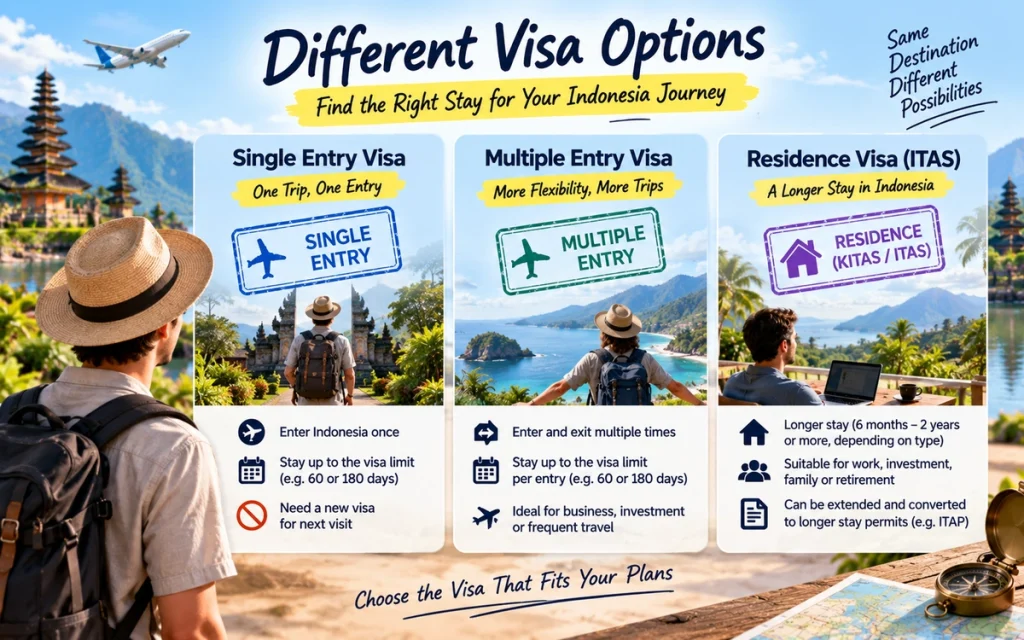
The C1 Visa is not the only visitor visa option available for foreign nationals traveling to Indonesia. The most suitable visa depends on the traveler’s nationality, purpose of travel, intended length of stay, and whether the traveler needs to enter Indonesia once or multiple times.
For a traveler planning one extended stay for tourism, the C1 Visa can be a practical option because it provides an initial stay of up to 60 days and can be extended, subject to the applicable requirements, up to a total stay of 180 days. This makes it different from shorter-stay options that may be more appropriate for brief visits.
The C1 Visa is also different from a multiple-entry visitor visa. Because C1 is single-entry, it is better suited to travelers who intend to remain in Indonesia during their stay. Travelers who regularly leave Indonesia and return may find a multiple-entry visa more suitable for their travel pattern.
Travelers should also distinguish a visitor visa from visas or stay permits designed for other purposes. Employment, investment, family residence, and other long-term activities may require a different immigration status. A C1 Visa should not be selected simply because it allows a longer stay if the traveler’s actual activities require another type of visa or stay permit.
Nationality is one factor in determining the appropriate option, but it should not be the only consideration. The decision should also take into account the purpose of the trip, expected duration, planned activities, and whether the traveler needs to leave and re-enter Indonesia during the stay.
11. Which C1 Visa Is Best for Your Nationality and Travel Plans?
There is no separate C1 Visa category for each nationality. For eligible foreign nationals, the C1 Visa follows the same basic visitor-visa framework. The more important question is whether the C1 Visa matches the traveler’s nationality, travel document, purpose of travel, intended length of stay, and travel pattern.
For travelers planning a single extended visit to Indonesia, the C1 Visa can be a suitable choice because it allows an initial stay of up to 60 days and can be extended, subject to the applicable requirements, up to a total stay of 180 days. This can be useful for travelers who want to spend several months in Indonesia without planning repeated international departures.
For travelers who expect to leave Indonesia and return during the same period, a multiple-entry visitor visa may be more appropriate because the C1 Visa can only be used for one entry. The choice therefore depends less on nationality alone and more on how the traveler intends to use the visa.
Travelers should also check whether their nationality or travel-document status creates additional immigration requirements. In particular, applicants who are stateless, use a non-national travel document, or fall within a nationality subject to special immigration rules may need to satisfy additional conditions before applying.
Ultimately, the best visa is the one that matches the traveler’s actual circumstances. Before applying for a C1 Visa, travelers should confirm the current requirements for their nationality and travel document and make sure that their planned activities are permitted under the visitor visa.
12. Frequently Asked Questions
Can any nationality apply for the C1 Visa Indonesia?
The C1 Visa is available to eligible foreign nationals, but not every nationality or travel-document holder necessarily follows the same application conditions. Certain applicants may be subject to additional immigration requirements, including sponsor requirements. Travelers should check the current Indonesian Immigration rules for their nationality and travel document before applying.
Is the C1 Visa the same for all nationalities?
The basic C1 Visa framework is generally the same for eligible foreign nationals: it is a single-entry visitor visa with an initial stay of up to 60 days and possible extensions subject to the applicable rules. However, nationality and travel-document status can affect additional requirements.
Do I need a sponsor for a C1 Visa?
A sponsor is generally not required for the C1 Visa. However, Indonesian Immigration provides exceptions for certain applicants, including stateless persons, holders of non-national travel documents, and citizens of particular countries subject to special immigration rules.
How long can I stay in Indonesia with a C1 Visa?
The C1 Visa provides an initial stay of up to 60 days from arrival. It can be extended several times, subject to the applicable requirements, with a total stay of up to 180 days.
Can I leave Indonesia and use my C1 Visa again?
No. The C1 Visa is a single-entry visa. Once you leave Indonesia, the same C1 Visa cannot be used for another entry.
How much does the C1 Visa cost?
The current official C1 Visa fee is IDR 1,000,000. Additional costs may apply depending on the applicant’s circumstances and any professional or document-related services used during the application process.
Can I convert a C1 Visa into an ITAS?
A C1 Visa can be converted into a temporary stay permit, or ITAS, subject to the applicable immigration rules and the applicant’s eligibility for the relevant ITAS category. Conversion is not automatic.
Does nationality affect the C1 Visa stay duration?
For eligible applicants, nationality does not normally change the standard initial stay of up to 60 days or the maximum total stay of up to 180 days. However, nationality can affect other application conditions that should be checked before applying.
Which nationalities should check C1 Visa requirements carefully?
All applicants should verify the current requirements before applying. Particular attention is important for travelers who are stateless, use non-national travel documents, or hold a nationality subject to special immigration conditions.
Conclusion
The C1 Visa is a practical option for eligible foreign nationals who want to visit Indonesia for an extended period without making repeated international entries. While the basic visa framework is generally the same across eligible nationalities, nationality and travel-document status can affect additional requirements, including whether a sponsor is needed.
Before applying, travelers should confirm the current requirements for their nationality, travel document, and intended activities. The C1 Visa provides an initial stay of up to 60 days and may be extended, subject to the applicable rules, for a total stay of up to 180 days. Because it is a single-entry visa, travelers who need frequent departures and returns should consider a multiple-entry option instead.
Choosing the right Indonesia visa is ultimately about matching the visa to your actual travel plans. If you are unsure whether the C1 Visa is suitable for your nationality or circumstances, getting professional guidance can help you avoid unnecessary delays or choosing the wrong visa category.
Need Help With Your C1 Visa Application?
Planning to visit Indonesia and not sure whether the C1 Visa is right for your nationality? AzraID can help you understand the applicable requirements, prepare your documents, and navigate the Indonesia visa application process.
Contact AzraID for professional assistance with your C1 Visa Indonesia application and get guidance based on your nationality, travel plans, and intended length of stay.