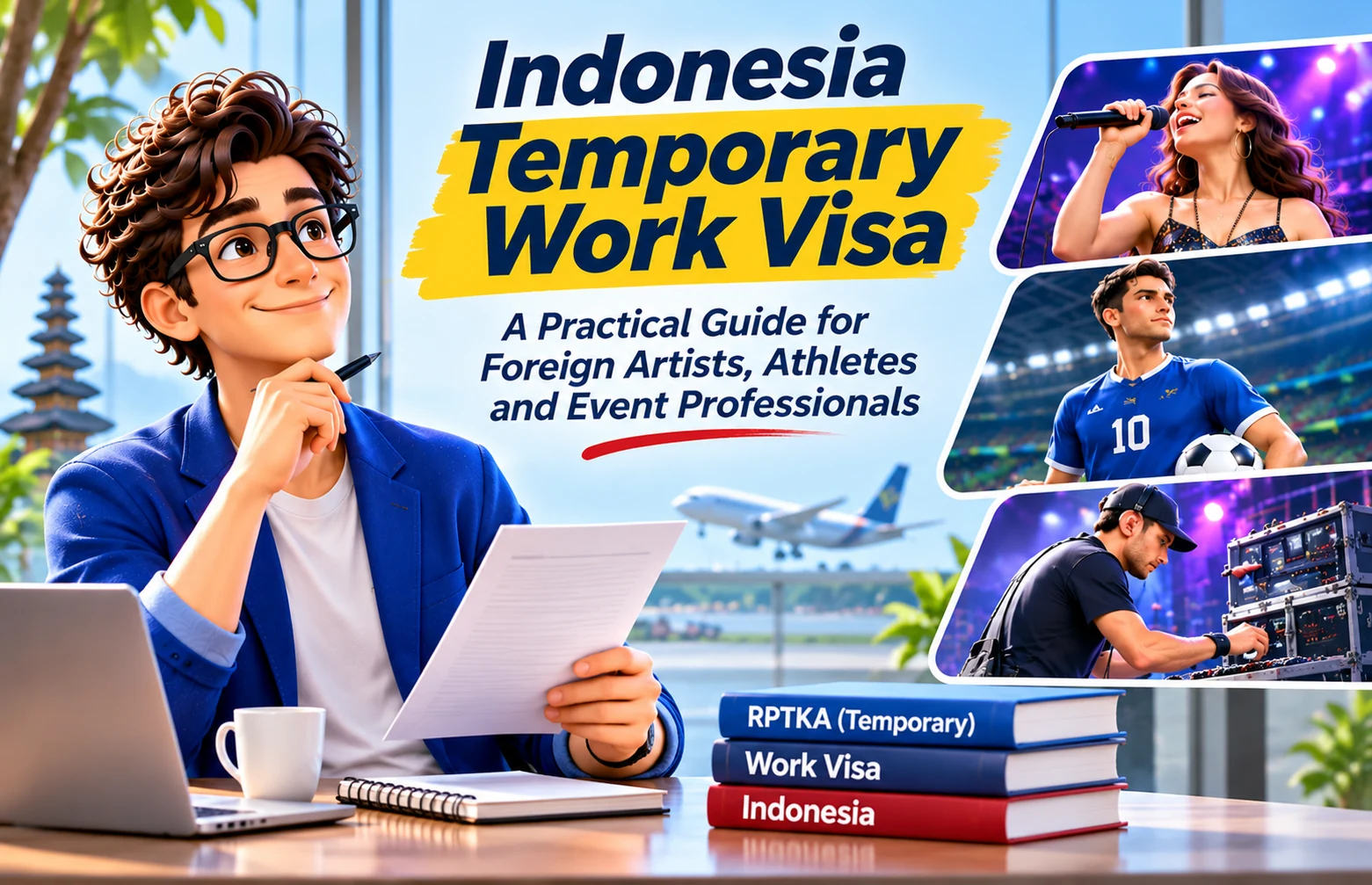
Foreign professional athletes may come to Indonesia to join a club, compete in an organized league, participate in a sporting event, or undertake another professional engagement. The appropriate immigration route depends on the athlete’s actual activities, the nature of the engagement, the Indonesian sponsor, and the legal relationship between the parties.
The phrase “Indonesia Work Visa for Professional Athletes” is commonly used by clubs, agents, athletes, and sports organizations looking for guidance. It is not the formal name of one universal visa. Indonesia provides a specific limited-stay work visa classification for athletes, while separate visit-visa categories cover certain temporary sports activities. Manpower and sports-sector requirements may also apply.
For a foreign national coming to Indonesia to work as an athlete, E23S is an important immigration category to assess. However, selecting E23S does not by itself settle every compliance issue. The Indonesian employer or sponsor must also determine whether foreign-worker approval is required and whether the athlete’s role is covered by additional sports-sector rules.
This guide explains the main considerations for foreign athletes and Indonesian clubs, employers, and sports organizations. It is general information, not a determination that a particular athlete, sponsor, position, or sporting arrangement is eligible. The current official requirements and the facts of each case should be checked before an application is filed.
Understanding the Indonesia Work Visa for Professional Athletes
An athlete’s immigration position should be assessed by looking at the real activity in Indonesia, not simply the title used in a contract or invitation letter. A foreign player engaged by an Indonesian club for a season may be in a different position from an athlete invited to take part in a defined non-commercial sporting event. A foreign coach, referee, team manager, or technical official is also not automatically treated as an athlete.
The sponsor should identify the athlete’s duties, the Indonesian entity engaging the athlete, the contractual arrangement, the proposed period and location of activity, and whether the activity is professional, commercial, or a qualifying temporary visit. Remuneration is a relevant fact, but it should not be treated as the only test. The full circumstances and the applicable visa conditions matter.
Indonesian manpower rules regulate the use of foreign workers by employers. Government Regulation No. 34 of 2021 provides the general framework, while Minister of Manpower Regulation No. 8 of 2021 sets out implementing procedures, including RPTKA-related requirements. Immigration permission and manpower approval are related but separate parts of the compliance process.
Who May Need an Indonesia Athlete Work Visa?
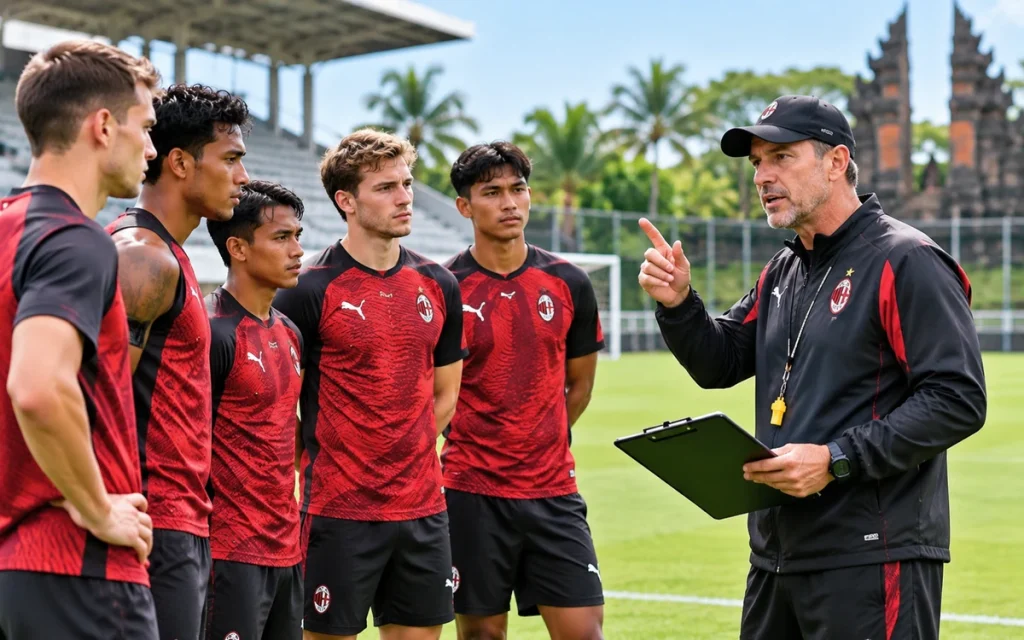
A foreign athlete who is engaged to perform professional sporting duties in Indonesia should have the immigration route assessed before travel. The assessment may be relevant to professional footballers, basketball and volleyball players, combat-sport competitors, individual athletes, and participants in other organized sports. The sport alone does not determine the visa category; the actual activity and engagement do.
Professional Football Players
Foreign football players engaged by Indonesian clubs may need an employment-based immigration route where they will train, play, and fulfil professional duties under an arrangement with the club. The club should review the player’s contract, role, competition participation, sponsor eligibility, and applicable sports-sector rules before the player travels.
A short invitation to take part in a one-off friendly match or qualifying non-commercial event should not automatically be treated as equivalent to a season-long professional engagement. The organizer and immigration adviser should examine the event purpose, contractual relationship, compensation, duration, and conditions.
Basketball and Volleyball Players
The same fact-based assessment applies to foreign basketball, volleyball, and other team-sport players. A club contract, participation in a domestic league, and continuing professional duties may point toward a work-related route. A temporary appearance at a qualifying event may require a different assessment.
Combat Sports and Individual Athletes
Boxers, martial artists, tennis players, golfers, swimmers, cyclists, and other individual athletes may have different arrangements. Some are contracted to a local club or promoter; others enter Indonesia for a specific competition, exhibition, training camp, or invitational event. The nature of the event and the athlete’s contractual role should be documented clearly.
Other Professional Sports
The analysis may also apply to motorsports, athletics, and other disciplines. The responsible sports body and competent government authority may depend on the discipline and the activity. Do not assume that a visa category or sports-sector approval used for one sport automatically applies to another.
E23S Visa Indonesia: Work Visa for Professional Athletes
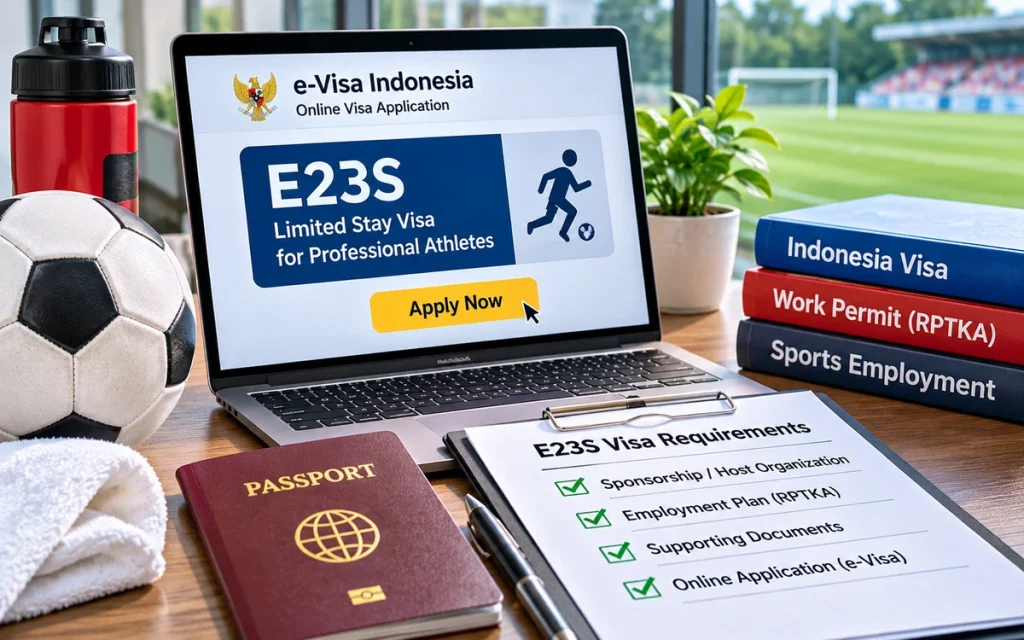
Indonesian Immigration identifies E23S as a Limited Stay Visa for working as an athlete. It is therefore a key category to consider when a foreign national is coming to Indonesia to undertake professional athlete work. The official immigration information also identifies E23T as the work visa category for sports officials. The current E23S description and service information can be checked through the official immigration service information published by the immigration office.
What Is the E23S Visa?
E23S is an immigration classification associated with work as an athlete. It should be distinguished from visit visas intended for defined temporary sports activities. An athlete and the Indonesian sponsor should confirm that the selected classification corresponds to the athlete’s actual role and the supporting employment and sponsorship documents.
A visa classification does not by itself establish that all manpower and sports-sector requirements have been met. The sponsor should separately assess whether an approved RPTKA is required, whether a specific exemption applies, and whether the athlete’s role triggers requirements under sports legislation.
Who Should Consider E23S?
E23S should be assessed where the foreign national is coming to Indonesia to work as an athlete, including a professional engagement with an Indonesian club or sports organization. The precise scope must be checked against the current official visa description and the facts of the proposed activity.
A person who is only attending a meeting, observing a competition, participating in a qualifying non-commercial event, or performing a different sports-related role may require a different classification. Coaches, referees, technical officials, managers, and event personnel should not automatically use the athlete category.
Permitted Activities and the Employment Arrangement
The sponsor should describe the athlete’s actual duties accurately. Relevant supporting information may include the employment or engagement agreement, the club or organization’s legal identity, competition or league details, the proposed period of activity, and a clear description of the athlete’s role.
The immigration permission must match the activity authorized. A foreign national should not use an athlete visa to undertake unrelated employment, provide services outside the approved scope, or work for an entity or in a role not covered by the relevant approval.
E23S vs C8A, C8B, and D8 Sports Visit Visas
Indonesia also has visit-visa categories for defined sports activities. These should not be confused with an employment-based route. Immigration information describes C8A as a sports visit visa for athletes and C8B as a sports visit visa for sports officials or accompanying personnel, for qualifying non-commercial sports activities on the required invitation. D8 is identified as a multiple-entry visit visa for sports activities. The exact conditions and current checklist must be checked against the official immigration information.
When C8A May Be Appropriate
C8A may be relevant where an athlete is invited to participate in a qualifying non-commercial sports activity and the application meets the current official conditions. The organizer should verify the invitation, event purpose, activity description, sponsor or guarantor requirements, and any restrictions directly against the official immigration guidance.
The description “non-commercial” should not be treated casually. If the athlete has an employment contract, is engaged for continuing professional duties, or will work for an Indonesian entity, the sponsor should obtain a case-specific assessment rather than assuming that C8A is suitable.
When C8B May Be Relevant
C8B is the sports visit-visa category identified for sports officials or accompanying personnel in qualifying non-commercial activities. It should not be used simply because a person travels with an athlete. The person’s actual duties must be reviewed. A coach, referee, technical official, team manager, or other specialist may fall under a different immigration or work classification depending on the activity.
When D8 May Be Relevant
D8 is identified by Immigration as a multiple-entry visit visa for sports activities. It may be relevant to eligible travelers who need repeated visits for qualifying sports activities. Multiple-entry permission does not automatically authorize employment or activities outside the visa conditions. The organizer and traveler must verify the permitted activity, invitation and guarantee requirements, and current conditions before applying.
When an Employment Visa Should Be Considered
Where the athlete will be employed or professionally engaged in Indonesia, particularly for continuing duties under a club or organization, the sponsor should assess the relevant work visa route, including E23S where appropriate. The manpower process and any sports-sector approvals must be reviewed separately. E23T is the work visa category identified for sports officials; it is not the athlete category.
Requirements for Foreign Athletes in Indonesia
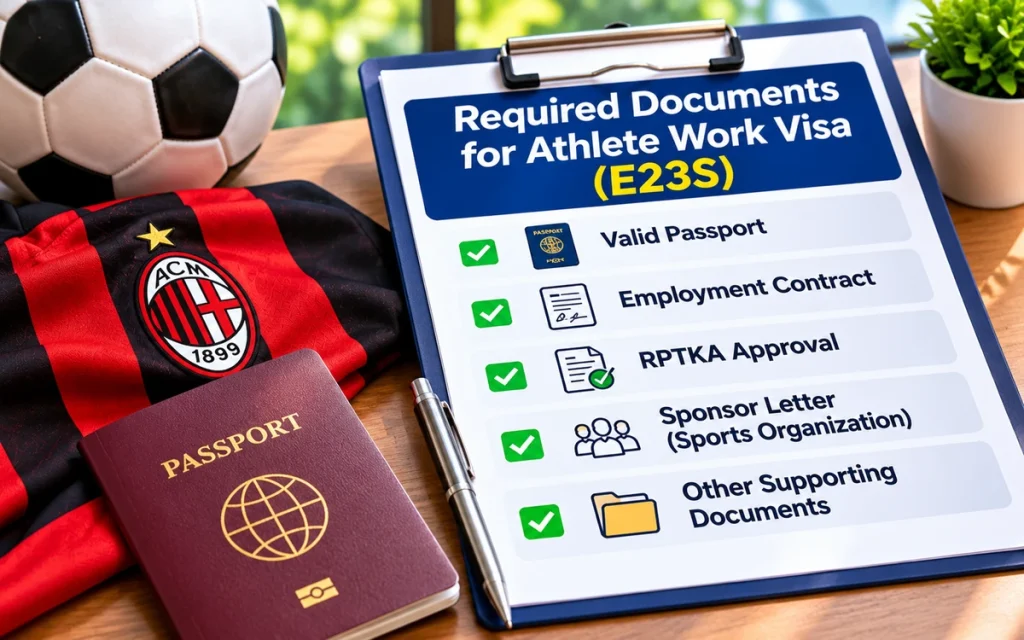
There is no single checklist that safely applies to every athlete and sponsor. The documents required depend on the immigration category, the sponsor, the nature of the engagement, applicable manpower approval, and any additional sports-sector requirements. The following are preparation categories, not a substitute for the live official checklist.
Passport and Personal Documents
The athlete will need a passport and the personal information required by the relevant immigration application. Depending on the current application process, the sponsor may also need a recent photograph, contact details, travel or stay information, and other supporting personal documents. Confirm passport-validity rules, file specifications, and any additional requirements through the official portal rather than relying on an old checklist.
Employment Agreement and Indonesian Sponsor Documents
The Indonesian sponsor should prepare documents establishing its legal identity and authority to engage the athlete. The file may include company or organization documents, sponsor information, the athlete’s employment or engagement agreement, position and duty descriptions, and details of the proposed work location and period.
The agreement should accurately state the parties, role, remuneration or other contractual terms where applicable, duration, and responsibilities. It should not describe an employment relationship as a casual visit merely to obtain a different visa category.
Sports Qualifications and Supporting Evidence
Depending on the athlete’s discipline and the applicable sports-sector requirements, supporting evidence may include a sporting profile, competition record, professional credentials, federation registration, or other evidence of qualifications. These materials can help the relevant organization and authorities assess the athlete’s suitability for the proposed role.
The legal requirements for an athlete should not be confused with those for sports personnel such as coaches, referees, managers, technical specialists, or medical personnel. The sponsor should identify the person’s actual function and assess the applicable provisions before deciding which qualifications or certificates are required.
Sports Organization Recommendations and Government Authorization
Government Regulation No. 46 of 2024 on the Implementation of Sports distinguishes sports personnel (Tenaga Keolahragaan) from other participants in the sports sector. Article 101 lists sports personnel roles including coaches, assistant coaches, referees, judges, managers, promoters, administrators, instructors, medical and health personnel, and technical personnel, among others.
Article 103 specifically provides that foreign sports personnel serving at sports organizations or sports institutions must have the required qualifications and competency certificates, obtain a recommendation from the relevant national sports federation or another relevant institution, and obtain authorization from the competent central government agency in accordance with applicable law. The provision also requires covered foreign sports personnel to respect local norms, culture, and customs and to transfer knowledge and skills within their expertise.
Article 103 also places obligations on the sports organization or institution using the foreign sports personnel, including making a written application to the competent government agency and verifying the person’s qualifications and competency. The sponsor should therefore identify whether the foreign national’s actual function falls within the legal category of Tenaga Keolahragaan and determine the applicable procedure with the relevant sports body and authority.
These provisions should not be generalized automatically to every foreign athlete. A professional athlete and a sports personnel specialist may have different roles under the sports framework. Where an athlete also performs a coaching, technical, managerial, officiating, or other sports-personnel function, the additional requirements should be assessed for that function.
RPTKA and Work Authorization for Foreign Athletes
RPTKA is the foreign-worker utilization plan under Indonesian manpower regulations. Government Regulation No. 34 of 2021 establishes the general framework for the use of foreign workers, while Minister of Manpower Regulation No. 8 of 2021 provides implementing procedures. The Ministry of Manpower describes the framework as covering RPTKA approval, employer and foreign-worker documentation, accompanying Indonesian workers for knowledge and skills transfer, DKPTKA payment procedures, and employer reporting.
Employers using foreign workers are generally required to obtain RPTKA approval unless a specific statutory exemption applies. A club should not assume that an athlete is exempt simply because the engagement is connected with sport, lasts for a short period, or is described as a competition appearance. The legal basis for any exemption must be identified and matched to the actual activity.
Indonesian Employer or Sponsor Responsibilities
The Indonesian employer or sponsor should establish whether it is legally eligible to employ or sponsor the foreign national and whether the proposed position and activity are permitted. It should prepare accurate information about the role, period of work, qualifications, and any Indonesian worker accompaniment or knowledge-transfer arrangements required by the applicable rules.
The employer should also consider reporting, payment, insurance, and other obligations that may apply under manpower and immigration rules. These obligations can vary with the arrangement and the current regulation. They should be checked before the athlete starts work.
RPTKA Approval and Related Procedures
Where RPTKA approval is required, the employer should complete the applicable assessment and submission process through the relevant manpower system. The approved position, employer, and work details should be consistent with the immigration application and the actual engagement.
An immigration visa does not replace RPTKA approval where one is legally required. Conversely, RPTKA approval should not be treated as immigration permission itself. The sponsor must coordinate the manpower and immigration steps and ensure that the athlete does not begin activities before the necessary permissions are effective.
DKPTKA and Other Employer Obligations
The employer should check whether Dana Kompensasi Penggunaan Tenaga Kerja Asing (DKPTKA) is payable and how it applies to the proposed engagement. The amount, payment timing, and any exception must be verified under the rules in force and the specific RPTKA arrangement. There is no single fee that should be assumed to apply to every athlete engagement.
The employer should also review obligations relating to insurance, local-worker accompaniment, knowledge transfer, periodic reporting, and changes to the athlete’s position or employment. If the athlete changes club, sponsor, role, or work location, the employer should obtain advice before the change takes effect.
Need Assistance With Athlete Work Authorization in Indonesia?
Engaging a foreign professional athlete involves more than selecting the appropriate visa. Indonesian clubs, employers, and sports organizations may need to review RPTKA requirements, sponsorship arrangements, and applicable immigration procedures before the athlete begins professional activities.
Azra Solutions can assist with immigration consultation and guidance on the relevant work authorization process for foreign professional athletes in Indonesia.
How to Apply for an Indonesia Athlete Work Visa
The process should begin with a review of the proposed sporting engagement, not with selecting a visa code in isolation. The following sequence is a practical planning framework. The exact steps and order may vary according to the current immigration and manpower systems.
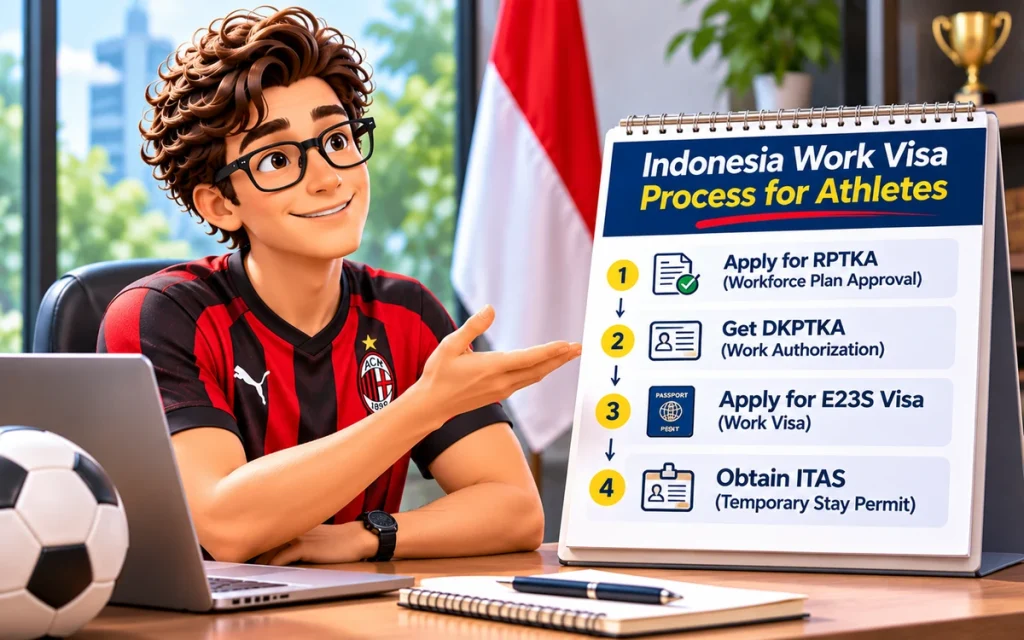
Step 1 – Confirm the Athlete’s Employment Arrangement
Identify the Indonesian club, employer, organizer, or sponsor; the athlete’s role; the nature of the contract; the activities to be performed; the location; the expected period; and whether the activity is commercial or non-commercial. Clarify whether the athlete will be employed, professionally engaged, or merely invited to a qualifying temporary event.
Step 2 – Verify the Employer and Work Authorization
Check the sponsor’s legal status and its eligibility to engage the foreign national. Determine whether RPTKA approval is required, whether a specific exemption may apply, and whether additional sports-sector recommendations or authorizations are needed. Confirm the responsible sports body and competent authority where sports-sector approval is applicable.
Step 3 – Prepare the E23S Visa Application
If E23S is the correct classification, prepare the application using the current official immigration requirements. Ensure that sponsor details, athlete identity, job description, and supporting approvals are consistent. Do not rely on unofficial document lists or outdated processing estimates.
Step 4 – Complete the Immigration Process
The sponsor or authorized representative should follow the official application and payment instructions, respond to any requests for additional information, and monitor the application through the official system. The athlete should not travel on the assumption that an application receipt or pending submission is equivalent to an issued visa.
Step 5 – Complete the Relevant Stay-Permit Formalities
After the visa is issued and the athlete enters Indonesia, the applicable stay-permit formalities must be completed in accordance with the visa conditions and current immigration procedures. The athlete should retain copies of the relevant approvals and comply with the permitted stay period, sponsor conditions, and activity restrictions.
Responsibilities of Indonesian Sports Organizations
A club, federation, event organizer, or other sports institution should plan immigration and manpower compliance before confirming the athlete’s start date. It should verify the athlete’s role, the accuracy of the contract, the sponsor’s eligibility, and the relevant approvals.
Where Article 103 of Government Regulation No. 46 of 2024 applies, the organization must pay particular attention to qualifications, competency certification, recommendations, and authorization. It should also consider its written application and verification responsibilities under that provision.
The organization should maintain accurate records of the athlete’s contract, work activities, travel and stay details, approvals, and any changes. A permission granted for one sponsor or activity should not be assumed to cover a different arrangement. If the athlete changes club, sponsor, role, or contractual arrangement, the organization should review the implications before the change takes effect.
Common Mistakes When Hiring Foreign Athletes
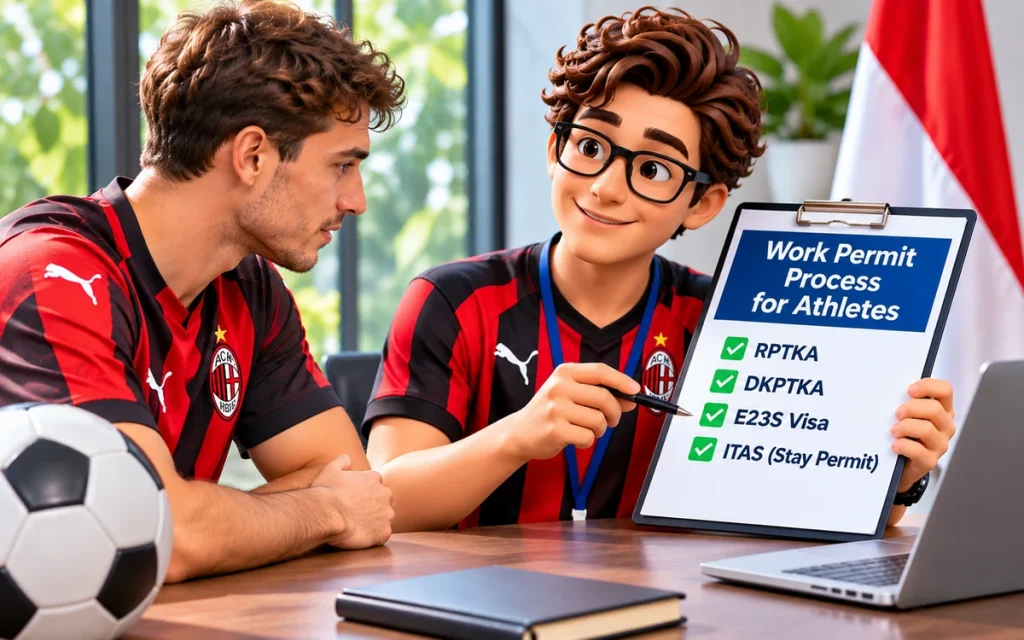
- Assuming every sports visit visa permits professional employment. A visit visa is limited to its authorized purpose and conditions.
- Treating E23S as a complete substitute for manpower approval. RPTKA and immigration permission are separate compliance questions.
- Using the athlete category for a coach, referee, team manager, or technical official without checking the correct classification.
- Assuming every short engagement is exempt from RPTKA or other work-authorization requirements.
- Applying Article 103 of Government Regulation No. 46 of 2024 automatically to every foreign athlete without first identifying whether the person’s role falls within Tenaga Keolahragaan.
- Assuming C8A, C8B, or D8 permits employment or activities outside the conditions of the relevant visit visa.
- Submitting inconsistent information across the contract, sponsor documents, RPTKA process, and visa application.
- Allowing the athlete to start work while required approvals are pending or before the correct permission is effective.
Frequently Asked Questions
What visa does a foreign professional athlete need to work in Indonesia?
E23S is the limited-stay work visa category identified by Indonesian Immigration for working as an athlete. Whether it is the correct route depends on the athlete’s actual activity and engagement. A qualifying non-commercial sports visit may be assessed under a visit-visa category such as C8A, but it is not a general substitute for employment permission.
What is the E23S visa in Indonesia?
E23S is an Indonesian Limited Stay Visa category for working as an athlete. The current eligibility criteria, sponsor requirements, supporting documents, and stay conditions should be checked through the official immigration service information and application portal.
Can a foreign athlete use a C8A visa to play in Indonesia?
C8A is a sports visit-visa category for athletes participating in qualifying non-commercial sports activities under the applicable invitation and visa conditions. It should not be assumed to authorize a professional employment arrangement or ongoing work for an Indonesian club.
What is the difference between C8A, C8B, and D8?
C8A is identified for athletes in qualifying non-commercial sports activities, C8B for sports officials or accompanying personnel in qualifying activities, and D8 for multiple-entry sports visits. The traveler must check the current permitted activities and requirements for the selected index.
Does an Indonesian club need RPTKA to hire a foreign athlete?
Employers generally need approved RPTKA to use foreign workers unless a specific legal exemption applies. The club must assess the applicable manpower rules and the athlete’s actual arrangement before relying on an exemption.
Do foreign athletes need a sports federation recommendation?
Article 103 of Government Regulation No. 46 of 2024 sets requirements for foreign sports personnel serving at sports organizations or institutions, including qualifications, competency certification, a recommendation from the relevant sports federation or institution, and government authorization. The sponsor should assess whether the athlete’s actual role falls within that category or whether the person performs a separate sports-personnel function.
Can a foreign athlete work for more than one Indonesian club?
Do not assume that an approval or visa connected with one sponsor automatically authorizes work for another club. Any additional engagement should be reviewed against the sponsor, approved position, immigration conditions, and manpower requirements before the athlete undertakes the additional work.
How long does an E23S application take?
Processing time depends on the application, supporting documents, government review, and current system procedures. Check the official portal and current service information when preparing the application. Avoid relying on estimates that may have become outdated.
Can Azra Solutions assist with an athlete work visa?
Azra Solutions can provide immigration consultation and assistance with reviewing the proposed activity, identifying the relevant visa route, and coordinating supporting immigration and sponsorship procedures. Eligibility and approval remain subject to the competent Indonesian authorities and applicable regulations.
Get Assistance With an Indonesia Athlete Work Visa
Bringing a foreign professional athlete to Indonesia involves more than selecting a visa category. Clubs, sports organizations, agents, and athletes should review the employment arrangement, sponsor eligibility, RPTKA requirements, sports-sector approvals, and immigration conditions before the athlete begins work.
Azra Solutions provides immigration consultation and assistance for foreign professionals and Indonesian organizations. We can help assess the proposed athlete engagement, identify the relevant immigration pathway, and explain the supporting documentation and sponsorship procedures.
For broader information about work-related immigration options, read our Indonesia Work Visa guide for sports, entertainment and performing arts professionals.
You can also read our guide to the for eligible short-term professional engagements. The applicable route must still be assessed against the athlete’s actual activity.
Contact Azra Solutions to discuss your planned athlete engagement and the appropriate immigration process. You can reach our team through WhatsApp or by email at info@azraid.com.
Official Legal References
The following official sources provide the legal and immigration framework discussed in this guide. Always check the latest version and current application requirements before proceeding.
Government Regulation No. 46 of 2024 concerning the Implementation of Sports.
Government Regulation No. 34 of 2021 concerning the Use of Foreign Workers.
Minister of Manpower Regulation No. 8 of 2021 concerning the Implementing Regulation of Government Regulation No. 34 of 2021.
Official Immigration information identifying E23S for athletes and E23T for sports officials.
Official Immigration information on sports visit visas C8A, C8B, and D8.
Official Indonesian Immigration application portal.