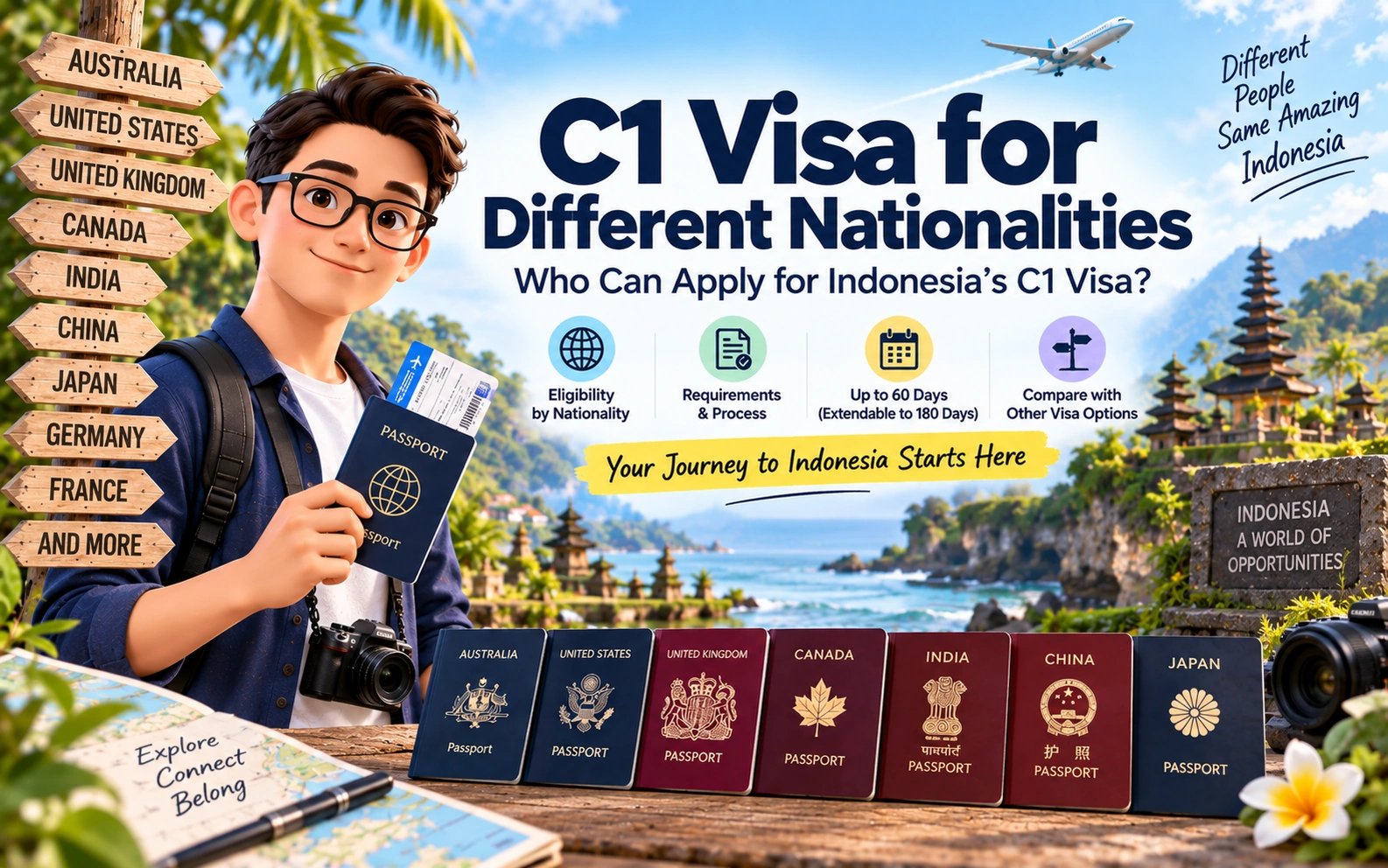
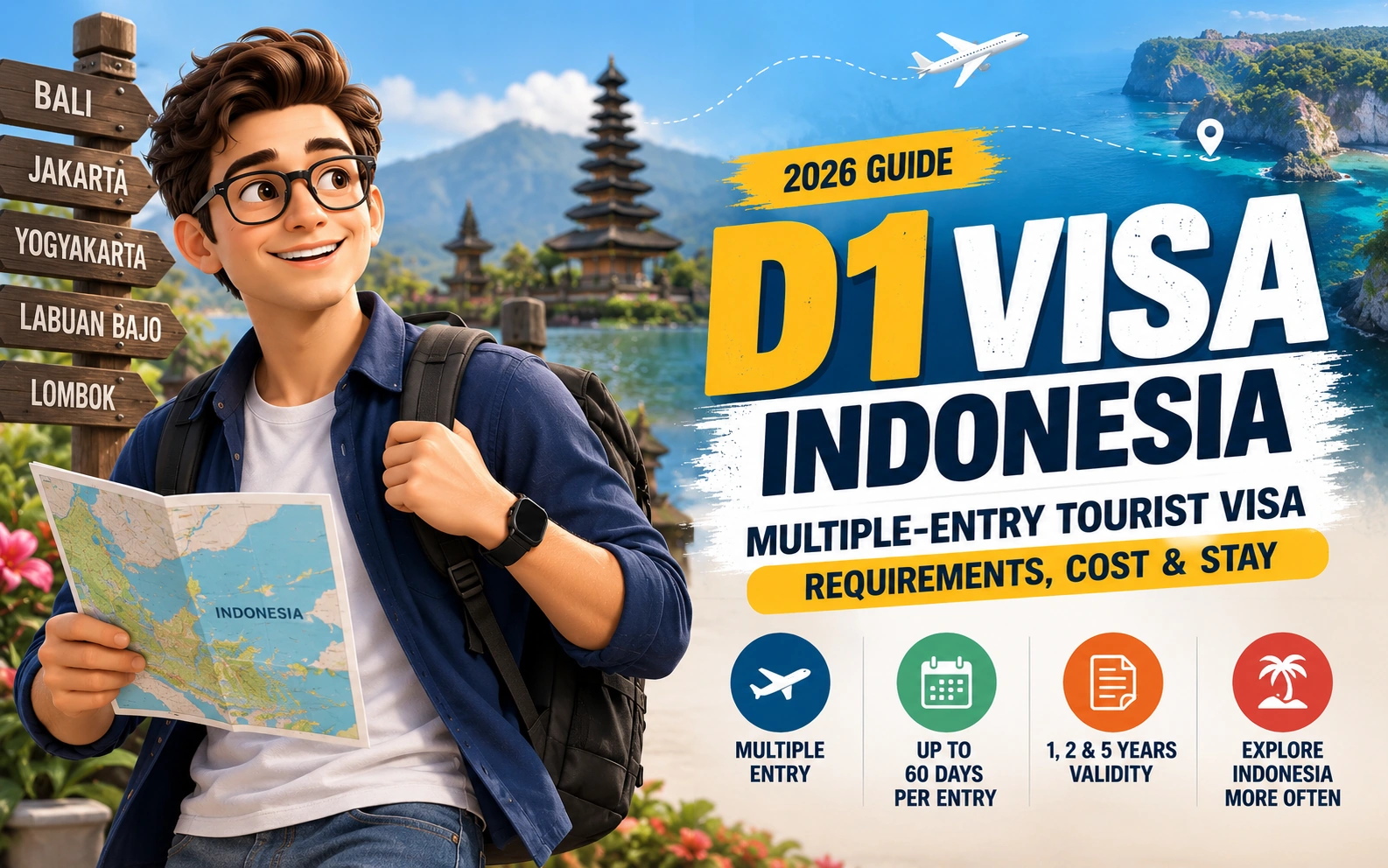
The D1 Visa Indonesia is a multiple-entry visitor visa designed for foreign nationals who need to enter Indonesia more than once for permitted tourism and visit-related activities. Unlike a single-entry tourist visa, the D1 Visa can be used for multiple entries during its validity period, making it a potential option for travelers who expect to return to Indonesia several times.
Understanding the difference between visa validity and permitted stay is important before applying. A D1 Visa that is valid for one or more years does not mean that the holder can remain in Indonesia continuously for the entire validity period. The permitted stay is determined separately for each entry under the applicable immigration rules.
This guide explains what the D1 Visa Indonesia is, how multiple entry works, who it is suitable for, the main requirements, costs, stay duration, application process, extension rules, and how it compares with other types of tourist visa in Indonesia.
1. What Is the D1 Visa Indonesia?
What Does D1 Visa Mean?
The D1 Visa is an Indonesian visitor visa for tourism and certain other permitted visit activities. The Directorate General of Immigration classifies D1 as a visitor visa for multiple entries into Indonesia. The official Immigration Office of Central Jakarta states that D1 can be used for tourism, visiting family, attending meetings, incentives, conventions, exhibitions or similar events, and transiting through Indonesia to another country.
For travelers, the main feature of the D1 Visa is its multiple-entry nature. Instead of applying for a new single-entry tourist visa every time they return to Indonesia, eligible travelers can use the D1 Visa for repeated entries while the visa remains valid and the applicable entry conditions are met.
Is the D1 Visa a Multiple-Entry Visa?
Yes. The D1 Visa is a multiple-entry visitor visa. This is the key difference between D1 and a single-entry tourist visa such as the C1 Visa.
The practical advantage is that a traveler can leave Indonesia and return again without obtaining a new single-entry visa for every trip, provided the D1 Visa is still valid and the traveler continues to meet Indonesia’s immigration requirements at the time of entry.
2. How Does the D1 Multiple-Entry Visa Work?
Multiple Entries Explained
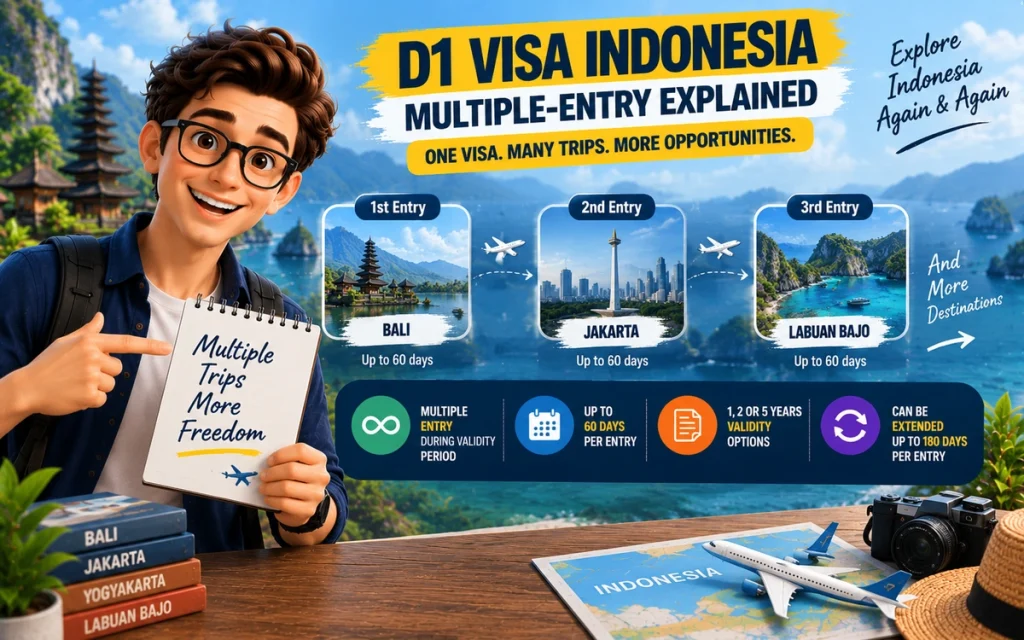
A multiple-entry visa is designed for travelers who expect to enter Indonesia more than once during the visa’s validity period. With a D1 Visa, the visa’s validity gives the traveler a period during which the visa may be used for multiple entries, subject to the conditions attached to the visa.
For example, a traveler who plans to spend time in Bali, leave Indonesia for another country, and later return to Indonesia may benefit from a multiple-entry visa rather than repeatedly applying for a single-entry tourist visa.
Visa Validity vs. Stay Duration
One of the most important points to understand about the D1 Visa Indonesia is that visa validity and permitted stay are not the same thing.
Visa validity refers to the period during which the visa can be used for entry. Stay duration refers to how long the foreign national is permitted to remain in Indonesia after a particular entry.
Therefore, a D1 Visa with a long validity period does not automatically allow continuous residence in Indonesia for the entire validity period. Each entry is subject to the permitted stay granted under the immigration rules.
How Long Can You Stay in Indonesia on Each Entry?
The D1 Visa is generally associated with a permitted stay of up to 60 days per entry. The applicable stay period and any extension must be checked against the current immigration rules and the conditions attached to the visa. Travelers considering a single-entry alternative can also compare it with the C1 Visa Indonesia, which provides an initial stay of up to 60 days.
This distinction is important when planning a long-term travel schedule. A traveler may have a D1 Visa that remains valid for an extended period while still needing to manage the permitted stay for each individual entry.
3. Who Should Apply for a D1 Visa Indonesia?
D1 Visa for Frequent Travelers
The D1 Visa can be useful for foreign travelers who expect to visit Indonesia repeatedly rather than making only one trip. Its multiple-entry structure is particularly relevant for people who regularly travel between Indonesia and other countries.
It may be worth considering a D1 Visa if you expect to return to Indonesia several times during the visa’s validity period and want a visa structure designed for multiple entries.
When D1 Is a Better Option Than a Single-Entry Tourist Visa
The D1 Visa may be more practical than a single-entry tourist visa when your travel plans involve multiple trips to Indonesia. The main benefit is convenience: you can use the same multiple-entry visa for subsequent trips while it remains valid, instead of applying for a new single-entry visa for each planned visit.
When D1 May Not Be the Right Visa
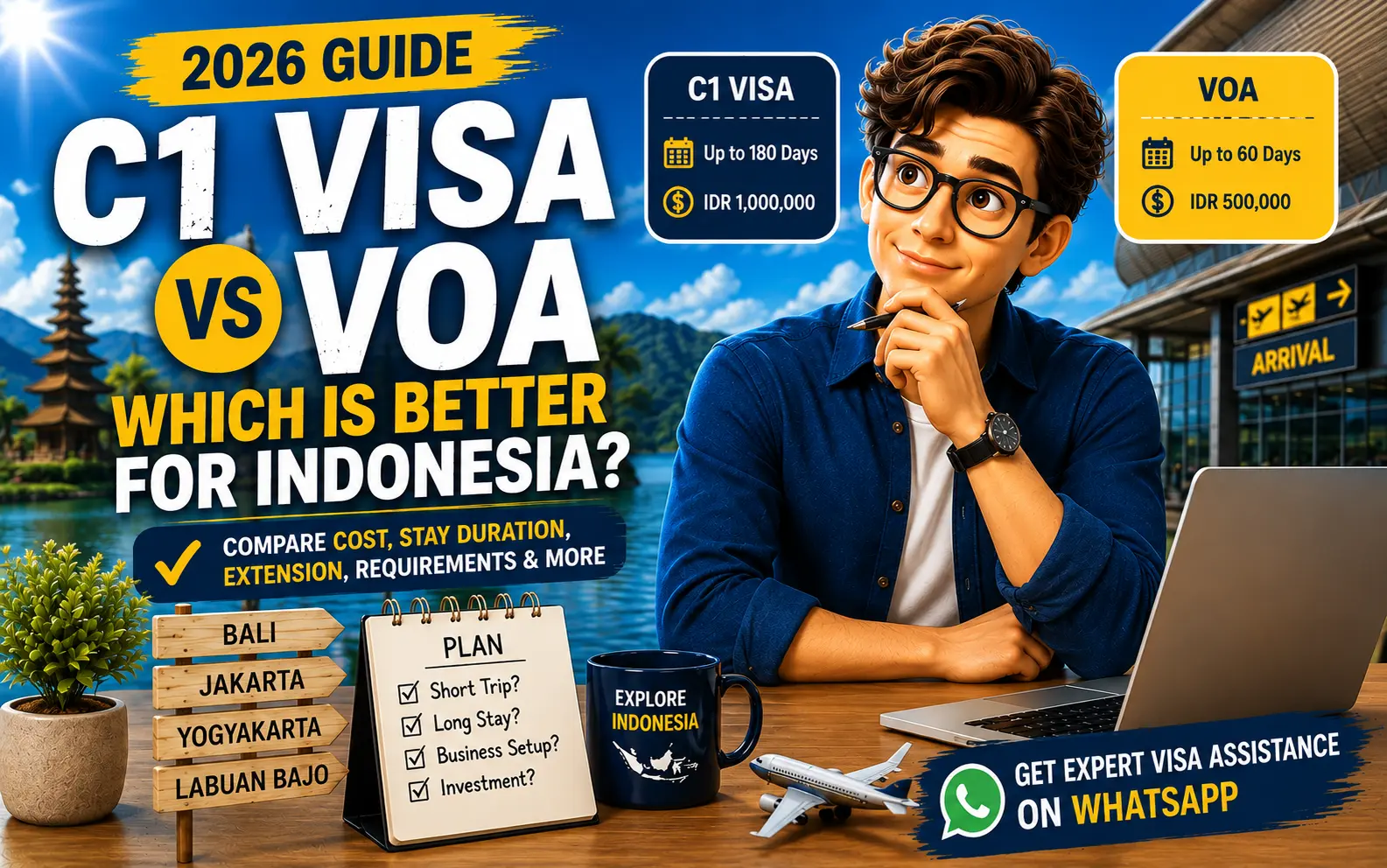
D1 may not be necessary for a traveler who only plans to make one trip to Indonesia. A single-entry tourist visa may be more appropriate when there is no need for repeated entry. Depending on the planned length of stay and eligibility, travelers may also want to compare C1 with other visitor options such as VOA in our guide to C1 Visa vs VOA.
D1 is also not a substitute for a work or residence visa. If your primary purpose is employment, establishing residence, or another activity that requires a different immigration status, you should use the visa category intended for that purpose.
The D1 Visa’s permitted activities should always be checked against the current Indonesian immigration rules before undertaking any activity in Indonesia.
4. D1 Visa Indonesia Requirements
Passport Requirements
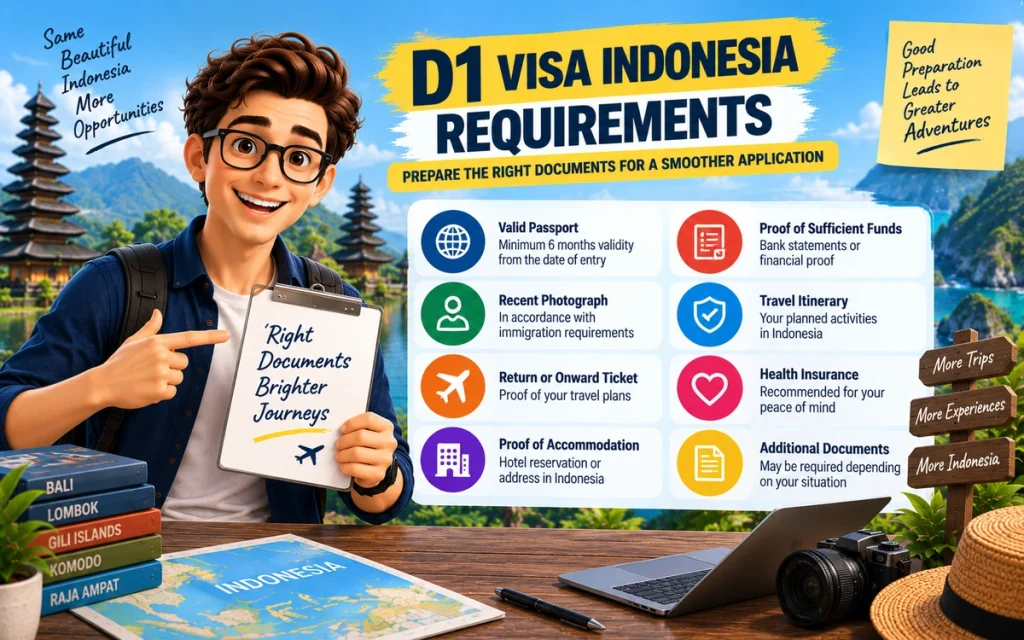
Applicants must have a valid travel document with at least six months of remaining validity. The document must be valid for the application and intended travel to Indonesia.
Proof of Funds and Other Supporting Documents
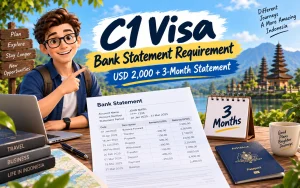
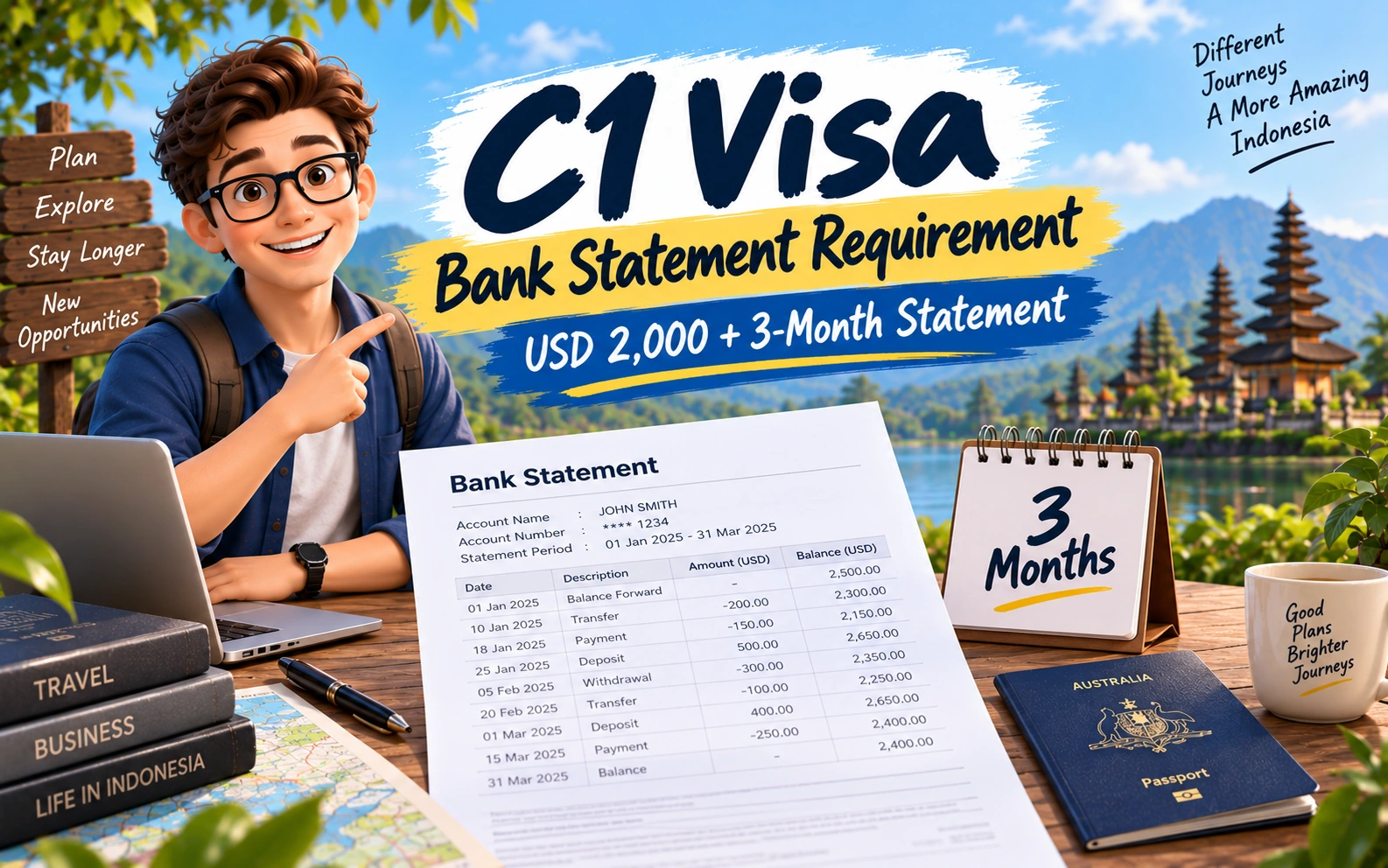
The current Indonesian Immigration requirements include proof of sufficient funds to cover living expenses in Indonesia. Applicants must provide a three-month bank statement in the name of the foreign national or sponsor showing a minimum balance equivalent to USD 2,000.
The application also requires a recent color photograph, curriculum vitae, and travel itinerary. These documents are submitted electronically through the official Indonesian e-Visa system.
Depending on the applicant’s circumstances, additional supporting documents may be required. The current D1 requirements include either a letter, invitation, or correspondence from a government institution or private organization explaining the relationship with the foreign national, or a statement from an Indonesian spouse or parent explaining the family relationship and the foreign national’s activities in Indonesia, supported by a family card or equivalent document.
Sponsor Requirements
A sponsor is generally not required to apply for a D1 Visa. However, Indonesian Immigration provides an exception for nationals of certain countries listed under the applicable sponsor requirements.
Applicants should therefore check the current official Immigration requirements based on their nationality before submitting the application. Where a sponsor is required, the sponsor must follow the applicable procedures in the e-Visa system.
5. D1 Visa Indonesia Cost and Fees
Official Government Visa Fee
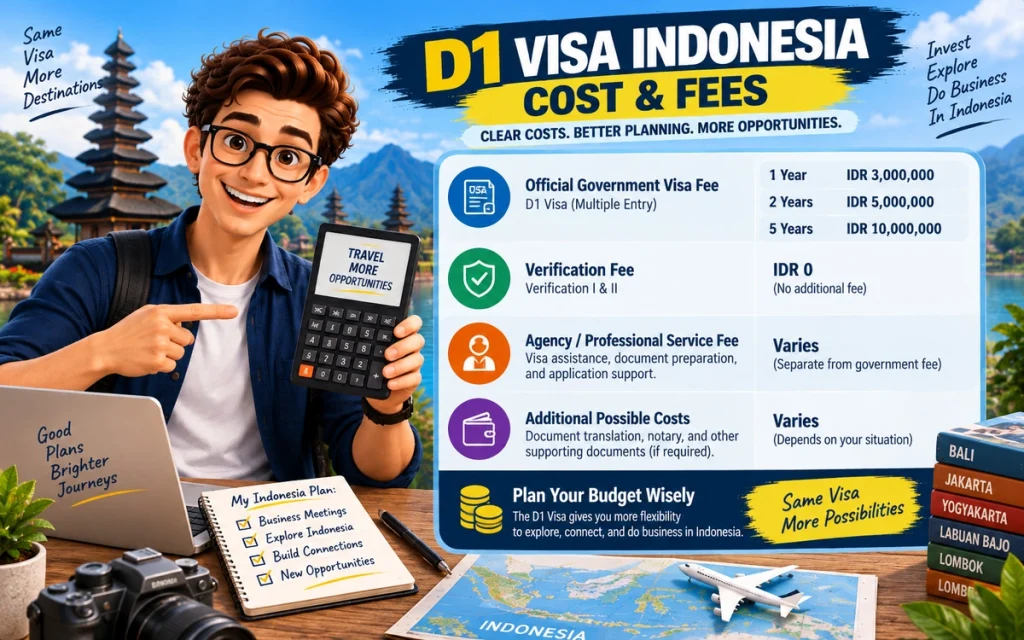
The current official Indonesian Immigration fee for the D1 Visa depends on the selected validity period:
| D1 Visa Validity | Official Government Fee |
| Up to 1 year | IDR 3,000,000 |
| Up to 2 years | IDR 5,000,000 |
| Up to 5 years | IDR 10,000,000 |
The current official page also lists the verification fee as IDR 0. Government fees can change, so applicants should confirm the amount shown in the official e-Visa system before making payment.
Additional Professional or Agency Service Fees
The official Immigration fee is separate from any professional service fee charged by a visa consultant or agency. Additional charges may apply for application assistance, document review, sponsorship arrangements where applicable, or other professional services.
When comparing D1 Visa prices, check whether a quoted amount refers only to the government fee or also includes professional services.
Does the D1 Visa Cost Depend on Its Validity Period?
Yes. The official government fee increases according to the selected visa validity period. The current D1 schedule provides separate fees for visas valid for up to one, two, and five years.
6. How to Apply for a D1 Visa Indonesia
Prepare the Required Documents
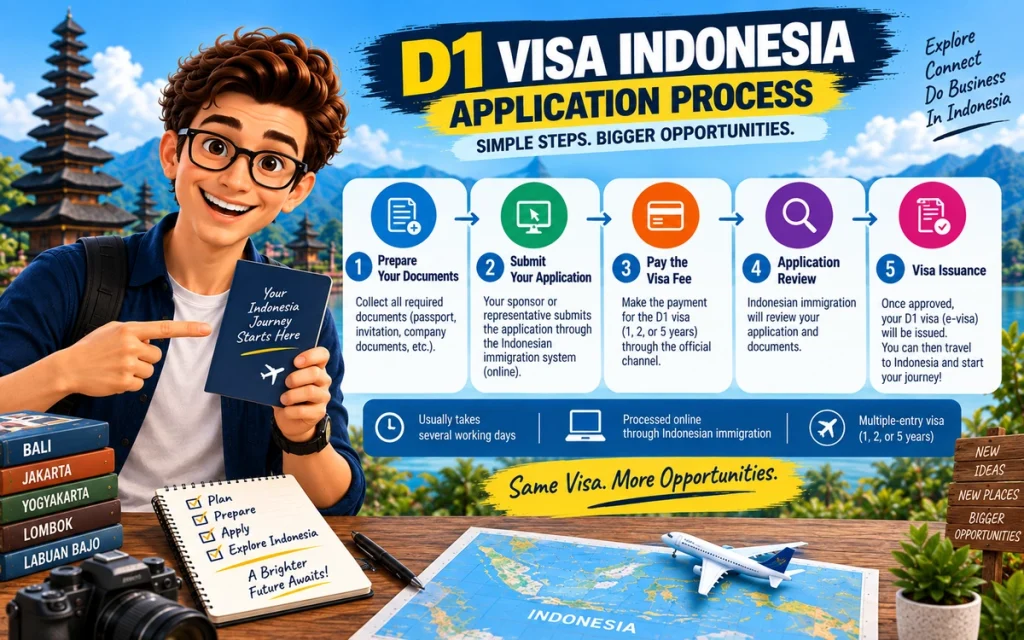
Before starting the application, prepare the required electronic documents, including the valid travel document, three-month bank statement showing sufficient funds, recent color photograph, curriculum vitae, travel itinerary, and any additional supporting documents required for your circumstances.
Submit the Visa Application
Applicants must create an account on the official Indonesian e-Visa website before submitting a D1 Visa application. After logging in, the applicant can submit the application electronically and upload the required documents in the specified format.
Immigration Verification and Processing
The application process includes checking the completeness of the requirements, verifying the immigration payment, creating and verifying the applicant profile, approval, and visa issuance.
Receive the D1 Visa
Once approved, the D1 Visa is issued electronically. Applicants should review the visa details carefully, including the validity period and conditions attached to the visa, before traveling to Indonesia.
7. D1 Visa Indonesia Processing Time
How Long Does the Application Take?
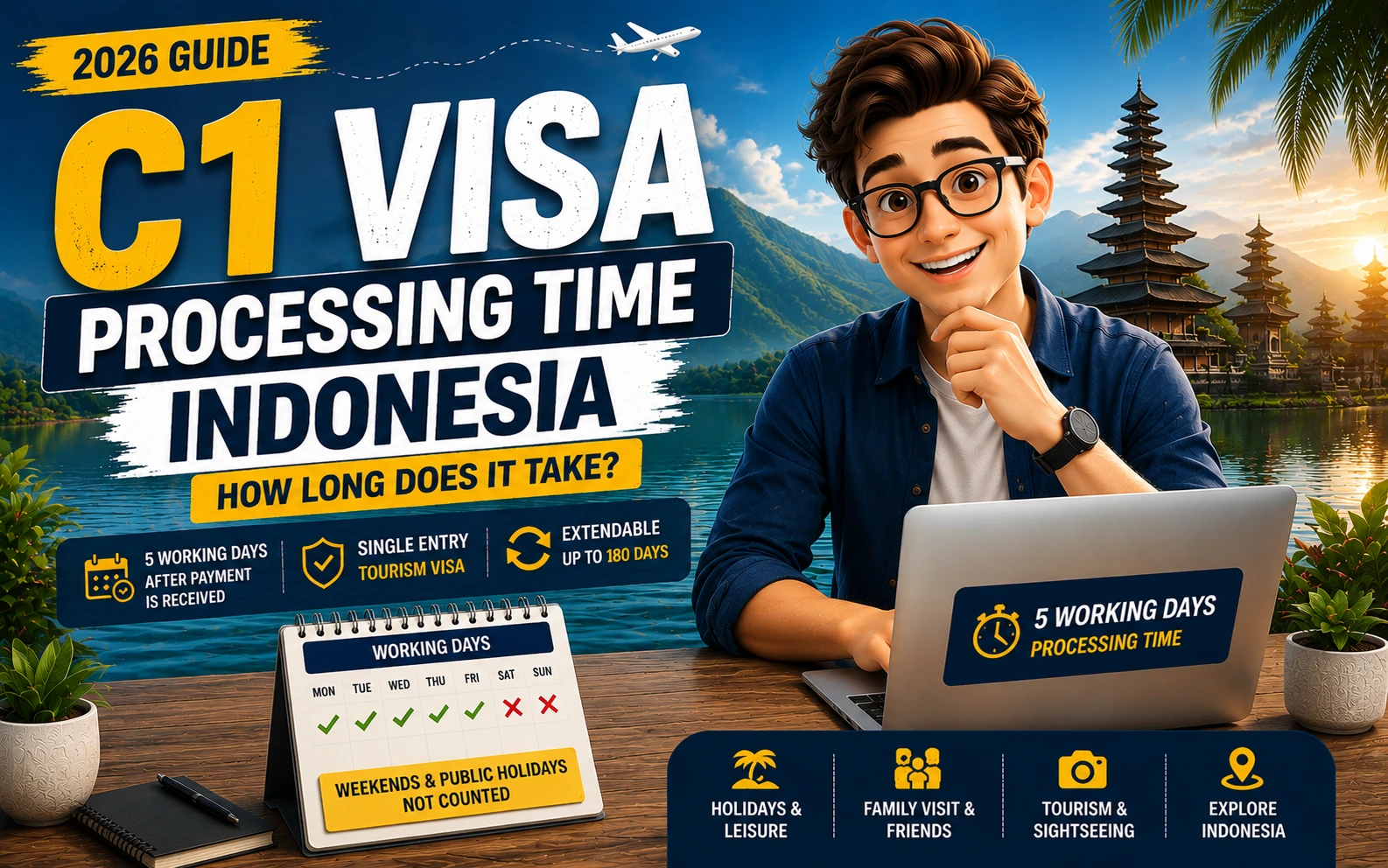
The current Directorate General of Immigration information states that D1 Visa processing takes five working days after the visa payment has been received.
What Can Cause Delays?
Applications may require additional review when information or supporting documents are incomplete or need clarification. Preparing complete and consistent documents before submission can help avoid unnecessary delays.
8. Can You Extend a D1 Visa in Indonesia?
D1 Visa Extension Rules
Yes. The stay granted through a D1 Visa can be extended. Under the current official Immigration rules, a D1 holder can initially stay for up to 60 days on each arrival and may extend the stay several times up to a maximum of 180 days.
The extension applies to the permitted stay in Indonesia. It does not change the D1 Visa into a residence permit. The official Immigration page also states that the D1 Visa cannot be converted into a Limited Stay Permit (ITAS).
When to Apply for an Extension
Travelers who need to remain in Indonesia beyond their current permitted stay should arrange the extension before that stay expires and follow the current procedure in the official e-Visa system.
The current Immigration information states that the extension can be completed online by the sponsor through a registered account. Because extension procedures can depend on the applicant’s circumstances, travelers should confirm the current requirements and process before applying.
9. What Can You Do With a D1 Visa?
Permitted Tourism and Visit Activities
The D1 Visa is designed for visitors who need to enter Indonesia multiple times for tourism and other permitted visit activities. According to the current Indonesian Immigration classification, D1 holders may travel for tourism, visit family, attend meetings, incentives, conventions, exhibitions, or similar events as participants, and transit through Indonesia to another country.
This makes the D1 Visa particularly useful for travelers whose plans require repeated visits to Indonesia rather than a single continuous tourist trip.
Activities That Require a Different Visa
The D1 Visa does not authorize employment or paid work in Indonesia. Indonesian Immigration specifically states that D1 holders are prohibited from selling goods or services or receiving compensation, wages, or similar remuneration for work or business activities from individuals or corporations in Indonesia.
If your purpose in Indonesia involves working, receiving income from Indonesian individuals or companies, or carrying out activities that are not covered by the D1 visit classification, you should consider the appropriate visa or stay permit instead of relying on a D1 Visa.
10. D1 Visa vs. C1 Visa Indonesia
D1 vs. C1 at a Glance
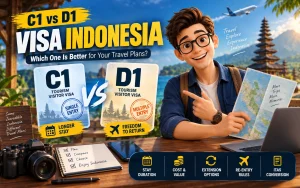
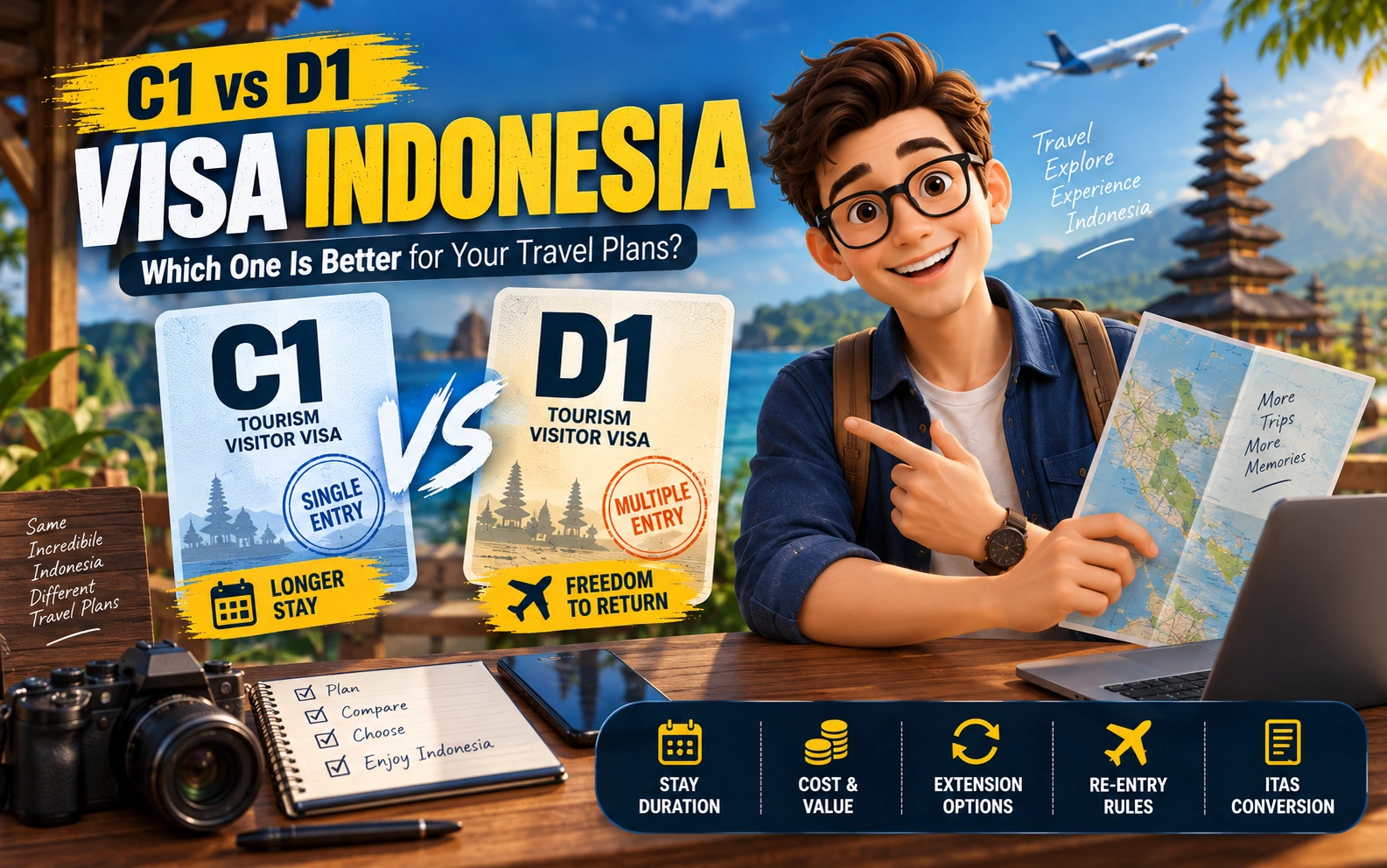
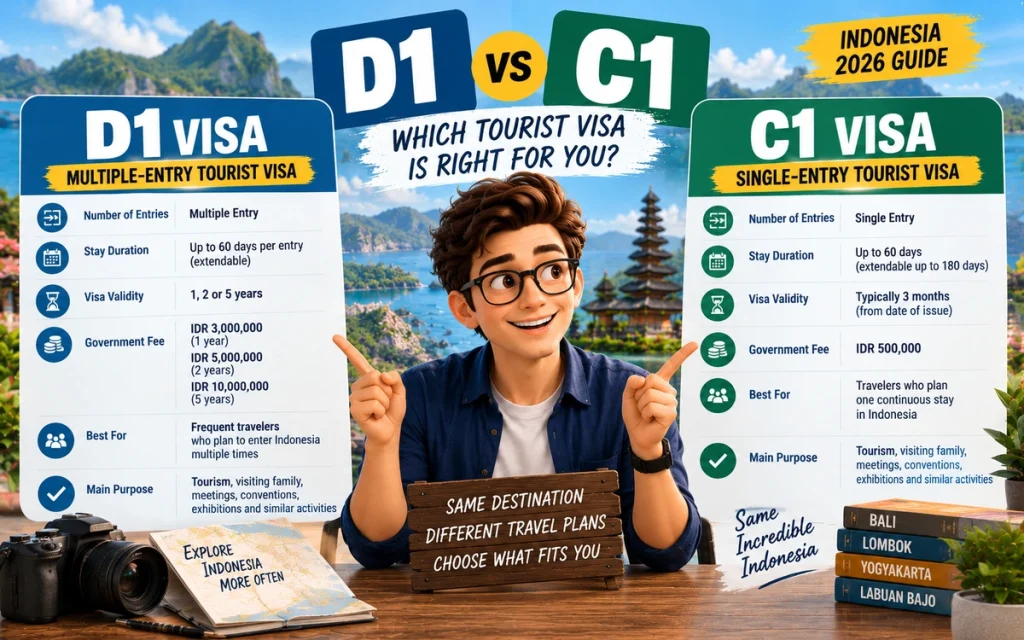
The main difference between the two visas is the number of entries they provide. The C1 Visa is a single-entry tourism visa, while the D1 Visa is a multiple-entry visitor visa. For a more detailed comparison, see our guide to C1 Visa vs D1 Visa Indonesia.
| Feature | D1 Visa | C1 Visa |
| Entry type | Multiple entry | Single entry |
| Stay per entry | Up to 60 days | Up to 60 days |
| Maximum stay with extensions | Up to 180 days | Up to 180 days |
| Main advantage | Repeated entries | Simple option for one trip |
| Best suited for | Frequent visitors | Travelers planning a single visit |
The two visas can therefore serve different travel patterns. A traveler who expects to leave Indonesia and return during the visa’s validity period may find the D1 more practical, while someone planning one continuous tourist stay may find the C1 sufficient. If you choose C1 and plan to stay longer, see our guide to C1 Visa Extension Indonesia for more information about extending your stay.
Which Visa Is Better for Frequent Travelers?
For frequent travelers, the D1 Visa is generally the more suitable option because it allows multiple entries into Indonesia during the visa’s validity period. This avoids the need to apply for a new single-entry tourist visa every time the traveler leaves Indonesia and plans to return.
However, the D1 is not automatically the better choice for every traveler. If you only plan one trip to Indonesia, a single-entry C1 Visa may be more appropriate and simpler for your travel needs.
11. D1 Visa Indonesia FAQ
Is D1 Visa Indonesia multiple entry?
Yes. The D1 is a multiple-entry visitor visa. It allows the holder to enter Indonesia several times during the visa’s validity period, with a maximum stay of 60 days on each arrival.
How long can I stay in Indonesia with a D1 Visa?
You can stay for up to 60 days on each arrival. The permitted stay can be extended several times up to a maximum of 180 days, subject to the applicable Immigration requirements.
How much does a D1 Visa Indonesia cost?
The current official government fee is IDR 3,000,000 for a D1 valid for up to one year, IDR 5,000,000 for up to two years, and IDR 10,000,000 for up to five years. Professional or agency service fees, if any, are separate.
Who can apply for a D1 Visa?
Foreign nationals who meet the D1 visitor visa requirements can apply through the Indonesian e-Visa system. The current requirements include a valid travel document, proof of funds, a recent color photograph, curriculum vitae, travel itinerary, and any applicable special supporting documents.
Can I work in Indonesia with a D1 Visa?
No. The D1 Visa does not authorize paid work in Indonesia. Immigration rules prohibit D1 holders from selling goods or services or receiving compensation, wages, or similar remuneration for work or business activities from individuals or corporations in Indonesia.
Can a D1 Visa be converted to a KITAS?
No. The current D1 Visa rules state that the stay granted under the D1 Visa cannot be converted into a Limited Stay Permit (ITAS/KITAS). If your purpose requires a KITAS, you should use the appropriate visa or stay permit pathway.
12. Conclusion: Is the D1 Visa Indonesia Right for You?
The D1 Visa Indonesia is primarily designed for foreign travelers who need the flexibility of multiple entries. It can be a practical choice for frequent visitors, travelers with recurring trips, and people who need to return to Indonesia during the visa’s validity period.
The key point is to distinguish visa validity from permitted stay. A D1 Visa may be valid for one, two, or five years, but each arrival allows a stay of up to 60 days, with extensions available up to a maximum of 180 days under the applicable rules.
If you are planning only one tourist trip, a C1 Visa may be enough. If you expect to enter Indonesia repeatedly, the D1 can provide substantially greater flexibility. Before applying, check the latest Indonesian Immigration requirements and select the visa validity period that matches your travel plans.
Need Help With Your D1 Visa Indonesia Application?
Planning multiple trips to Indonesia and not sure whether the D1 Visa is right for you? AzraID can help you understand the requirements, prepare your documents, and choose the appropriate visa option based on your travel plans.
Contact AzraID for personalized Indonesia visa assistance and get guidance before submitting your application.