Indonesia offers opportunities for international artists, musicians, performers, athletes, and sports professionals. To take up a professional engagement in the country, foreign nationals and Indonesian organizers must identify the immigration route that matches the activity and determine whether the arrangement is a temporary event engagement or formal employment. Indonesia has specific visit-visa classifications for certain artistic, music, and sporting activities, while employment relationships are governed by separate immigration and manpower requirements.
An Indonesia work visa sponsorship arrangement is not one universal process. The correct route depends on the foreign professional’s actual duties, the duration and frequency of the engagement, the contractual relationship, and the eligibility of the Indonesian sponsor or employer. For qualifying employment, an eligible impresariat business may be an employer of foreign workers under the applicable regulations, but it must still meet the relevant RPTKA and immigration requirements.
This guide explains the main visa options for foreign artists and athletes, the role of an Indonesian impresariat company, the relationship between RPTKA and immigration permission, and the practical steps for arranging a compliant professional engagement. It is general information; eligibility and approvals must be checked against the current rules and the facts of each case.
Quick distinction: C7, C7A, C7B, C7C, C8, C8A, and C8B are visit-visa classifications for specified artistic, music, talent, and sports activities. D7 and D8 are listed for corresponding multiple-entry artistic/cultural and sports activities. E23 is a separate work-visa classification for qualifying employment. These routes are not interchangeable; confirm the exact permitted activity and current application conditions before filing.
Understanding Indonesia Work Visa Sponsorship
What Does Indonesia Work Visa Sponsorship Mean?
“Indonesia work visa” is a common search term used to describe immigration permission for foreign nationals undertaking work or other professional activities in Indonesia. It is not the name of one universal visa. The official visa index contains different classifications for activities such as artistic performances, music performances, sporting activities, sports officials, and employment.
The distinction matters. A foreign musician engaged for a defined concert may follow a different route from a musician hired as an employee by an Indonesian company. Likewise, an athlete participating in a particular competition may have different requirements from an athlete employed by an Indonesian club for a season.
The visa index and the permitted activities attached to a visa should be checked before an application is filed. The foreign national must carry out only the activities permitted by the visa and stay permit issued to them.
Can Foreigners Legally Work in Indonesia?
Yes. Foreign nationals may undertake professional or employment activities in Indonesia when the relevant immigration and manpower requirements are met. The requirements depend on the legal nature of the engagement. Some event-based activities have specific visit-visa classifications. Employment by an Indonesian employer may require an employment-related limited-stay visa and the manpower approvals applicable to that employment.
A tourist visa or a visa issued for an unrelated purpose should not be treated as general permission to work. A contract, invitation, or payment arrangement does not by itself determine the correct immigration category. The actual duties and the applicable visa conditions must be assessed.
The distinction between a short-term assignment and an employment relationship is explained in the sections below.
Visa, Work Authorization, and ITAS: What Is the Difference?
A visa is an immigration authorization used to enter Indonesia for the purpose stated in its classification. A stay permit determines the foreign national’s permitted period of stay after entry or activation, depending on the visa route. ITAS (Izin Tinggal Terbatas) is a limited stay permit, commonly referred to as KITAS in everyday usage.
RPTKA (Rencana Penggunaan Tenaga Kerja Asing) is different. It is a manpower-related approval concerning an employer’s plan to use foreign workers. It is not a visa and it is not an ITAS. Where the foreign worker regulations require an approved RPTKA, immigration sponsorship alone does not replace that manpower requirement.
In practical terms, the parties should separately confirm: (1) the correct immigration classification; (2) whether an Indonesian sponsor or guarantor is required; (3) whether the engagement constitutes employment subject to RPTKA; and (4) the stay permit and duration that will apply.
Who Needs an Indonesia Work Visa or Other Work-Related Immigration Permission?
The relevant immigration route depends on what the foreign national will do in Indonesia, not simply the industry or job title. The following groups commonly need an assessment before travelling or starting an assignment.
Professional Athletes
Foreign athletes may travel to Indonesia to compete in leagues, tournaments, championships, exhibitions, or other organized sporting activities. The immigration route depends on whether the athlete is participating in a qualifying sporting event or is entering an employment arrangement with an Indonesian club or organization.
For qualifying sporting activities, the official visa index includes C8 and the more specific C8A athlete and C8B sports-official classifications. D8 is listed for multiple-entry sports activities. If an athlete is instead employed by an Indonesian organization, the employer must assess the employment route, applicable RPTKA requirements, and the current work-visa conditions. These are not interchangeable routes: the facts of the engagement determine which one should be considered.

Sports Coaches and Instructors
Foreign coaches and instructors may be engaged by sports clubs, academies, federations, schools, or event organizers. Examples include football, swimming, tennis, badminton, basketball, martial arts, and performance coaching. The correct route depends on whether the person is providing a specific short-term service, participating in an event, or working under an employment relationship.
A job title such as “coach” does not by itself establish the visa category. The sponsor should document the actual duties, work location, duration, contractual relationship, and any applicable manpower approval.
Sports Officials and Referees
Sports officials may include referees, judges, umpires, technical delegates, competition supervisors, and other qualified personnel appointed to perform official duties at sporting events. Indonesia’s current public visa list identifies C8B for sports officials and D8 for multiple-entry sports activities. If the role is an employment position rather than event participation, the employer must assess the applicable employment visa and manpower requirements.
The organizer should provide clear evidence of the appointment and the event, such as an official invitation, competition schedule, role description, and details of the responsible Indonesian organization.
Foreign Artists and Performers
Foreign artists may participate in theatre, dance, cultural presentations, stage productions, and other artistic performances in Indonesia. The official visa list includes C7 for general art performers and crew, C7C for talent and art performance, and D7 for multiple-entry artistic and cultural performance activities. Music performers and their crew have separate C7A and C7B classifications. Where the artist is employed under a qualifying employment arrangement, the employer must assess the appropriate work-visa route, approved position, and applicable manpower requirements.
A temporary performance engagement should not automatically be treated as regular employment, and an employment arrangement should not be labelled a temporary performance merely to use a different route. The documents and application must reflect the real engagement.
Musicians, Singers, and DJs
International singers, instrumentalists, touring band members, DJs, and other music performers may be invited to concerts, festivals, club performances, and organized music events. The official visa list distinguishes C7A for music performers and C7B for music performer crew. The public list reviewed here shows D7 as the multiple-entry artistic and cultural performance category; applicants should verify the precise activity and conditions through the live portal rather than assuming that older D7A or D7B labels remain current.
The sponsor and applicant should distinguish the performer from accompanying crew and describe each person’s actual function. A musician hired as an employee for an ongoing role may require a different assessment from a musician engaged for a defined concert.

Entertainment and Other Performers
The term performer can cover a range of professional roles, including dancers, actors, stage performers, circus artists, and other entertainers. The appropriate visa classification depends on the specific performance and whether the individual is a performer, crew member, or employee in an ongoing position.
Applicants should not assume that all entertainment roles fall under the same category. The production description, event schedule, contract, and role of each foreign participant should be reviewed before an application is made.
Sports and Entertainment Consultants
Foreign consultants may provide specialist advice in areas such as athlete development, sports operations, performance strategy, talent management, entertainment business, or event planning. The correct route depends on the scope of services, the client relationship, the place where the services are performed, and whether the arrangement constitutes employment in Indonesia.
A business meeting or discussion is not automatically the same as delivering paid professional services in Indonesia. The sponsor should describe the assignment accurately and check the permitted activities of the proposed visa.
Event Managers and Production Professionals
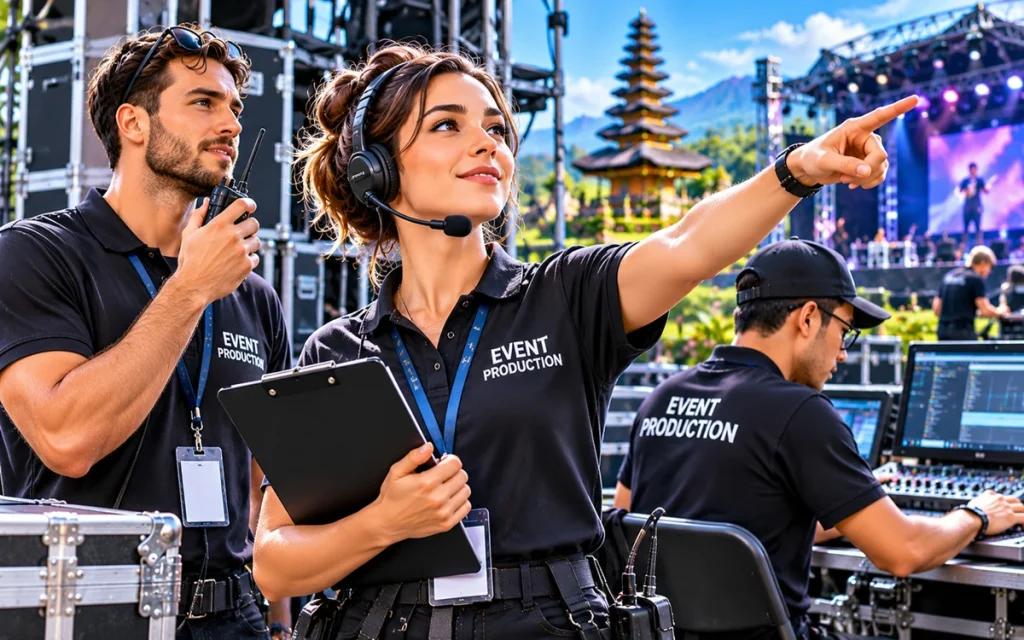
International event managers, concert producers, stage managers, lighting and sound specialists, technical directors, and production personnel may be involved in Indonesian events. Their immigration requirements depend on their precise duties and engagement structure. A person attending planning meetings may be in a different position from a person carrying out hands-on professional work at a production site.
Organizers should prepare role descriptions and event documentation for each foreign team member rather than treating an entire international crew as one undifferentiated group.
Indonesia Performer Visa, Artist Visa, Sports Visa, and Employment Categories
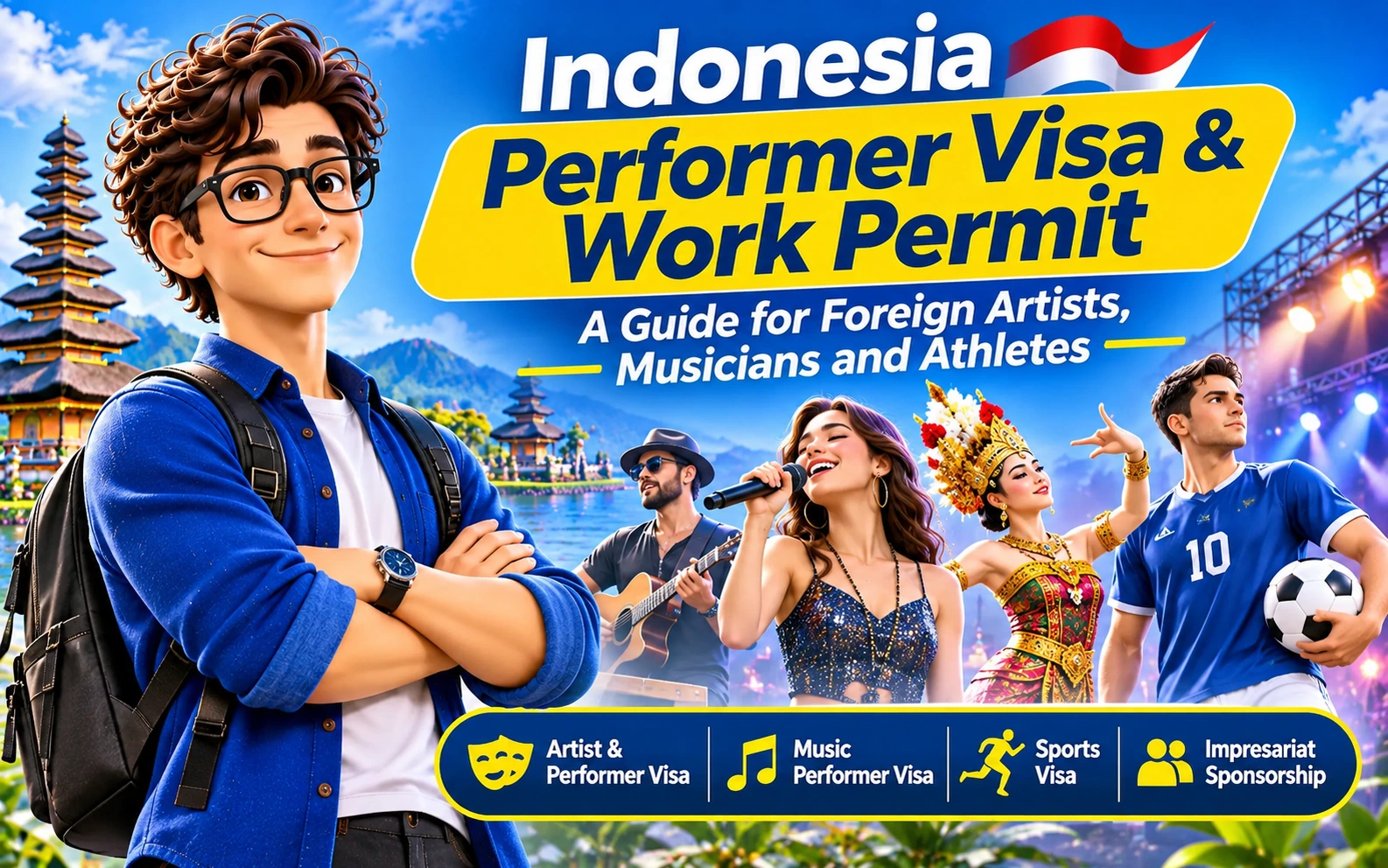
Indonesia’s immigration system uses separate classifications for different purposes. The following categories are relevant to the sports, entertainment, and employment scenarios discussed in this guide. Visa indices and conditions can change, so applicants should verify the current description and requirements on the official eVisa portal before applying.
C7, C7A, C7B, and C7C: Art, Music, and Talent Performance Visas
The official Immigration visa list distinguishes several single-entry visit categories for performance-related activities: C7 for general art performers and crew, C7A for music performers, C7B for music performer crew, and C7C for talent and art performance. These categories should not be treated as interchangeable. The applicant’s actual role, the type of performance, and the permitted activity must match the selected index. Check the current eVisa portal instructions for validity, stay period, sponsor requirements, and supporting documents before applying.
The event organizer or other eligible guarantor should ensure that the application documents describe the performance, venue, dates, role, and responsible parties accurately.
C8, C8A, and C8B: Sports Visas for Athletes and Officials
The official visa list includes C8 as the single-entry visit category for sports activities, with C8A identified for athletes and C8B for sports officials. Immigration describes the Sport Visa as a route for qualifying sporting activities, including activities supported by the required invitation or sports-organization documentation. It should not be assumed that every paid or commercial sports employment arrangement qualifies. The applicant’s role, event, organizer, and permitted activity must be checked against the current visa conditions.
The supporting documents may include an invitation from the organizer, competition details, appointment confirmation, schedule, and information about the Indonesian guarantor.
D7 and D8: Multiple-Entry Art and Sports Visit Visas
The official visa list also includes D7 for multiple-entry artistic and cultural performance activities and D8 for multiple-entry sports activities. The public visa index reviewed for this guide does not list separate D7A, D7B, D8A, or D8B subcategories, so applicants should not rely on older online references to those labels without confirming the live classification. D7 and D8 are not unrestricted work permits. Each entry and activity must remain within the category’s permitted scope and current conditions.
Multiple-entry permission is not blanket authorization to undertake any work. Each entry and activity must remain within the conditions of the visa. Applicants should confirm the current validity, permitted activities, and sponsor requirements before relying on a multiple-entry category.
E23: Employment Visa and Limited Stay Permit
For foreign nationals entering a genuine employment relationship in Indonesia, E23 is listed as an employment-related limited-stay visa category. The employer must assess the applicable manpower approval and immigration requirements before the foreign national starts work. The job, employer, work location, duration, and supporting documents must match the approvals. Immigration’s current visa index should be checked at the time of application because visa subcategories and eligibility rules may be revised. For general employment-service information, visit Azra Solutions’ Working Visa (KITAS) service.
Do not rely on older online articles that describe artist-, athlete-, or sports-official-specific E23 subcategories without checking the current official index. The current public Immigration list identifies E23 as a work-visa category and separately lists other employment classifications, including E25 categories for company commissioners and executives. The correct category must be matched to the actual role and eligibility rules at the time of filing. For general employment-service information, see Azra Solutions’ Working Visa (KITAS) service.
For general employment arrangements outside the specific artist, athlete, or sports-official descriptions, E23 may be relevant, subject to the current classification and eligibility conditions.
ITAS and KITAS for Employment
ITAS means Izin Tinggal Terbatas, or Limited Stay Permit. KITAS is a commonly used term for the documentation or status associated with a limited stay permit. An employment-related limited-stay visa may lead to the issuance of an ITAS in accordance with the relevant process.
Immigration guidance lists initial ITAS periods for employment-related categories such as 180 days, one year, or two years, depending on the classification and approval. Extensions and the total permitted period are subject to the applicable rules and the individual’s category. Applicants should not assume that every visa offers the same duration.
An ITAS does not give unrestricted permission to work in any position or for any organization. The foreign national must comply with the purpose and conditions of the immigration permission and any applicable employment authorization.
RPTKA: Foreign Worker Utilization Plan
RPTKA stands for Rencana Penggunaan Tenaga Kerja Asing, or Foreign Worker Utilization Plan. Under Government Regulation No. 34 of 2021, employers that utilize foreign workers are generally required to obtain RPTKA approval, subject to exemptions and specific provisions in the regulations.
The RPTKA process concerns the employer’s use of foreign workers, including the proposed position and period of employment. It is a manpower approval, not a visa, not an ITAS, and not a general sponsorship license.
Whether RPTKA is required must be assessed against the actual legal arrangement and any applicable exemption. A short-term activity under a specific visit visa should not automatically be treated as regular employment; conversely, a company should not assume that describing an engagement as an event will remove employment obligations where the facts show an employment relationship.
Temporary Assignments vs. Long-Term Employment
Short-Term Event and Performance Assignments
A short-term assignment may involve a defined concert, festival, sporting competition, cultural performance, or other event. The foreign professional’s role, event dates, organizer, and permitted activities should be documented. The appropriate visit-visa category depends on the activity and current immigration rules.
Short duration alone does not determine the visa. A short assignment can still involve professional activity that requires a specific work-related visit visa. The applicant should not use a tourist visa simply because the event lasts only a few days.
Recurring or Multiple-Entry Engagements
Some professionals need to enter Indonesia more than once for a series of qualifying events or assignments. The multiple-entry categories listed for artistic, music, and sporting activities may be relevant, but the applicant must satisfy the category-specific conditions.
A multiple-entry visa does not convert a temporary event engagement into general employment permission. It also does not automatically authorize a change in sponsor, role, or activity.
Longer-Term Employment
Where a foreign national is hired to work for an Indonesian employer under an ongoing employment arrangement, the parties should assess the relevant employment visa and ITAS route, together with RPTKA and other manpower obligations where required.
The employer should ensure that the job title, duties, work location, contract period, and supporting documents are consistent. If the role or employer changes, the parties should check whether a new approval or immigration procedure is necessary.
How Indonesia Work Visa Sponsorship Works
What Is an Indonesian Sponsor or Guarantor?
An Indonesian sponsor or guarantor (Penjamin) is an eligible person or organization that provides the sponsorship required by a particular visa or stay-permit category. The sponsor’s role and obligations depend on the immigration classification. Some categories require a corporate guarantor, while the eligibility rules for other categories may differ.
The sponsor should be a genuine party connected to the applicant’s intended activity and must be eligible under the relevant rules. Sponsorship should not be treated as merely lending a company name or submitting an application without responsibility for the underlying engagement.
Can an Indonesian Company Sponsor Foreign Professionals?
An Indonesian company may be able to sponsor foreign professionals where the relevant visa category permits corporate sponsorship and the company meets the applicable conditions. The company’s legal status, registered business activities, operational capacity, and relationship to the proposed engagement should be reviewed.
For example, an event organizer may have a legitimate role in arranging a visiting performer’s participation, while a sports club may engage an athlete under a qualifying employment arrangement. The correct sponsor and visa category depend on the facts of each case.
The Role of an Impresariat Company
Government Regulation No. 34 of 2021 expressly includes an impresariat services business (usaha jasa impresariat) among the categories of employers that may employ foreign workers. This means an eligible impresariat business can fall within the recognized employer categories; it does not mean that every company describing itself as an impresariat is automatically approved to employ or sponsor every foreign professional. The company must meet the applicable legal, manpower, and immigration requirements, and the engagement must reflect its genuine business activities.
Minister of Manpower Regulation No. 8 of 2021 provides a procedure for RPTKA approval for temporary work. Article 8 includes impresariat services as one of the activities eligible for this temporary-work application route; it separately includes one-off work or work lasting less than six months. Article 9 sets out the application information and supporting documents. This is not an exemption from RPTKA and should not be simplified into a rule that every impresariat engagement is automatically limited to six months. The employer must assess the correct route and obtain the required approval.
Under the framework in Government Regulation No. 34 of 2021, employers using foreign workers are generally required to obtain approved RPTKA, subject to the applicable exceptions and special procedures. Article 3 includes an impresariat services business among the recognized employer categories. Before engaging a foreign professional, an impresariat company should verify its legal form, business licensing, registered activities, role as the actual employer, the position to be occupied, and the applicable RPTKA and immigration route. The applicable legal framework and implementing guidance should be checked again at the time of each application.
An Indonesian impresariat company may organize, manage, represent, or facilitate professional engagements in the performing arts and entertainment sectors. Depending on its registered business activities and actual operations, the company may coordinate artists, performers, event organizers, venues, production teams, and other professional partners. For people searching for an Indonesia Artist Visa or Indonesia Music Performance Visa, it is important to distinguish a temporary performance engagement from formal employment.
Where legally eligible, an impresariat company may also act as a sponsor or guarantor for specific immigration applications. However, being an impresariat does not automatically authorize a company to sponsor every foreign national or every type of work. Eligibility must be checked against the relevant visa category and manpower rules.
A company considering this business model should align its corporate documents and business activities with the services it genuinely provides. It should also distinguish event management or artist representation from employing foreign workers, because those arrangements can trigger different legal requirements.

Sponsor Responsibilities and Compliance
Depending on the visa category, the sponsor may need to provide accurate company information, submit or support the application, provide required documents, ensure that the stated purpose matches the actual engagement, and comply with applicable reporting or guarantee obligations.
An employer using foreign workers must separately comply with manpower requirements that apply to the employment. The sponsor and the foreign national should keep copies of contracts, invitations, event schedules, approvals, and immigration documents, and should monitor the validity of the relevant permission.
Need Assistance With Indonesia Work Visa Sponsorship?
Arranging a professional engagement in Indonesia may involve several considerations, including sponsor eligibility, the appropriate visa category, RPTKA requirements, and supporting documentation.
Azra Solutions can help you understand the relevant immigration procedures and assess your sponsorship requirements based on your intended professional activities in Indonesia.
Indonesia Work Visa Application Process
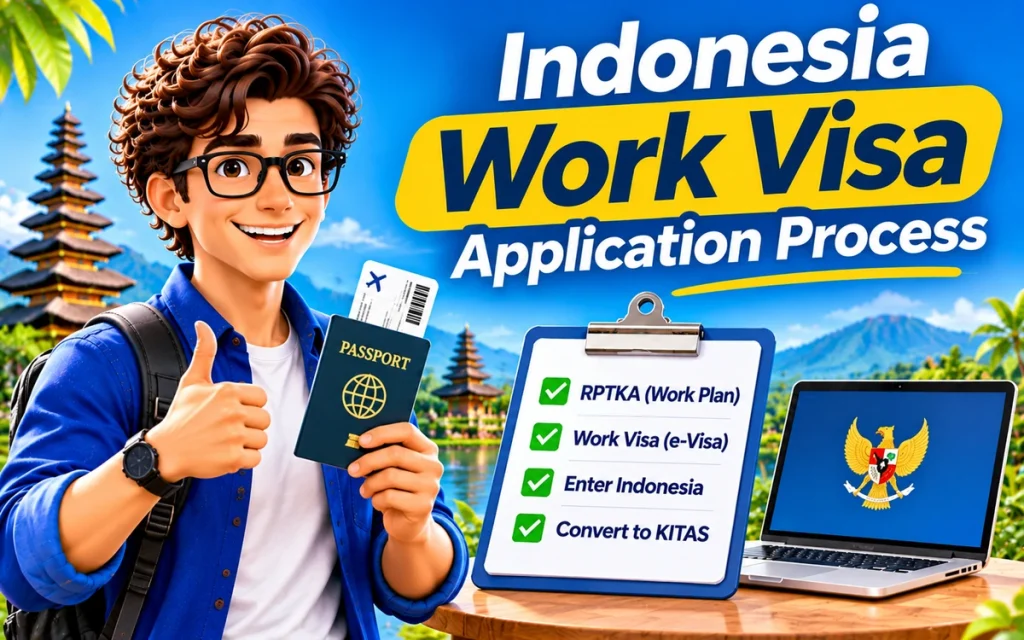
Step 1: Define the Professional Activity
Identify the applicant’s actual duties, the event or employment arrangement, the Indonesian organization involved, the work location, and the expected duration. Do not select a visa solely by job title or by the name used in a contract.
Step 2: Confirm the Visa Category and Sponsor
Check the current official visa index and confirm whether the category requires a corporate sponsor, another type of guarantor, or permits a different application arrangement. Confirm that the proposed sponsor is eligible and genuinely connected to the activity.
Step 3: Check Manpower Requirements
If the engagement is employment in Indonesia, determine whether RPTKA approval is required and whether any specific exemption applies. The employer should complete the relevant manpower procedures and ensure that the position and employment details are consistent with the immigration application.
Step 4: Prepare Supporting Documents
The applicant and sponsor should prepare the passport, photographs, company documents, invitation or employment documents, role description, event or work schedule, and other documents required for the specific category. Documents should be legible, current, and consistent.
Step 5: Submit the Application Through the Official System
Applications should be submitted through the official Indonesian Immigration eVisa portal or the process designated for the relevant category. The applicant and sponsor should follow the portal’s current instructions for uploading documents, payment, verification, and issuance.
Apply and check current requirements through the official Indonesian Immigration eVisa portal: evisa.imigrasi.go.id
Step 6: Review the Issued Visa and Complete Arrival Formalities
Before travel, check the visa details, validity, permitted activity, sponsor information, and entry conditions. After arrival, complete any required immigration formalities and confirm the stay permit issued under the relevant route.
Step 7: Maintain Compliance During the Assignment
The foreign national should carry out only the activities authorized by the visa and stay permit. The sponsor or employer should monitor expiry dates, changes in duties or work location, and any reporting or extension requirements. If the arrangement changes, obtain advice before the foreign national undertakes the new activity.
Common Problems Foreign Professionals and Sponsors Should Avoid
Choosing a Visa Based on the Job Title Alone
The same job title can describe different legal arrangements. A musician performing at a single concert, a musician employed by a venue, and a music producer providing consulting services may require different assessments. Focus on the actual duties, contract, duration, and sponsor.
Assuming Every Short Assignment Is Exempt from Work-Related Requirements
A short duration does not automatically make an activity tourism or remove the need for a work-related visa. The applicant should check whether the activity is covered by a specific visit-visa classification or another authorization.
Assuming Every Foreign Professional Needs the Same RPTKA Process
RPTKA requirements depend on the employment arrangement and applicable exemptions. The employer should not apply a one-size-fits-all rule to event performers, visiting sports officials, consultants, and long-term employees.
Using a Sponsor That Is Not Eligible for the Selected Category
A company’s existence or NIB does not automatically make it an eligible sponsor for every visa. Confirm sponsor eligibility for the specific category and ensure that the company’s role in the engagement is genuine.
Submitting Inconsistent or Incomplete Documents
Different job titles, dates, sponsor details, event descriptions, or contract terms across documents can create questions during assessment. Prepare one consistent description of the professional engagement and check every document before submission.
Performing Activities Outside the Approved Scope
A visa or stay permit is not unrestricted permission to undertake any work. The foreign national should not change employers, duties, or activities without checking whether additional approval or a new immigration process is required.
Why Work With an Indonesian Impresariat or Professional Sponsor?
International professional engagements often involve more than immigration paperwork. Artists, athletes, event organizers, and production teams may need local coordination, clear contractual arrangements, and a reliable Indonesian counterpart. An experienced local company can help organize these elements, provided that it is legally eligible to perform the relevant role.
Professional Engagement Coordination
An impresariat or management company may coordinate the relationship between international talent and Indonesian organizers, venues, clubs, promoters, or production companies. This can include engagement planning, documentation, scheduling, and communication with local partners.
Sports and Athlete Engagements
For athletes and sports professionals, local coordination may involve clubs, competition organizers, sports associations, and event operators. The immigration route should be assessed separately for event participation and employment with an Indonesian organization.
Entertainment and Performing Arts
For artists, musicians, and performers, an Indonesian counterpart may coordinate performance agreements, event schedules, production arrangements, and the documents needed to support the correct immigration application.
Event and Production Teams
International events may involve performers, technical crew, managers, consultants, and production specialists. Each person’s role should be identified and assessed individually. A single event may therefore involve more than one immigration category.
Immigration and Manpower Coordination
A professional sponsor or adviser can help identify the questions that need to be resolved before an application is submitted: visa category, sponsor eligibility, RPTKA requirements, supporting documents, stay-permit duration, and compliance during the engagement. Final decisions and approvals remain with the competent Indonesian authorities.
Frequently Asked Questions About Indonesia Work Visa Sponsorship
Can foreigners legally work in Indonesia?
Yes. Foreign nationals may undertake professional or employment activities when they hold the appropriate immigration permission and comply with applicable manpower regulations. The correct route depends on the actual activity and contractual arrangement.
Can an Indonesian company sponsor a foreign athlete?
An eligible Indonesian company or organization may sponsor a foreign athlete under a visa category that permits the relevant sponsorship arrangement. The sponsor must meet the category’s requirements, and employment-based arrangements must also be assessed under manpower regulations.
Which visa is used by foreign musicians performing in Indonesia?
The official visa list identifies C7A for music performers and C7B for music performer crew. General art performers and crew are listed under C7, while C7C covers talent and art performance. The applicant must select the category matching their actual role and the current conditions.
Which visa is used by foreign athletes participating in Indonesian sporting events?
The official visa list identifies C8A for athletes and C8B for sports officials. D8 is listed for multiple-entry sports activities. The applicant must confirm that the event and role meet the current category requirements.
What is the difference between an artistic performance visa and an employment visa?
C7 is a visit-visa category for qualifying general art performers and crew, while E23 is an employment-related limited-stay visa category. They relate to different types of engagement and should not be treated as interchangeable. The correct route depends on whether the person is undertaking a qualifying event-based performance or entering an employment relationship.
What is the difference between a sports visit visa and an employment visa?
C8A is listed for athletes and C8B for sports officials under the single-entry sports visit-visa framework. D8 is listed for multiple-entry sports activities. A foreign athlete participating in an eligible event and an athlete employed by an Indonesian organization may have different requirements.
What is RPTKA in Indonesia?
RPTKA is the Foreign Worker Utilization Plan. It is a manpower approval relating to an employer’s use of foreign workers. Employers are generally required to obtain it unless a regulatory exemption or specific provision applies. RPTKA is not a visa or stay permit.
Can an Indonesian impresariat company employ or sponsor foreign artists and athletes?
An Indonesian impresariat company may be able to sponsor particular applications if it is eligible under the relevant immigration category and its role and business activities support the engagement. Its status as an impresariat does not automatically grant permission to sponsor every foreign professional.
How long does an Indonesia work visa application take?
Processing time varies by category, completeness of documents, sponsor eligibility, required manpower approvals, and assessment by the authorities. Applicants should check current processing information through the official portal and avoid relying on a guaranteed timeline.
Can a foreign professional extend their stay in Indonesia?
An extension may be available for certain visa or stay-permit categories, subject to the rules and conditions for that category. The applicant should check the permitted duration and extension procedure before the current permission expires.
Can a foreign professional work for a different company after arrival?
Not automatically. A change of employer, sponsor, position, or activity may require a new application, amendment, or other approval. The foreign national should confirm the correct procedure before starting work under a different arrangement.
Get Professional Immigration Assistance in Indonesia
Planning to bring foreign artists, musicians, athletes, or event professionals to Indonesia?
Every professional engagement may involve different immigration and manpower requirements. Choosing the appropriate visa category and understanding the sponsorship process are important steps before starting your activities in Indonesia.
Azra Solutions provides immigration consultation and coordination for foreign professionals and Indonesian organizations. Our team can help review your intended activities, explain relevant visa options, and guide you through the applicable immigration procedures.
Contact our team to discuss your situation and explore the appropriate next steps.
Official References
- Official Indonesian Immigration visa index – Bontang Immigration Office
- Official Indonesian Immigration eVisa portal
- Minister of Manpower Regulation No. 8 of 2021 – official legal text (PDF)
- Government Regulation No. 34 of 2021 – Ministry of Manpower legal record
- Yogyakarta Immigration Office – Work-related visa guidance
- Azra Solutions – Working Visa (KITAS) service
Legal and immigration classifications may change. This article is general information, not a legal opinion or a guarantee of visa or RPTKA approval. Confirm the live classification, permitted activities, sponsor eligibility, and current manpower rules before each application.