Planning a trip to Thailand while staying in Indonesia? This guide to Thailand eVisa for foreigners in Indonesia explains how to check whether you need a visa, which category may match your travel purpose, and what to review before applying. The official system asks for details such as your passport or travel document, current location, and selected place of application. Check the current instructions for your own circumstances before making travel arrangements.
For the latest official information and to begin your own checks, use the Thailand eVisa official website. This article is an independent informational guide from AzraID; it is not a government service and does not guarantee visa approval.
1. What Is the Thailand eVisa?
Thailand’s electronic visa system allows eligible applicants to complete the visa application process online through the official portal of the Ministry of Foreign Affairs of the Kingdom of Thailand. The portal presents visa categories, application steps, eligibility checks, and supporting-document requirements.
An eVisa application is not simply a general online form that applies identically to every traveller. The available visa category and required evidence depend on details such as the applicant’s travel document, purpose of visit, and application circumstances. The official portal should therefore be treated as the primary reference when deciding what to apply for.
Start with the official Thailand eVisa portal to review the available categories and current instructions.
Understanding the official Thailand eVisa system
The portal describes a six-stage online process: create an account, complete an application form, upload supporting documents, pay the visa fee, wait for processing, and receive an eVisa confirmation document by email if the application is approved. Applicants can also sign in to manage their applications and check their status.
The portal states that applicants do not need to submit their passports and supporting documents in person as part of the online eVisa process. However, applicants must still follow the instructions applicable to their particular application and any further request made by the responsible Thai Embassy or Consulate-General.
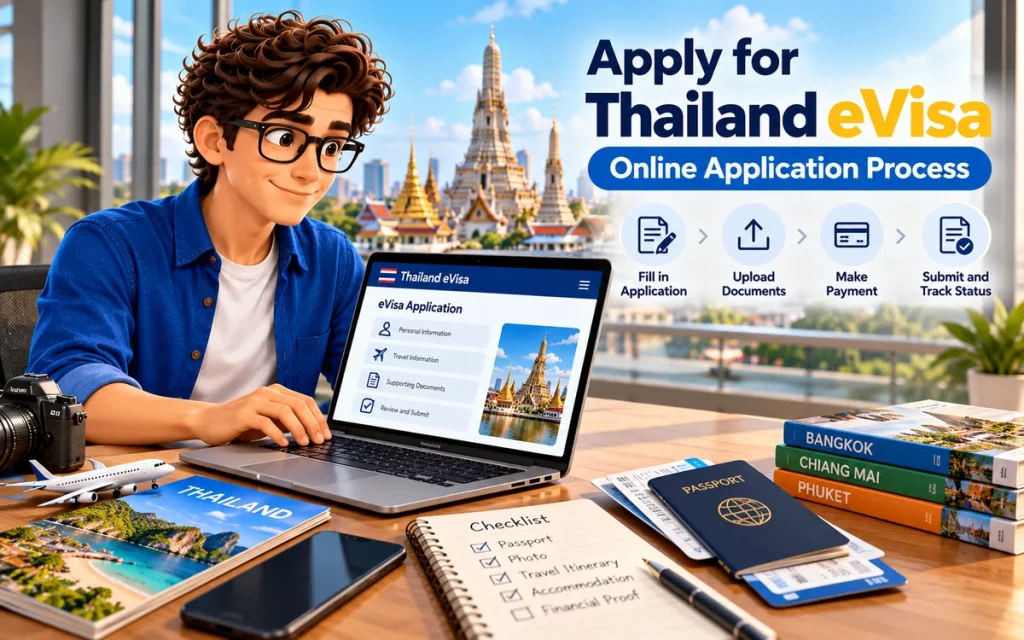
Who should use the official eVisa portal?
Travellers who believe they need a Thai visa can use the portal to check the relevant visa category and application requirements. The portal also provides a tourist-visa checker that asks for the country or territory of the passport or travel document and the planned length of stay. Use the result as a starting point, then review the category and application instructions that apply to your case.
2. Do Foreigners in Indonesia Need a Visa to Visit Thailand?
Not every foreign national travelling from Indonesia will necessarily need to apply for a Thai tourist visa. Thailand’s official portal provides a tool to help travellers check whether a tourist visa may be required, using the passport or travel document and planned length of stay. Check the result before deciding which application route to follow.
Thailand Tourist Visa for Foreigners: Check Your Eligibility
The passport or travel document you will use for travel is an important part of the official eligibility check. Do not assume that the rules for an Indonesian passport also apply to a foreign passport simply because the traveller is currently in Indonesia. Likewise, do not assume that two foreign nationals living in the same Indonesian city will have identical visa requirements. For a separate overview of Thailand visa-free entry information for Indonesian passport holders, read our guide to visa-free countries for Indonesian passport holders. This is a separate passport-specific topic and should not be used to infer eligibility for other passports.
Check your planned length of stay
The official tourist-visa checker asks for the planned number of days in Thailand. Enter your intended stay accurately and review the result shown by the official system. If your itinerary changes, check the requirements again rather than relying on an earlier assumption.
Visa requirements depend on individual circumstances
The result of a tourist-visa check should not be treated as a substitute for reviewing the full rules for your trip. Your purpose of travel and the visa category you may need are also relevant. If your purpose is not tourism—for example, transit, study, employment, business, retirement, or another activity—review the appropriate category on the official portal instead of choosing a tourist visa by default.
Use the official Thailand eVisa website to run the available check and review the visa categories before making travel arrangements.
3. Can You Apply for a Thailand eVisa from Indonesia?
If you want to apply for Thailand eVisa from Indonesia, first check the information requested during the official eligibility process and the instructions for the relevant application. Being physically present in Indonesia does not, by itself, establish that every applicant can use the same application route. The official portal also states that applicants can apply only when they are currently outside Thailand. Applicants in Indonesia should still verify the passport, current-location, and place-of-application details requested by the system.
Passport country or territory
During the eligibility step, the system asks for the country or territory of the passport or travel document. Select the information that matches the document you will use for the trip. If your nationality and the country or territory issuing your travel document differ, read the official instructions carefully and answer the application questions accurately.
Your current location
The eligibility process also asks for your current location. If you are staying in Bali, Jakarta, Yogyakarta, or another part of Indonesia, provide the truthful information requested by the system. Do not select a different location simply because you believe it may make the application easier.
Selecting the appropriate place of application
The system asks applicants to select where they will apply. The official application guide explains that the eligible Thai Embassies or Consulates displayed are based on the applicant’s current location. Select only an option offered by the system for your circumstances, and follow the instructions shown for that application. If you are unsure how the selected office applies to your case, consult the official guidance of the responsible Thai Embassy or Consulate-General.
Thailand Visa Application from Bali: What to Check
Foreign nationals in Bali should enter their actual current location and review the place-of-application options made available by the official system. The application guide states that eligible Thai Embassies or Consulates are displayed based on the applicant’s current location. Do not assume that a particular office is available without checking the official portal and the instructions for your case.
Begin with the eligibility process on the official Thailand eVisa portal and follow the instructions displayed for your selected application.
Unsure About Your Thailand Visa Options?
Your visa options may depend on your passport, current location, travel purpose, and intended stay. If you are unsure which official information applies to your circumstances, a private consultation may help you understand what to check before applying.
[Contact AzraID for Guidance →]
4. Types of Thailand Visa Available Through the Official Portal
The official portal lists multiple visa categories. The correct category depends on the purpose of the visit, so travellers should not choose a category based only on its name or on another person’s experience.
Tourist visas
The portal identifies tourist visas for purposes including tourism, MICE, and medical treatment. Review the specific category details and requirements shown for the planned activity. Do not assume that every visit involving a short stay falls under the same tourist-visa option.
Transit visas
The portal lists transit visas for transit, sports activities, or crew-related purposes. If Thailand is a transit point or your travel involves one of the activities listed by the portal, check the relevant category and conditions rather than assuming a tourist visa is the right choice.
Work and business visas
The portal includes work and business visa categories. A traveller intending to undertake employment or business-related activities should review the relevant official category and supporting-document requirements. Do not use a tourist category as a substitute for the category that corresponds to the actual purpose of travel.
Other categories
The official portal also lists categories relating to study and training, media and film crews, religious activities, research and science, staying with family, retirement, medical treatment, Smart Visas, Long-Term Resident Visas, the Destination Thailand Visa (DTV), Thailand Privilege Card, and other purposes. Availability, conditions, and evidence vary by category. Use the portal’s own category pages to determine which one may fit your circumstances.
Review the current categories and their details directly on the official Thailand eVisa website.
5. Thailand eVisa Requirements and Supporting Documents
There is no single document checklist that should be assumed to apply to every applicant and every Thai visa category. The official portal presents required documents in connection with the selected category and application. It also instructs applicants to check the relevant Embassy or Consulate-General’s website for specifically required documents.
Practical document-preparation checklist (not a universal list): The official application manual shows the application flow requesting the passport biodata page, a photograph, personal information, travel-document information, address information, employment details, travel information, accommodation in Thailand, and supporting documents. The exact evidence and upload requirements depend on the selected visa category and the relevant application. Use the checklist below to organise your preparation, then confirm the exact requirements shown in your own application.
- Passport or travel document: Prepare the biodata-page image requested by the official application system and check that the details match the form.
- Photograph: Prepare the photograph requested by the system and follow the current upload instructions displayed in the application.
- Personal information: Have the personal details needed to complete the online form available and enter them consistently with your travel document.
- Address information: Prepare the address details requested by the form, including information relevant to your current circumstances.
- Employment details: Be ready to provide the employment information requested in the application, where applicable.
- Travel information: Prepare your planned travel details so you can complete the travel-information section accurately.
- Accommodation in Thailand: Have the accommodation information requested by the application ready, if applicable to your form.
- Visa-category supporting documents: Check the exact supporting-document list for your selected visa type and place of application. The official portal advises applicants to check the relevant Thai Embassy or Consulate-General instructions for specific requirements.
Official manual reference: the Thai eVisa application guide illustrates these fields and upload stages. It does not mean every item is required in the same form for every visa category or applicant.
Open the official guide: https://thaievisa.go.th/static/English-Manual.pdf
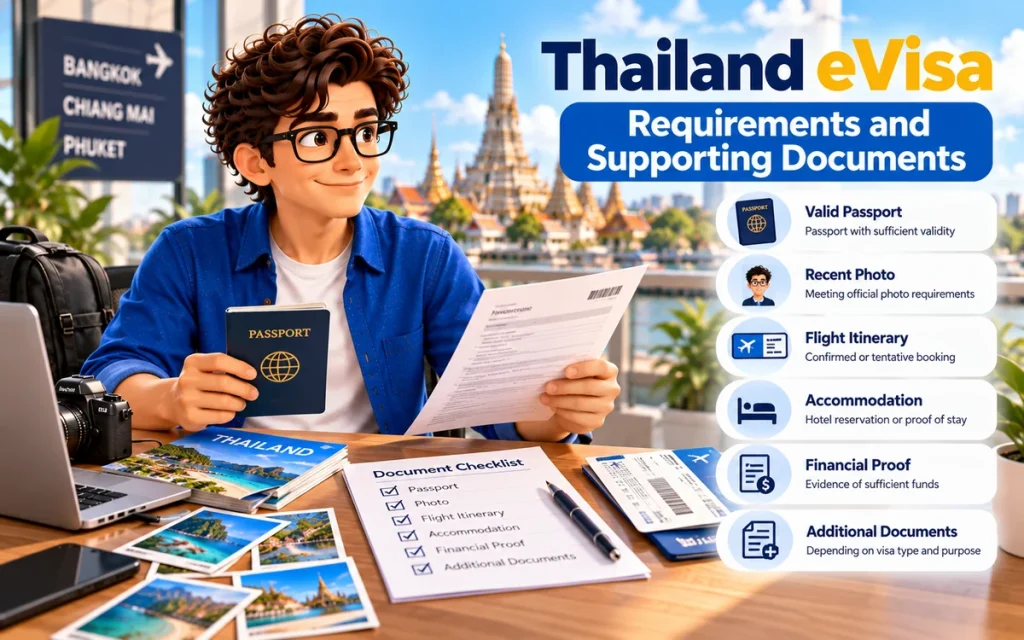
Identify the requirements for your visa category
First, select the category that corresponds to your genuine purpose of travel. Then read the requirements shown for that category and the selected place of application. Depending on the application, the system may ask for information about the applicant, travel document, travel plans, accommodation, or supporting evidence. The exact list shown for your application takes precedence over a generic checklist.
Check the document list for your place of application
The official system asks applicants to identify their current location and where they will apply. Its application guide explains that the eligible Thai Embassies or Consulates displayed are based on the applicant’s current location. The portal also advises applicants to check the relevant Embassy or Consulate-General’s website for specific document requirements. Follow the instructions for the office and category relevant to your application.
Review your documents before submission
Before uploading, check that each file is readable and matches the information entered in the application. Confirm that names, passport details, dates, and travel information are consistent. Follow the file-format, size, and other upload instructions shown in the system. Do not upload unrelated or misleading documents to try to satisfy a requirement.
If the responsible officer requests additional documents, follow the request and its instructions through the official account or communication channel. The official user manual explains that applicants can review document requests and submit the requested material through the system.
For the process and current document instructions, consult the official Thailand eVisa portal and the linked application guidance.
6. How to Apply for a Thailand eVisa Online
The official portal describes six main stages. The exact fields and documents depend on the selected visa category and application circumstances.
Official reference: Thailand eVisa How to Apply and the official application manual.
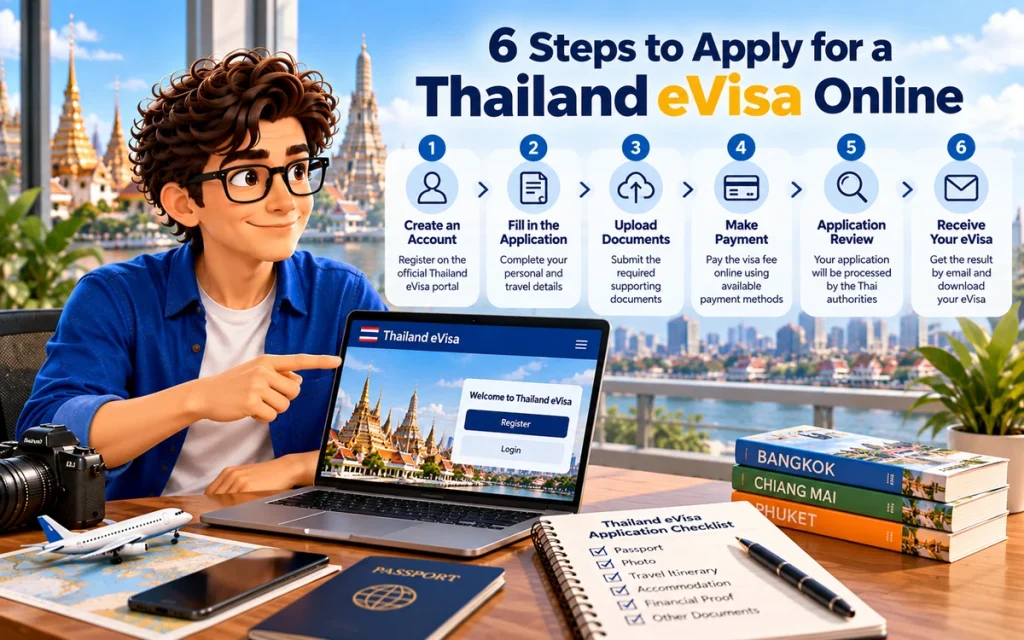
Step 1: Create an account
Open the official portal and select the option to create an account. Enter the requested personal details and email address, set a password according to the system’s rules, and complete the email verification process. Keep access to the email account you register because the system uses email for account activation and application communication.
Step 2: Complete the application form
Sign in and begin a new application. Complete the eligibility fields, including the country or territory of your passport or travel document, your current location, and where you will apply. The official guide states that the eligible Thai Embassies or Consulates shown are based on your current location. Then select the relevant travel-document type, visa type, purpose of visit, and number of entries as requested. Continue with the applicant and travel information sections.
Enter details carefully and check them against your passport and travel plans. Do not select a visa type or purpose that does not reflect the real reason for your trip.
Step 3: Upload supporting documents
Upload the supporting documents requested by the system for your application. The official user manual shows separate stages for applicant information, travel information, and supporting documents. Review every upload before continuing, and follow any additional instructions from the responsible Embassy or Consulate-General.
Step 4: Pay the visa fee
Review the application and the payment details before completing payment. The official portal warns that visa fees are non-refundable. Confirm that the application details are correct and that you understand the payment information shown by the system before proceeding.
Step 5: Wait for processing
After submission and payment, monitor the application through your official account and check the email address associated with the application. The portal states that the responsible Embassy or Consulate-General may request an interview or additional documents. Respond to any request according to the instructions provided.
Do not assume that the visa will be approved by a particular date. The official portal does not guarantee that a submitted application will be granted, and applicants should avoid relying on an unverified processing estimate.
Step 6: Receive the eVisa confirmation by email
If the application is approved, the official portal states that an eVisa confirmation document will be sent by email. The confirmation can be printed and presented to airlines and Thai immigration officials when travelling to Thailand. Check the confirmation carefully and follow the instructions provided with it.
Use the official step-by-step application guide if you need help understanding the account, application, status-checking, or document-request functions.
Need Help Preparing for Your Thailand Trip?
Understanding visa requirements before travelling can help you plan with greater confidence. Your passport, travel itinerary, and current location may affect which requirements you need to check.
Azra Solutions offers private travel and visa consultation to help you understand relevant information and plan your next steps.
7. Thailand eVisa Fees and Processing Time
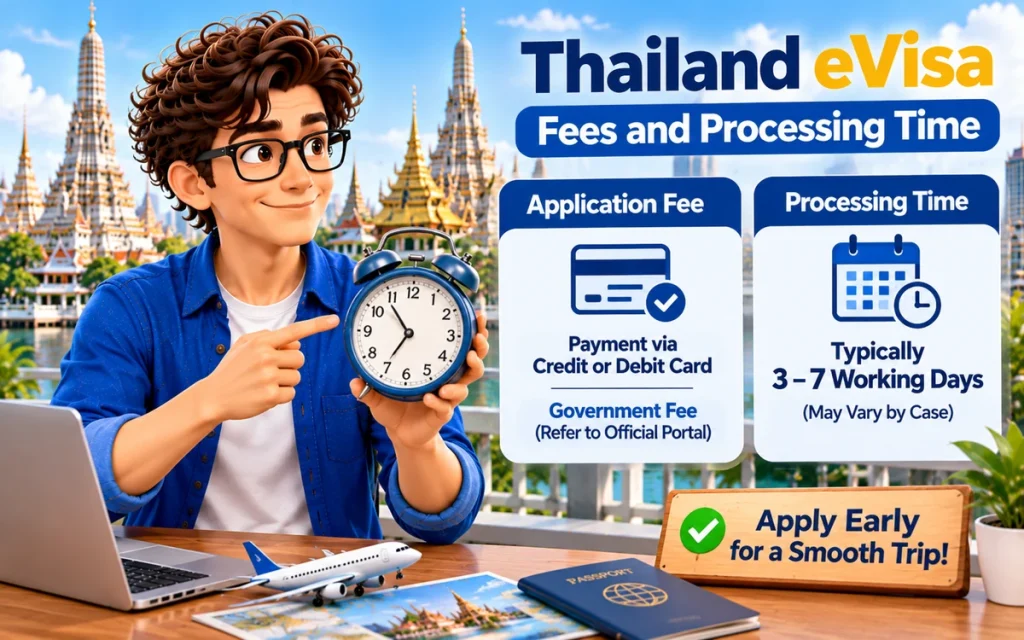
Applicants should check the current fee and any payment instructions displayed by the official portal for their specific application. The fee should not be inferred from another applicant’s experience, another visa category, or an old online article.
Where to check the applicable visa fee
Review the payment amount and payment instructions shown in the official system before paying. The portal warns that visa fees are non-refundable. If a payment option or fee-exemption process appears in your application, follow the official instructions shown for that case.
Understanding processing and additional requests
Processing depends on the responsible authority and the details of the application. The official portal states that an Embassy or Consulate-General may request an interview or additional documents. Such requests can affect the steps an applicant needs to complete, so monitor the application status and messages rather than relying on an assumed standard timeline.
Why you should not assume a guaranteed approval date
The official portal does not say that every application will be approved, and submitting an application is not a guarantee that a visa will be granted. Avoid making non-refundable travel commitments based solely on an assumed decision date. Check the official instructions and allow time for the application to be processed.
8. Common Thailand eVisa Application Mistakes
Selecting the wrong application details
Choosing an incorrect passport or travel-document country, current location, place of application, visa type, purpose, or number of entries can create inconsistencies in the application. Review the eligibility step carefully before continuing.
Submitting incomplete or inconsistent information
Compare the application with your travel document and supporting evidence. Differences in spelling, dates, travel details, or other personal information can prompt questions or a request for clarification. Correct errors before submitting whenever the system allows you to review the form.
Failing to check official instructions
Requirements can vary by category and application location. A checklist from another traveller may not apply to your case. Always review the current official instructions and any additional document requirements identified by the relevant Thai Embassy or Consulate-General.
Ignoring email and application-status updates
Use an email address you can access and check the account for status changes or document requests. If the system requests further evidence, follow the instructions and submit the requested documents through the official process.
9. What If Your Thailand eVisa Application Is Delayed or Refused?
Check your application status
Sign in to the official eVisa account and use the application-management or status-checking function. The official user manual explains how to view applications and their status. Read the status and any message carefully before deciding what to do next.
Respond to requests for additional documents
If the responsible officer requests more information, read the remarks and submit the requested documents through the official account process where indicated. Make sure the response addresses the request and follows the instructions shown in the system.
Follow official guidance for your application
If your application is delayed or refused, do not assume that submitting another application or changing a detail will solve the issue. Review the official communication and contact the responsible Thai Embassy or Consulate-General through its official channel if clarification is needed. Any next step should be based on the guidance that applies to your case. Remember that the official portal states that applications are subject to approval and that an application submission does not necessarily mean a visa will be granted.
10. Frequently Asked Questions About Thailand eVisa
Can foreigners apply for a Thailand eVisa while staying in Indonesia?
The answer depends on the information entered in the official eligibility process and the instructions applicable to the selected application. The system asks for the passport or travel-document country, current location, and place of application. Check these fields and the relevant official instructions before proceeding.
Can I apply for a Thailand eVisa while staying in Bali?
Being in Bali does not automatically establish eligibility for a particular application route. Enter your actual current location and review the place-of-application options and instructions displayed by the official portal.
Does every foreigner need a Thailand tourist visa?
Do not assume that every traveller needs a tourist visa. The official portal provides a tourist-visa checker based on the passport or travel document and planned length of stay. Use the official result and review the rules relevant to your trip.
How do I check the official Thailand eVisa fee?
Check the fee and payment instructions displayed in the official application system for your selected category and application. Do not rely on an unverified amount from a third-party source. The portal warns that visa fees are non-refundable.
Does submitting an application guarantee approval?
No. The official portal explicitly states that submitting an application does not necessarily mean a visa will be granted. The responsible Embassy or Consulate-General may also request an interview or additional documents.
Where can I check my application status?
Sign in to your Thailand eVisa account and use the application-management or status-checking functions. The official user manual provides instructions for viewing application status and responding to document requests.
11. Need Help Understanding Your Thailand Visa Options?
Choosing the right visa category and understanding the application instructions can take careful preparation, especially when you are a foreign national staying in Indonesia and need to confirm which application route applies to you.
Azra Solutions provides private travel and visa consultation to help clients understand official requirements, identify questions to verify, and prepare for the relevant application process based on the circumstances they share. Consultation does not replace the official application process, and Azra Solutions is not a Thai government agency, embassy, consulate, or immigration authority. To learn more about our private travel and visa consultation, visit AzraID.
Visa decisions are made by the relevant Thai authorities. Eligibility, required documents, fees, and processing arrangements must be verified through the official Thailand eVisa system and the responsible Embassy or Consulate-General.
For official visa categories, eligibility checks, and application instructions, visit the Thailand eVisa official website.
Plan Your Thailand Trip with Greater Confidence
Still have questions about Thailand visa requirements or the information you need to check before travelling?
Azra Solutions provides private travel and visa consultation for people who need guidance in understanding their travel-related options. Share your passport nationality, current location, and intended travel dates so we can better understand your enquiry.
Contact AzraID for a Private Consultation
Please note that Azra Solutions is a private consultancy, not a Thai government agency, embassy, consulate, or immigration authority. Official visa eligibility, application decisions, fees, and requirements are determined by the relevant Thai authorities. Consultation does not guarantee visa approval.